Rehab Pilates
Pilates for Posture Correction: What It Can and Cannot Do
A realistic guide to Pilates for posture correction in KL, what it may improve, and when physiotherapy assessment is more appropriate.
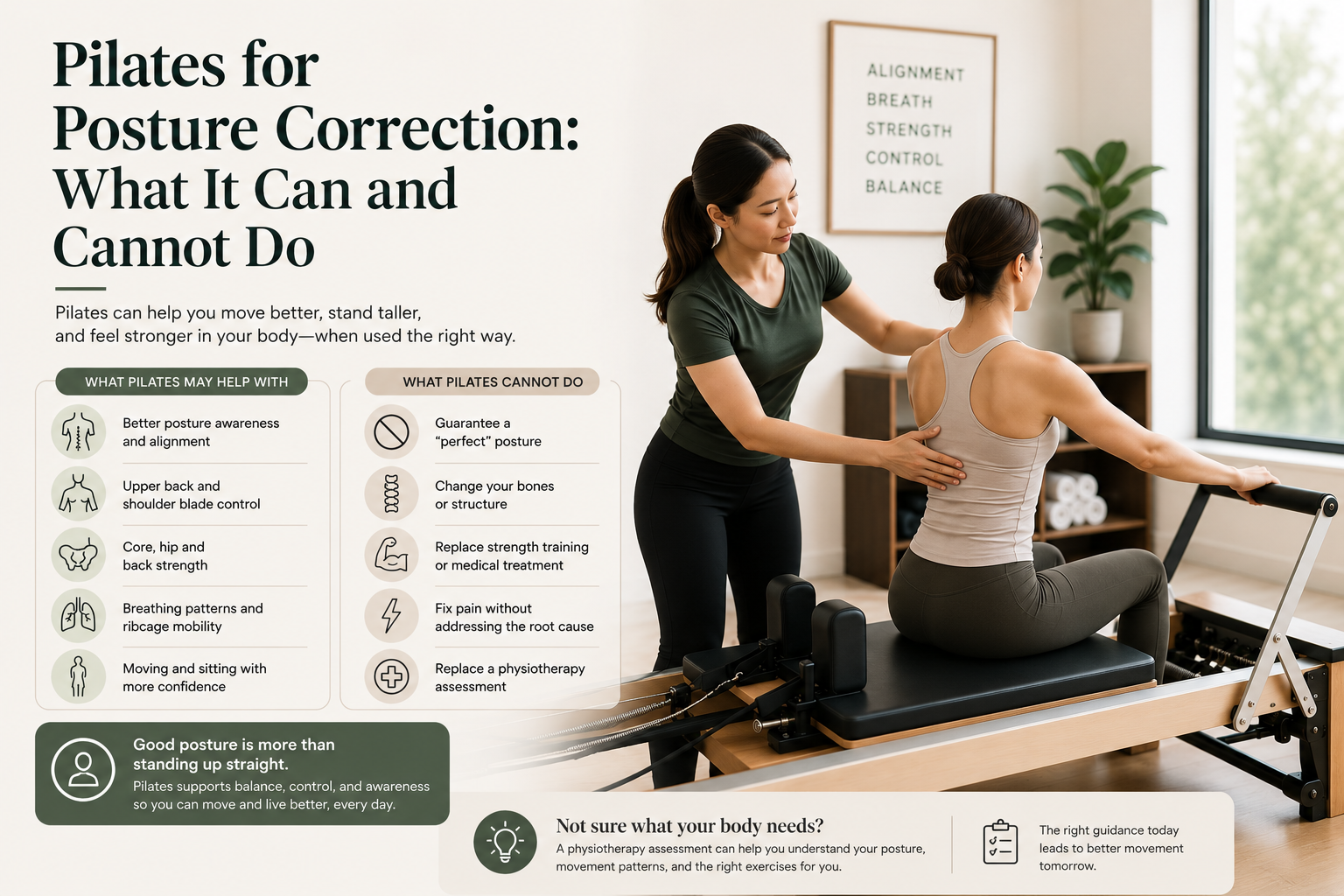
Pilates may help with posture correction when the goal is better movement awareness, strength, mobility and control. It cannot permanently force your body into one “perfect” position, and it should not be treated as a quick fix for pain without assessment.
For many people in Kuala Lumpur, posture-related concerns come from a mix of desk work, stress, exercise habits, sleep, strength, mobility and how long the body stays in one position. Rehab Pilates can support change, but the plan needs to match your body and daily routine.
What posture correction really means
Posture correction is often misunderstood. It does not mean you must sit or stand perfectly straight all day. The body is designed to move, shift and rest in different positions.
A more useful goal is posture flexibility: being able to sit, stand, breathe, reach, bend, lift and exercise with less strain and more confidence.
Pilates may support this by helping you notice how your rib cage, pelvis, spine, shoulders, hips and breathing work together during movement.
What Pilates may help with
Pilates-based rehab may help you build:
- Better awareness of slumped, stiff or over-braced positions
- Upper back and shoulder blade control
- Hip and trunk strength for sitting, standing and lifting
- Breathing patterns that reduce unnecessary tension
- Spinal mobility within a comfortable range
- More confidence moving out of one fixed posture
This can be useful for desk workers, active adults, post-natal clients, people returning after pain, and anyone who feels their body gets tired or tense easily during the day.
What Pilates cannot do
Pilates cannot guarantee that pain will disappear, permanently “fix” posture, or change structural factors overnight. Some posture differences are simply normal body variation. Others may be related to injury history, scoliosis, joint stiffness, muscle weakness, work setup, stress or general health.
It is also possible to do Pilates with too much tension. If every exercise becomes rigid, over-controlled or painful, it may reinforce guarding instead of helping you move better.
That is why posture work should be practical and adaptable, not perfection-based.
What a physiotherapy-led assessment may look at
A physiotherapy or rehab Pilates assessment may look at your symptoms, work habits, exercise history, spinal and shoulder mobility, hip strength, breathing, balance and how you move during daily tasks.
Cherrie may also ask when your posture feels most difficult: long computer work, driving, carrying a child, gym training, standing presentations or household tasks.
From there, exercises can be chosen more specifically. One person may need upper back mobility and shoulder control. Another may need hip strength, breathing work or advice on changing sitting patterns through the day.
When to get assessed
Consider getting assessed if posture concerns come with pain, headaches, numbness, weakness, repeated flare-ups, reduced shoulder or back movement, or uncertainty about which exercises are safe.
Seek medical care promptly if pain follows major trauma, worsens quickly, comes with fever, unexplained weight loss, new numbness or weakness, loss of bladder or bowel control, chest pain, or symptoms that feel unusual for you.
Related reading
- Posture Correction in KL: Assessment, Exercises and Realistic Expectations
- Physiotherapist in Mont Kiara: Movement Care for Pain, Posture and Mobility
- Clinical Pilates in Cheras: Rehab-Focused Movement with a Physiotherapist
- Can Poor Posture Cause Shoulder Pain?
- Text Neck: Why Phone Posture Can Affect Your Neck and Shoulders
- Neck and Shoulder Pain from Desk Work: What You Can Do
- Back Pain from Sitting Too Long: A Guide for Office Workers
- Physiotherapist-Led Pilates in KL: Who Is It Suitable For?
- What Is Rehab Pilates and How Is It Different from Regular Pilates?
- Clinical Pilates vs Regular Pilates: Which Is Better for Recovery?
- When Should You See a Physiotherapist in Kuala Lumpur?
- Pilates for Neck and Shoulder Tension: What to Focus On
- Pilates for Scoliosis in Malaysia: Supportive Movement, Not a Quick Fix
- Scoliosis Physiotherapy in Malaysia: What Adults Should Know
- Posture Assessment in KL: What Physiotherapists Look For
- Upper Crossed Syndrome: Is It Really the Cause of Your Pain?
- Rounded Shoulders: Stretching Alone Is Usually Not Enough
- Posture Correction Myths: What Patients Should Know
If you are in Kuala Lumpur or Selangor and want help with posture, desk strain or movement confidence, you can WhatsApp Cherrie to ask whether physiotherapy or rehab Pilates is a suitable starting point.
Foundational clinical sources and further reading
These authoritative sources provide general background relevant to this topic; they are not claim-by-claim citations. This content is educational and does not replace individual assessment, diagnosis or emergency medical care.
- What is physiotherapy? — World Physiotherapy
- WHO guidelines on physical activity and sedentary behaviour — World Health Organization