Local SEO
Clinical Pilates in Cheras: Rehab-Focused Movement with a Physiotherapist
Considering clinical Pilates in Cheras? Learn who it may suit, what assessment and sessions involve, and how rehab-focused Pilates differs from a class.
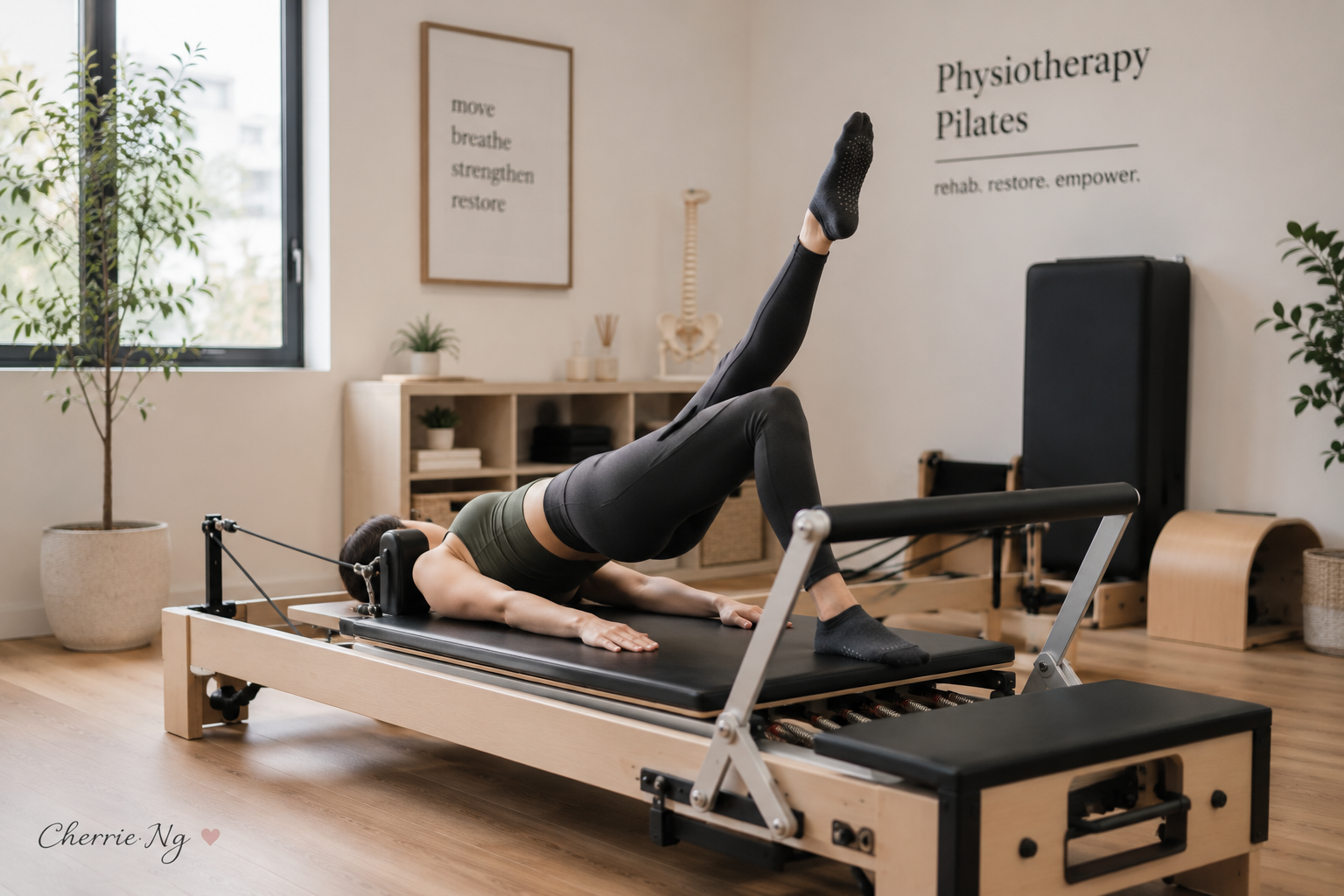
Clinical Pilates in Cheras may suit people who want individual, rehab-focused movement guidance rather than a standard group workout. On this website, the term describes Pilates-based exercise selected and progressed with physiotherapy reasoning, based on your symptoms, movement, current ability and goals.
The name alone does not guarantee that every programme is clinical or suitable for an injury. What matters is the assessment, the practitioner’s relevant training, how exercises are adapted, how symptoms are monitored and whether the plan helps you return to meaningful activities.
How is clinical Pilates different from a regular class?
A general Pilates class usually follows a programme for a group or a broad fitness level. It may be an enjoyable and appropriate way to exercise when you are well and comfortable with the movements.
A rehab-focused session starts with the individual problem. It may need to account for:
- Pain or stiffness during particular movements
- A recent injury or recurring flare-up
- Post-surgery precautions or medical instructions
- Reduced confidence when returning to exercise
- Differences in strength, mobility, balance or coordination
- Work, home, sport or caregiving demands
- Exercises that previously increased symptoms
The World Health Organization describes rehabilitation as person-centred and targeted to a person’s goals and preferences. Rehabilitation may include exercise, education, task adaptation and changes to the environment rather than one fixed treatment method. World Health Organization rehabilitation fact sheet
This means Pilates is a tool within the plan. The goal is not to perform a perfect Pilates repertoire; it is to use suitable movement to build capacity for what you need to do.
Who may consider rehab-focused Pilates?
An individual clinical Pilates approach may be worth discussing if you:
- Want to restart exercise after pain, injury or a period of inactivity
- Have recurring back, neck or shoulder discomfort during daily activity
- Need more confidence with movement after physiotherapy
- Want progressive strength and control work adapted to your level
- Find general classes too fast, too difficult or insufficiently specific
- Want posture support focused on movement options rather than appearance
- Need exercise choices that respect medical or post-surgery precautions
These situations do not confirm that Pilates is the correct first step. New, worsening, unexplained or injury-related symptoms should be screened before exercise is progressed.
What does the assessment look at?
Before planning exercises, Cherrie may ask about:
- Your symptoms and how they behave
- Relevant health conditions, injuries or operations
- Current exercise, work and daily routines
- Movements you avoid or find difficult
- Previous treatment and exercises
- Short- and longer-term goals
The movement assessment may look at joint mobility, strength, balance, breathing, trunk control, posture, coordination and how symptoms respond to relevant tasks. Not every client needs every test.
The findings help choose a safe starting point. Two people with the same diagnosis may receive different exercises because their symptoms, confidence, goals and current capacity are different.
What may happen during a session?
A session may combine:
- Mat-based or equipment-assisted Pilates exercises
- Breathing and trunk-control practice
- Mobility work for areas that feel restricted
- Progressive strengthening for the trunk, hips, shoulders or legs
- Balance, coordination or functional movement
- Education about symptom response and activity levels
- A short programme to practise between sessions
Exercises can be simplified, supported, loaded or made more complex as appropriate. Progression should depend on movement quality, effort, symptoms and the task you are preparing for—not on completing an advanced exercise as quickly as possible.
Can clinical Pilates help back pain?
Pilates may be one reasonable exercise option for some people with low back pain. A 2024 systematic review and meta-analysis reported improvements in pain and disability compared with no exercise and some non-specific exercise comparisons. The result does not mean Pilates will work for every cause of back pain or that everyone needs the same programme. Systematic review of Pilates exercise for low back pain
NICE guidance recommends considering exercise for low back pain while taking the person’s needs, preferences and capabilities into account. It does not require one branded exercise method. The same guidance places manual therapy, when considered, within a package that includes exercise rather than as a stand-alone solution. NICE guideline NG59
This is why the assessment and progression matter more than the label “clinical Pilates.”
What about shoulder, knee or other conditions?
The evidence is less certain when Pilates is applied broadly to every limb condition. A 2025 systematic review found possible improvements in pain, disability and quality of life for some extremity musculoskeletal conditions, but rated the evidence as very low certainty and found the evidence for superiority over other exercise inconclusive. Systematic review of Pilates for extremity musculoskeletal conditions
Pilates-based exercises can still be useful when they match the person’s assessment, but they should not replace condition-specific loading, walking or running progression, sport practice, medical follow-up or other rehabilitation elements when those are needed.
Can Pilates correct posture?
Clinical Pilates can help you practise movement awareness, strength, endurance and position changes. It should not promise to force every body into one ideal alignment or guarantee that changing appearance will remove pain.
A useful posture goal may be:
- Tolerating desk work with less interruption
- Moving the neck or shoulders more comfortably
- Building strength for lifting and carrying
- Changing positions without fear
- Returning to exercise with more options
Posture is considered alongside symptoms, work habits, movement capacity, recovery and the activities that matter to you.
Mat or reformer: which is better for rehab?
Neither is automatically more clinical. Mat exercises can be highly adaptable and easy to repeat at home. Reformer equipment can provide assistance, resistance and movement feedback.
The better choice depends on the exercise goal, symptoms, confidence, access and whether the movement can be progressed meaningfully. Expensive equipment does not replace good assessment or clear instruction.
How are Cheras sessions arranged?
This is a practitioner-led mobile and private-call-out service, not a promise of a walk-in Pilates studio at every Cheras location. Availability is confirmed case by case.
When enquiring, share:
- Your Cheras suburb, condominium, office or nearest landmark
- Your main concern and current activity level
- Whether you are seeking physiotherapy assessment or rehab Pilates
- Relevant diagnoses, surgery dates or medical precautions
- Your preferred day or time range
- Parking, security or access information where relevant
Cherrie can then discuss whether an individual session is suitable, which setting may work, and whether travel can be arranged.
When should physiotherapy or medical review come first?
Start with physiotherapy assessment when pain is new, recurring, worsening, spreading into an arm or leg, affecting strength or balance, disrupting normal activities, or making exercise choices unclear.
For back pain, seek urgent medical care for new loss of feeling around the genitals or anus, changes in bladder or bowel control, pain, weakness or numbness affecting both legs, chest pain, or symptoms beginning after a serious accident. NHS back pain guidance
Recent surgery may require clearance and specific precautions before exercise. Do not use a Pilates session to delay medical assessment for symptoms that are severe, rapidly changing or unusual for you.
Questions to ask before booking
Useful questions include:
- Will there be an individual assessment before exercises are selected?
- Who will guide the session, and what relevant healthcare and Pilates training do they have?
- How will exercises be changed if symptoms increase?
- Is the programme individual or shared with a group?
- How will progress relate to my work, sport or daily goals?
- What should I practise between sessions?
The answers should help you understand the process without promising a cure or a fixed recovery timeline.
Frequently asked questions
Do I need Pilates experience?
No. A rehab-focused starting point can be adapted for a beginner. Tell Cherrie about any movement that feels unfamiliar or uncomfortable.
Do I need a physiotherapy assessment first?
It is particularly useful when you have pain, an injury, surgery history, neurological symptoms or uncertainty about exercise. Someone seeking general fitness without symptoms may have different needs.
Is clinical Pilates always one-to-one?
The term is used differently by different providers. For this service, confirm the proposed format when enquiring; the key issue is whether the session and progression match your needs.
How many sessions will I need?
There is no universal number. It depends on your assessment, goals, symptom response, independent practice and how much guidance is needed to progress safely.
Related reading
- Physiotherapist in Cheras: Home Visits, Rehab Pilates and Movement Care
- What Is Rehab Pilates and How Is It Different from Regular Pilates?
- Pilates for Posture Correction: What It Can and Cannot Do
Sources and clinical references
- World Health Organization: Rehabilitation
- Systematic review of Pilates exercise for low back pain
- NICE guideline NG59: Low back pain and sciatica
- Systematic review of Pilates for extremity musculoskeletal conditions
- NHS: Back pain
If you are looking for clinical Pilates in Cheras, WhatsApp Cherrie with your location, main concern and movement goal. She can first help clarify whether physiotherapy assessment, individual rehab Pilates or another next step is more suitable.
Foundational clinical sources and further reading
These authoritative sources provide general background relevant to this topic; they are not claim-by-claim citations. This content is educational and does not replace individual assessment, diagnosis or emergency medical care.
- What is physiotherapy? — World Physiotherapy
- WHO guidelines on physical activity and sedentary behaviour — World Health Organization