Rehab Pilates
Pilates for Neck and Shoulder Tension: What to Focus On
Learn how Pilates may support neck and shoulder tension through movement, strength and breathing, plus when symptoms need physiotherapy assessment.
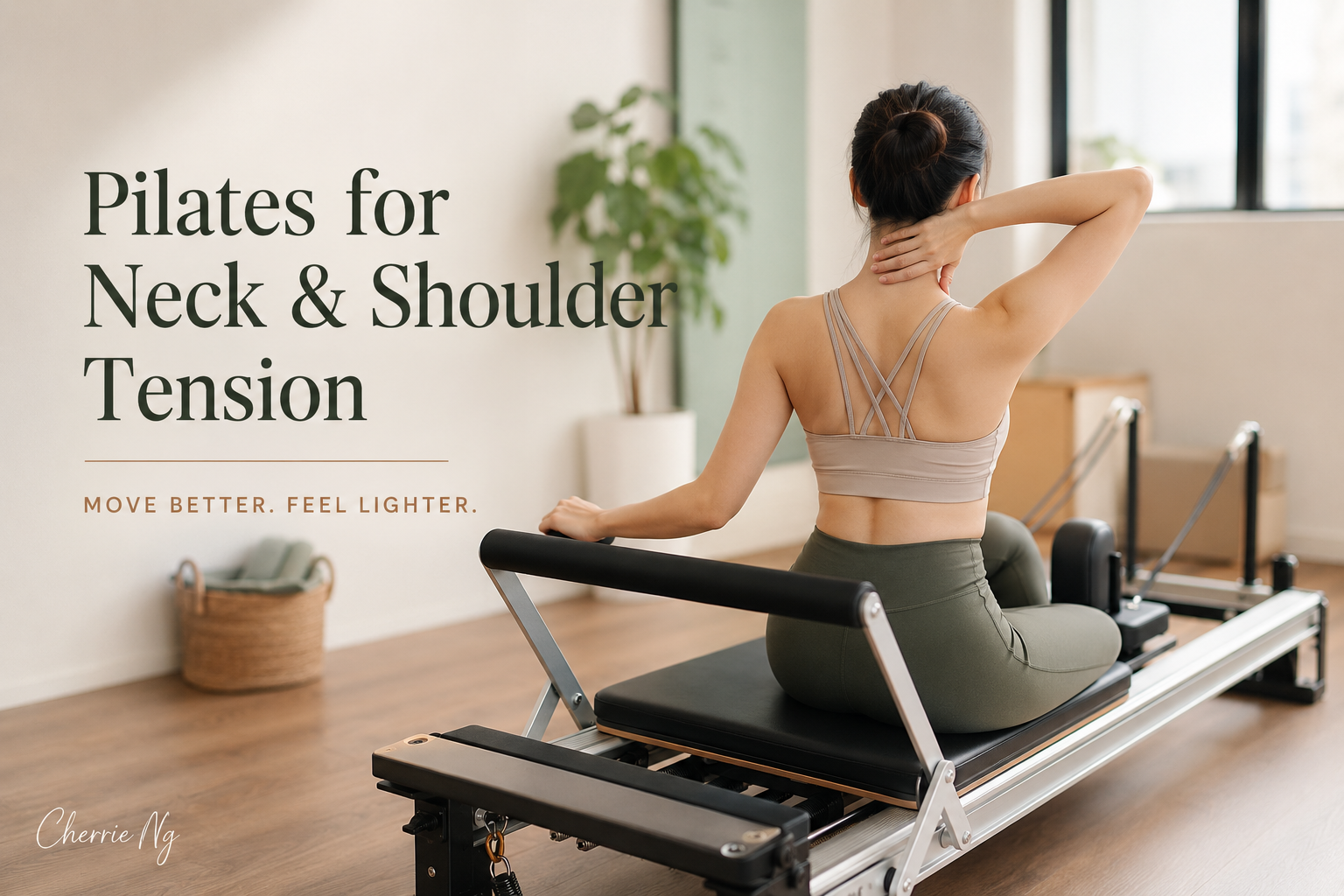
Pilates may help some people with neck and shoulder tension by building movement variety, upper-back and shoulder capacity, breathing awareness and confidence with exercise. The focus should not be on forcing the shoulders down, holding one perfect posture or stretching every area that feels tight.
Neck and shoulder tension is a description, not a diagnosis. It may relate to long periods at a desk, stress, sleep, training load, limited movement options, reduced strength, headache, nerve sensitivity or a neck or shoulder condition that needs assessment. Rehab Pilates can be adapted around these factors, but persistent or worsening symptoms should be screened first.
Why the neck and shoulders can feel tense
Muscles often feel tense when they have been working in one position for a long time. Laptop work, driving, phone use, carrying a bag, childcare and unfamiliar exercise may all increase demand around the neck, shoulder blades and upper back.
The feeling can also be influenced by:
- Stress, concentration or jaw clenching
- Poor sleep or fatigue
- A sudden increase in gym, swimming or overhead activity
- Limited upper-back or shoulder movement
- Reduced neck, shoulder or upper-back endurance
- Guarding after pain or injury
- Headache or symptoms travelling into the arm
A tight sensation does not prove that a muscle is short or damaged. Stretching may feel pleasant, but if the area lacks strength, recovery or movement variety, stretching alone may not change why the tension keeps returning.
What Pilates can and cannot do
Pilates provides many ways to adjust position, support, resistance and range. This can make it useful when someone needs a calmer entry point to upper-body exercise or wants guided practice after a flare-up.
It may help develop:
- Comfortable neck and upper-back movement
- Shoulder-blade control during reaching and loading
- Strength and endurance around the shoulders and trunk
- Breathing without unnecessary jaw or neck tension
- Awareness of habits such as shrugging or over-bracing
- Confidence progressing toward desk, gym or daily tasks
Pilates cannot guarantee pain relief, permanently correct posture or prove that one muscle is the cause. A 2025 systematic review found that Pilates may be more helpful than control conditions for chronic neck pain, but it was not superior to other exercise for disability and other exercises sometimes performed better for pain. The certainty of several findings was low, so Pilates is best viewed as one reasonable exercise approach rather than the only answer.
Focus 1: keep the neck involved without overworking it
Trying to hold the head perfectly still can make an exercise more tiring than necessary. Early rehab Pilates may use supported positions so the neck can participate without carrying too much load.
Useful starting principles may include:
- Letting the head rest when an exercise targets the arms, legs or trunk
- Using a small towel or cushion if the lying position is uncomfortable
- Moving the neck through a comfortable range instead of repeatedly tucking the chin hard
- Reducing long head-lift or curl-up holds when neck muscles fatigue first
- Keeping the jaw relaxed and breathing rather than clenching
The goal is not to avoid all neck effort. The neck also needs capacity. Support can gradually reduce as control and endurance improve.
Focus 2: train the upper back and shoulder blades
The shoulder blades move when you reach, push, pull and lift. They do not need to stay squeezed together or pulled down throughout every Pilates exercise.
Depending on assessment, training may include:
- Reaching the arms while allowing natural shoulder-blade movement
- Supported upper-back extension or rotation
- Rows, pulls or presses with light-to-moderate resistance
- Wall or quadruped exercises that load the arms gradually
- Controlled overhead movement within a tolerable range
- Carrying or lifting tasks that connect Pilates control to daily life
Progressive strength is often important when tension returns because the area tires easily. The best resistance is enough to create useful effort without causing sharp pain, spreading symptoms or a flare that does not settle.
Focus 3: breathe without forcing the shoulders down
Breathing demand naturally creates some movement around the ribs, upper chest and neck. Constantly pressing the shoulders down may make breathing and arm movement feel rigid.
Pilates breathing cues may help you notice jaw clenching, breath-holding or excessive neck effort. A relaxed inhale and steady exhale can be useful during slower exercises, but there is no need to force a very deep breath on every repetition.
As exercises become harder, breathing should adapt. The aim is to coordinate effort, not to make every rib or shoulder remain still.
Focus 4: use posture as an option, not a correction test
Sitting upright for a short exercise may feel helpful, but nobody needs to hold that position all day. Neck and shoulder symptoms often respond better to changing position, adjusting the workstation and building tolerance than to searching for one ideal posture.
Pilates can help you practise several options: supported sitting, rotation, reaching, kneeling, standing and loaded movement. This makes posture more flexible rather than more rigid.
For desk workers, the exercise plan should connect to the workday. Short movement breaks, screen and mouse adjustments, varied sitting positions and regular strength training may matter as much as the Pilates session itself.
What a physiotherapy or rehab Pilates assessment may look at
Cherrie may ask when the tension appears, whether it affects sleep or work, what makes it better or worse, and whether symptoms include headache, dizziness, numbness, tingling or weakness. She may also review desk demands, exercise history and the activities you want to return to.
Assessment may consider:
- Neck, upper-back and shoulder movement
- Strength and endurance around the neck and shoulder blades
- Symptoms during reaching, pushing, pulling or overhead tasks
- Breathing and unnecessary tension during effort
- Whether symptoms travel into the arm or change with neck movement
- Workstation habits, movement breaks, sleep and training load
- How the body responds to support, range or resistance changes
These findings help decide whether rehab Pilates is suitable, which exercises need modification and whether physiotherapy or medical review should come first.
How exercises may progress
The starting point might be gentle movement and supported arm work. Progress can then add resistance, a longer lever, less support, standing balance or more task-specific loading.
A progression may move from:
- Supported breathing and upper-back mobility
- Light arm reaches or shoulder-blade movement
- Rows, presses and quadruped loading
- Longer holds or stronger reformer resistance
- Standing carries, lifts and controlled overhead work
- Return to swimming, gym, racquet sports or other goals
Progress should be judged by movement quality, symptoms and recovery, not by how advanced an exercise looks. Mild muscular effort is expected; sharp pain, worsening arm symptoms or a strong lasting flare are reasons to adjust.
When Pilates should wait
Start with physiotherapy assessment if symptoms are new, worsening, linked to trauma, repeatedly disturb sleep, travel into the arm, or include numbness, weakness, balance changes or an unusual headache. A general Pilates class may not provide enough screening or individual modification in these situations.
Seek urgent medical care if neck or shoulder pain follows major trauma or comes with new arm or leg weakness, rapidly worsening numbness, loss of balance, fever, severe sudden headache, fainting, chest pain, unusual shortness of breath, or other symptoms that feel alarming or unusual.
Related reading
- Neck Pain Physiotherapy in KL: Why It Happens and What Helps
- Neck and Shoulder Pain from Desk Work: What You Can Do
- Pilates for Posture Correction: What It Can and Cannot Do
Frequently asked questions
Should I keep my shoulders down during every Pilates exercise?
No. The shoulder blades should move during reaching, pushing, pulling and lifting. A cue to reduce unnecessary shrugging can help in one exercise, but fixing the shoulders down for everything may restrict natural movement.
Why does my neck work during abdominal exercises?
The neck muscles help support the head during curl-ups and head lifts. Some effort can be normal, but support, a smaller range or a different exercise may be useful if the neck fatigues first or symptoms increase.
Is stretching or strengthening better for neck tension?
It depends on what contributes to the symptoms. Many people benefit from a combination of comfortable movement, progressive strength, recovery and daily activity changes rather than relying on stretching alone.
If you are in Kuala Lumpur or Selangor and neck or shoulder tension keeps returning during work, Pilates or exercise, you can WhatsApp Cherrie to ask whether physiotherapy or rehab Pilates assessment may be suitable.
Foundational clinical sources and further reading
These authoritative sources provide general background relevant to this topic; they are not claim-by-claim citations. This content is educational and does not replace individual assessment, diagnosis or emergency medical care.
- What is physiotherapy? — World Physiotherapy
- WHO guidelines on physical activity and sedentary behaviour — World Health Organization