Neck Pain
Neck and Shoulder Pain from Desk Work: What You Can Do
A practical guide to neck and shoulder pain from desk work, movement breaks, posture, Pilates and physiotherapy assessment in KL.
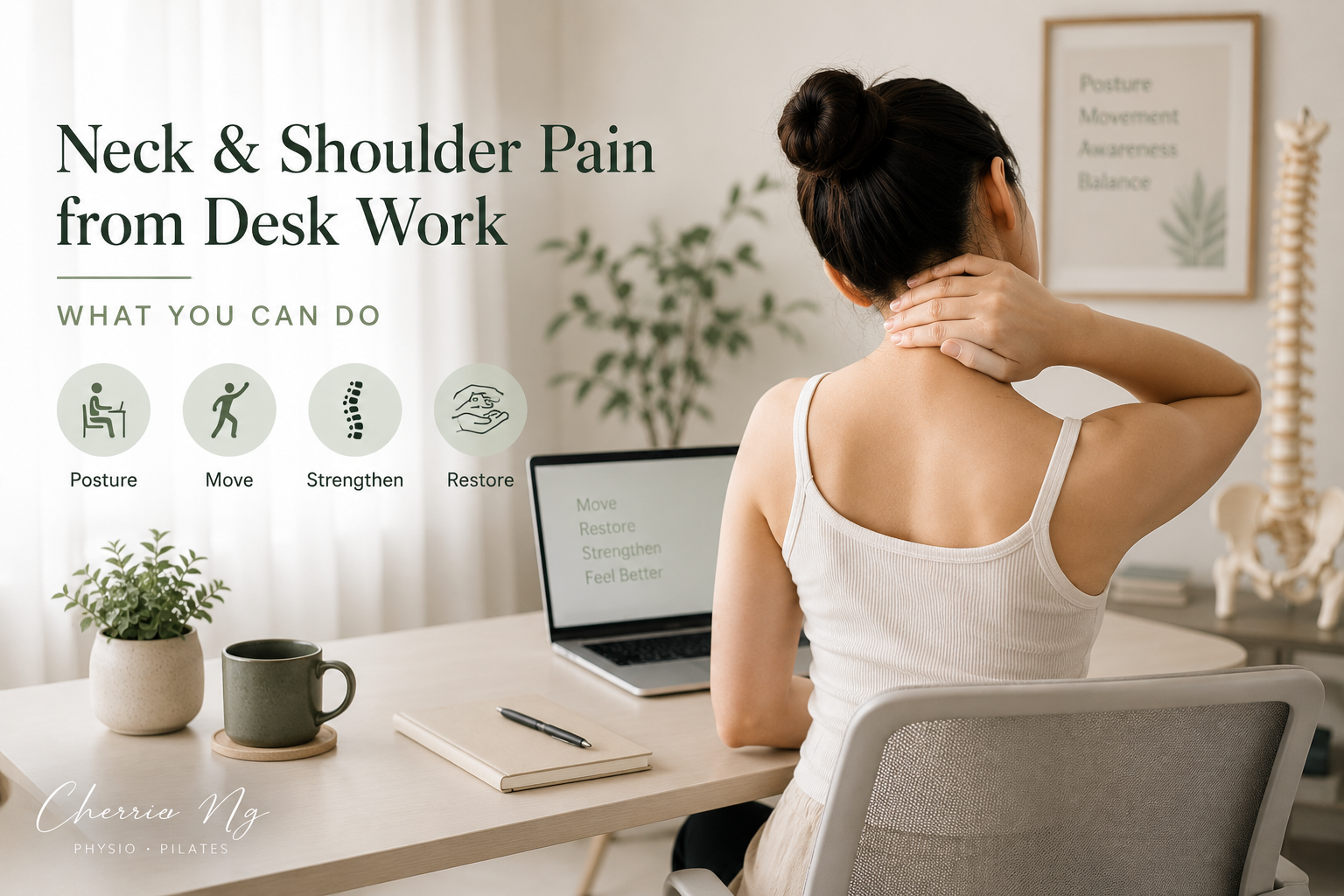
Neck and shoulder pain from desk work is common, but it is not always caused by one “bad posture.” More often, symptoms build when the neck, shoulders and upper back stay in one position for too long, stress is high, movement breaks are rare, or the body lacks enough strength and movement variety for the day.
In Kuala Lumpur and Selangor, physiotherapy can help you understand whether your desk-related neck and shoulder pain is mainly linked to work setup, movement habits, posture, shoulder control, stress, sleep, nerve symptoms or another factor that needs assessment.
Why desk work can irritate the neck and shoulders
Sitting at a desk is not harmful by itself. The issue is usually repetition: long hours looking at a screen, reaching for a mouse, typing with tense shoulders, using a laptop too low, or staying still through back-to-back calls.
Desk work may contribute to neck and shoulder symptoms when:
- You sit for long periods without changing position
- Your screen is too low, too high or off to one side
- Your shoulders stay lifted while typing or using a mouse
- You work mainly from a laptop without an external setup
- Stress makes the jaw, neck and shoulders tighten
- You have limited upper back or shoulder mobility
- You do not have enough strength for lifting, carrying or exercise outside work
Small ergonomic changes can help, but the goal is not to find one perfect posture. The goal is to make your workday easier for your body to tolerate.
Common symptoms office workers notice
Desk-related neck and shoulder pain may feel like:
- Neck stiffness after laptop or phone use
- Tightness across the upper shoulders
- Pain around the shoulder blade or upper back
- Headache linked with neck tension
- Difficulty turning the head after long sitting
- Shoulder discomfort when reaching or lifting
- Tingling, numbness or symptoms travelling into the arm
- Tightness that improves after massage but returns
Symptoms that spread into the arm, come with numbness or weakness, or keep worsening should be assessed rather than treated as simple muscle tightness.
What may help during the workday
If symptoms are mild and not worsening, practical changes may help:
- Change position before tension builds too much
- Take short movement breaks every 30 to 60 minutes when possible
- Raise the laptop or screen closer to eye level
- Keep the mouse and keyboard close enough that shoulders can relax
- Avoid holding the phone between ear and shoulder
- Add gentle neck, upper back and shoulder movement between tasks
- Breathe slowly for a few cycles when you notice jaw or shoulder tension
You do not need to sit perfectly upright all day. A relaxed posture that you can change often is usually more useful than a rigid “correct” position.
What a physiotherapy assessment may look at
A physiotherapy assessment may look at your symptom history, work setup, sitting tolerance, neck and upper back movement, shoulder blade control, strength, breathing, stress load, sleep and whether symptoms spread into the arm.
Cherrie may also ask what your day looks like: laptop work, driving, childcare, gym training, Pilates, lifting, phone use or long meetings. These details help shape a plan that fits real life.
Depending on the assessment, treatment may include mobility work, shoulder and upper back strengthening, posture and desk setup advice, movement breaks, manual therapy when appropriate, breathing strategies, rehab Pilates principles or a home exercise plan.
Where Pilates may fit
Rehab Pilates may help desk-related neck and shoulder pain by improving movement awareness, breathing, upper back mobility, shoulder control and trunk support. It can be useful when you feel stiff, tense or unsure how to move without provoking symptoms.
Pilates should still be adapted. If exercises make symptoms spread into the arm, increase numbness or create sharp pain, pause and seek advice.
When to seek assessment or medical care
Consider physiotherapy if neck and shoulder pain lasts more than a few days, keeps returning, affects work or sleep, limits turning or reaching, spreads into the arm, or makes you unsure which exercises are safe.
Seek medical care promptly if pain follows major trauma, comes with new arm or leg weakness, worsening numbness, loss of balance, fever, unexplained weight loss, severe sudden headache, dizziness, fainting, chest pain, shortness of breath, or symptoms that feel unusual for you.
Related reading
- Posture Correction in KL: Assessment, Exercises and Realistic Expectations
- Home Physiotherapy in Bangsar South: Support for Pain, Posture and Rehab
- Can Poor Posture Cause Shoulder Pain?
- Text Neck: Why Phone Posture Can Affect Your Neck and Shoulders
- Can Neck Tension Cause Headaches? A Physiotherapy View
- Neck Pain Physiotherapy in KL: Why It Happens and What Helps
- Pilates for Posture Correction: What It Can and Cannot Do
- Nerve Pain vs Muscle Pain: How to Tell the Difference
- Back Pain from Sitting Too Long: A Guide for Office Workers
- Pilates for Neck and Shoulder Tension: What to Focus On
- Posture Assessment in KL: What Physiotherapists Look For
- Upper Crossed Syndrome: Is It Really the Cause of Your Pain?
- Rounded Shoulders: Stretching Alone Is Usually Not Enough
- Desk Ergonomics in KL: Simple Setup Tips for Neck and Back Strain
- Corporate Wellness Posture Workshop in KL: What Teams Learn
- Office Stretching Routine: Simple Movement Breaks for Desk Workers
If you are in Kuala Lumpur or Selangor and desk work keeps triggering neck or shoulder pain, you can WhatsApp Cherrie to ask whether physiotherapy, posture support or rehab Pilates may be suitable.
Foundational clinical sources and further reading
These authoritative sources provide general background relevant to this topic; they are not claim-by-claim citations. This content is educational and does not replace individual assessment, diagnosis or emergency medical care.
- What is physiotherapy? — World Physiotherapy
- Musculoskeletal health — World Health Organization