Back Pain
Back Pain from Sitting Too Long: A Guide for Office Workers
A practical guide for office workers with back pain from sitting too long, including movement breaks, assessment and rehab options in KL.
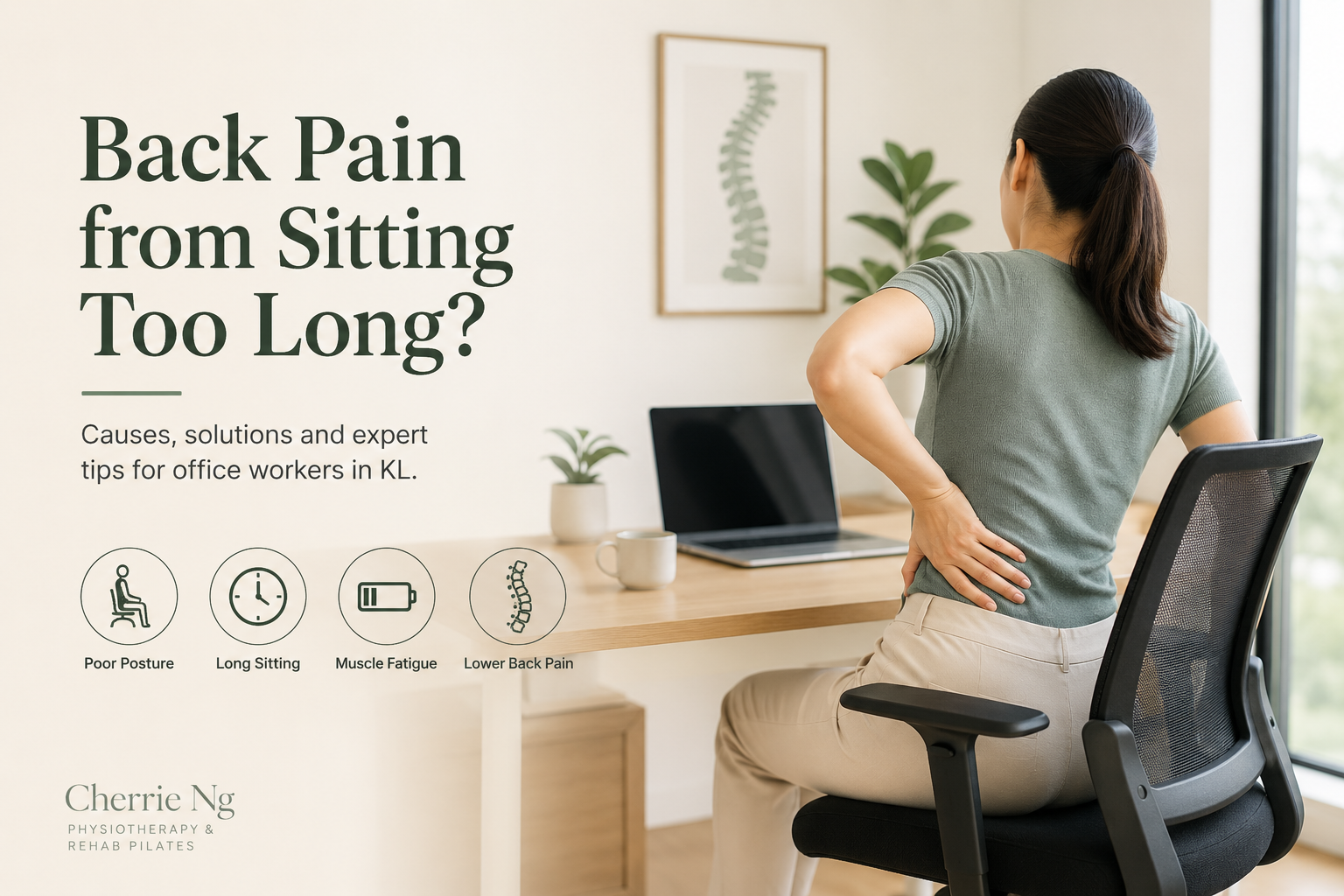
Back pain from sitting too long is common among office workers, but the problem is not always that your posture is “bad.” Often, the back becomes sensitive because it stays in one position for too long, lacks enough movement variety, or is not prepared for the loads you ask from it after work.
In Kuala Lumpur and Selangor, physiotherapy can help you understand whether your sitting-related back pain is mainly linked to work setup, movement habits, strength, mobility, stress, sleep, training load or another factor that needs assessment.
Why sitting can irritate the back
Sitting is not harmful by itself. The body is designed to tolerate many positions, including sitting. Problems often start when one position becomes the main position for many hours, day after day.
Long sitting may contribute to back discomfort when:
- You sit for long blocks without changing position
- Your chair, desk or screen setup makes movement awkward
- You feel stiff when standing up after work
- You go from sitting all day to heavy gym, sport or housework
- Stress or deadlines make the body tense and guarded
- You have reduced hip, spine or upper back mobility
- Back pain has made you afraid to bend or move normally
This is why simply buying a new chair does not always solve the issue. Ergonomics can help, but your body still needs movement, strength and load tolerance.
Common patterns office workers notice
Office workers with sitting-related back pain often describe:
- Lower back tightness after a few hours at the desk
- Pain when standing up from a chair
- Discomfort during long drives or meetings
- Morning stiffness after the previous day of sitting
- Back fatigue by the end of the workday
- Pain that improves briefly after stretching but returns
- Symptoms that flare after sudden exercise on weekends
The same pattern can have different contributors. One person may need more movement breaks. Another may need hip strength, better lifting confidence, desk setup changes, sleep support, Pilates-based control work or medical screening.
What a physiotherapy assessment may look at
A physiotherapy assessment usually starts with your symptom story: how long you sit, where you feel pain, what makes it better or worse, whether symptoms spread, and how the pain affects work, sleep, exercise and daily tasks.
Cherrie may then look at posture, spinal and hip movement, strength, walking, balance, breathing, bending, lifting habits, desk setup and how your symptoms respond to movement.
The goal is not to force a perfect sitting posture. It is to find practical changes that fit your workday and help your back tolerate sitting, standing, lifting and exercise more confidently.
What may help during the workday
If symptoms are mild and not worsening, small changes may help reduce repeated irritation:
- Change position before discomfort builds too much
- Stand up or walk briefly every 30 to 60 minutes if possible
- Keep frequently used items within easy reach
- Adjust screen height so your neck and back do not stay twisted
- Use a chair setup that supports relaxed, changeable sitting
- Add gentle hip, back or shoulder movement between meetings
- Build strength gradually outside work instead of only stretching
The best position is usually the next position. You do not need to sit perfectly still and upright all day; you need enough options to move and reset.
Where rehab Pilates may fit
Rehab Pilates may help office workers by improving breathing, trunk control, hip strength, spinal mobility and awareness of unnecessary tension. It can also provide a guided way to rebuild confidence if your back feels stiff, guarded or sensitive after long sitting.
Pilates should still match your symptoms. If sitting-related back pain is sharp, spreading into the leg, worsening, or affecting daily function, a physiotherapy assessment is a safer first step than joining a general class and hoping the exercises fit.
When to seek assessment or medical care
Consider physiotherapy if back pain from sitting lasts more than a few days, keeps returning, affects work or sleep, limits walking or exercise, spreads into the leg, or makes you unsure which movements are safe.
Seek medical care promptly if pain follows major trauma, worsens quickly, comes with fever, unexplained weight loss, new numbness or weakness, loss of bladder or bowel control, chest pain, severe abdominal pain, or symptoms that feel unusual for you.
Related reading
- How to Build a Workplace Movement-Break Programme Employees Can Actually Use
- Neck and Shoulder Pain from Desk Work: What You Can Do
- Core Strength for Back Pain: What People Often Get Wrong
- Lower Back Pain Physiotherapy in KL: Common Causes and Next Steps
- Why Does My Back Hurt in the Morning?
- Pilates for Posture Correction: What It Can and Cannot Do
- When Should You See a Physiotherapist in Kuala Lumpur?
- Desk Ergonomics in KL: Simple Setup Tips for Neck and Back Strain
- Standing Desk Back Pain: Why Standing More Is Not Always Better
- Office Stretching Routine: Simple Movement Breaks for Desk Workers
If you are in Kuala Lumpur or Selangor and back pain from sitting is affecting your workday, you can WhatsApp Cherrie to ask whether physiotherapy, rehab Pilates or posture support may be suitable.
Foundational clinical sources and further reading
These authoritative sources provide general background relevant to this topic; they are not claim-by-claim citations. This content is educational and does not replace individual assessment, diagnosis or emergency medical care.
- What is physiotherapy? — World Physiotherapy
- Musculoskeletal health — World Health Organization
- Low back pain and sciatica in over 16s: assessment and management (NG59) — National Institute for Health and Care Excellence