Back Pain
Lower Back Pain Physiotherapy in KL: Common Causes and Next Steps
Learn common lower back pain patterns, when to get assessed, and how physiotherapy in KL may support safer movement and recovery.
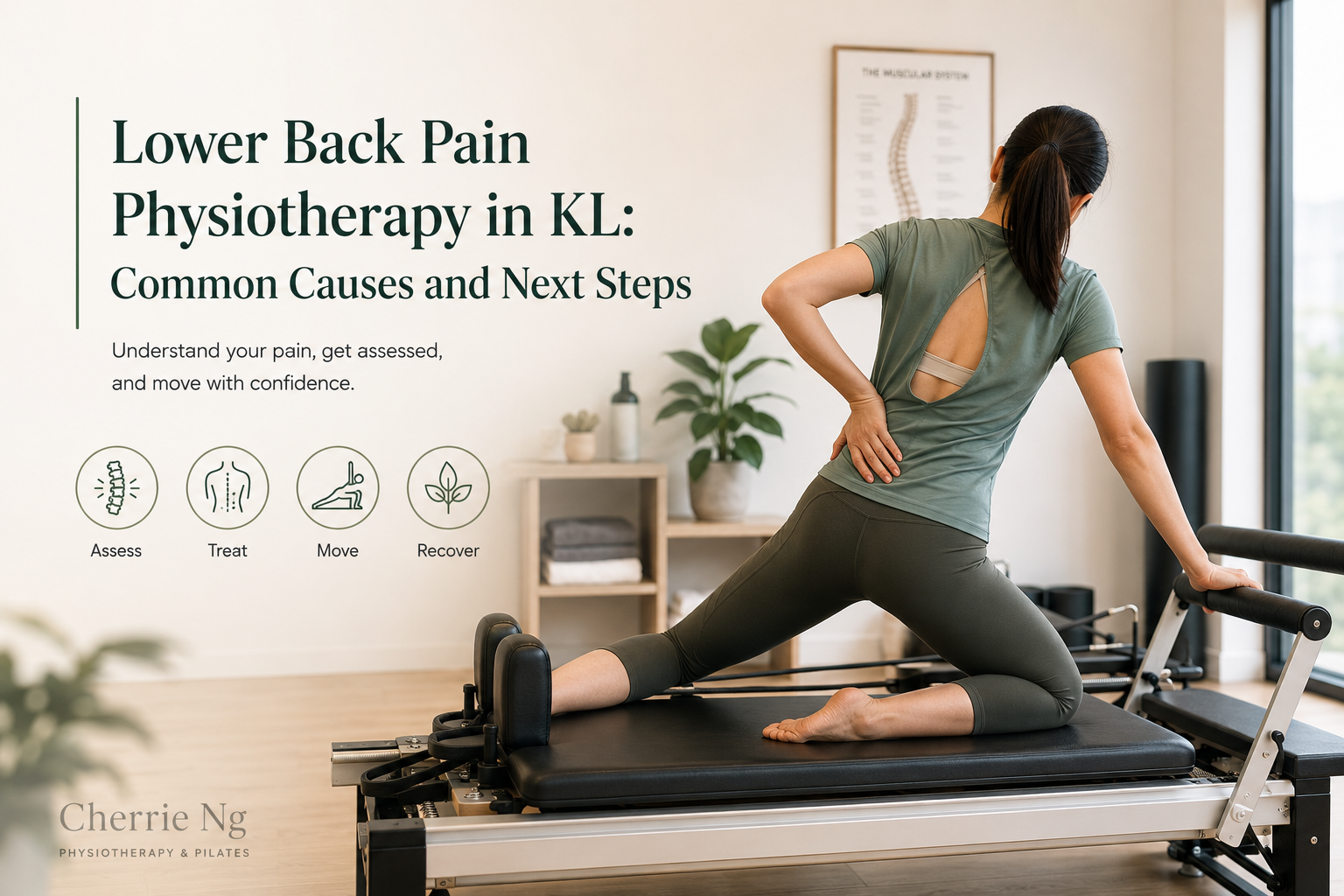
Lower back pain physiotherapy in KL usually starts with understanding why your back is sensitive, what movements are difficult, and what your daily routine demands. The goal is not simply to rest until pain disappears, but to find a safe way to move, build confidence and reduce the chance of repeated flare-ups.
Lower back pain can come from many factors: long sitting, sudden lifting, a new workout, reduced hip strength, stiffness, stress, poor sleep, previous injury or doing too much too soon. A physiotherapy assessment can help clarify which factors matter most for you.
Common lower back pain situations
Many people seek physiotherapy when lower back pain begins affecting work, sleep, exercise or daily tasks. Common patterns include:
- Pain after long sitting or driving
- Morning stiffness that improves after moving
- Pain when bending, lifting or carrying
- Discomfort after gym training or Pilates
- Back tightness after desk work
- Pain that keeps returning every few weeks or months
- Fear of movement after a previous flare-up
- Back pain with hip, buttock or leg symptoms
The same description can still mean different things for different people. For example, two people may both say their back hurts when bending, but one may need strength and load management while another may need mobility, nerve screening or work-habit changes.
What a physiotherapy assessment may look at
A lower back pain assessment usually begins with your symptom story: when it started, what makes it better or worse, whether symptoms spread, and how it affects your life.
Cherrie may then look at movement, posture, hip and spine mobility, strength, balance, walking, breathing strategy, lifting habits and how your symptoms respond to different positions.
Assessment is especially useful when you feel unsure about what is safe. It can help separate movements that are temporarily sensitive from movements that truly need to be avoided.
What physiotherapy may include
Depending on your back pain, physiotherapy may include:
- Education about pain, movement and activity pacing
- Gentle mobility exercises
- Core, hip and leg strengthening
- Movement retraining for bending, lifting or sitting
- Manual therapy when appropriate
- Desk setup and posture advice
- Gradual return to Pilates, gym, running or sport
- A simple home exercise plan
The plan should match your current tolerance. Starting too aggressively can flare symptoms, while avoiding movement for too long can reduce confidence and strength.
Where rehab Pilates may fit
Rehab Pilates can be helpful for some people with lower back pain, especially when the goal is to rebuild movement control, strength, breathing coordination and confidence.
It is not the first answer for every back pain situation. If pain is new, sharp, spreading, worsening or linked to injury, a physiotherapy assessment should usually come before joining a general Pilates class.
When appropriate, physiotherapist-led Pilates can help bridge the gap between pain management and returning to normal exercise.
When to seek assessment or medical care
Consider physiotherapy if lower back pain lasts more than a few days, keeps returning, affects work or sleep, limits walking, or makes you unsure which movements are safe.
Seek medical care promptly if pain follows major trauma, worsens quickly, comes with fever, unexplained weight loss, new numbness or weakness, loss of bladder or bowel control, chest pain, sudden severe abdominal pain, or symptoms that feel unusual for you.
Related reading
- Slipped Disc Physiotherapy in KL: Assessment, Exercise and When to Seek Medical Care
- Core Strength for Back Pain: What People Often Get Wrong
- Is Walking Good for Lower Back Pain?
- Back Pain Red Flags: When to Seek Medical Care Quickly
- Back Pain from Sitting Too Long: A Guide for Office Workers
- Standing Desk Back Pain: Why Standing More Is Not Always Better
- Why Does My Back Hurt in the Morning?
- Sports Injury Rehab in KL: Why Rest Alone Is Usually Not Enough
- Pilates for Back Pain in KL: When It Helps and When to Get Assessed
- Sciatica Physiotherapy in KL: Symptoms, Exercises and When to Seek Help
- When Should You See a Physiotherapist in Kuala Lumpur?
- Gym Injury Physiotherapy: When to Modify Training Instead of Stopping
- Scoliosis Physiotherapy in Malaysia: What Adults Should Know
- Heat or Ice for Pain: A Physiotherapist’s Practical Guide
If you are in Kuala Lumpur or Selangor and lower back pain is affecting your work, sleep or exercise, you can WhatsApp Cherrie to ask whether physiotherapy, rehab Pilates or home-based support may be suitable.
Foundational clinical sources and further reading
These authoritative sources provide general background relevant to this topic; they are not claim-by-claim citations. This content is educational and does not replace individual assessment, diagnosis or emergency medical care.
- What is physiotherapy? — World Physiotherapy
- Musculoskeletal health — World Health Organization
- Low back pain and sciatica in over 16s: assessment and management (NG59) — National Institute for Health and Care Excellence