Local SEO
Physiotherapist in Petaling Jaya: Mobile Rehab and Pilates-Informed Care
Looking for a physiotherapist in Petaling Jaya? Learn about mobile assessment, home rehabilitation, back-pain support and Pilates-informed care.
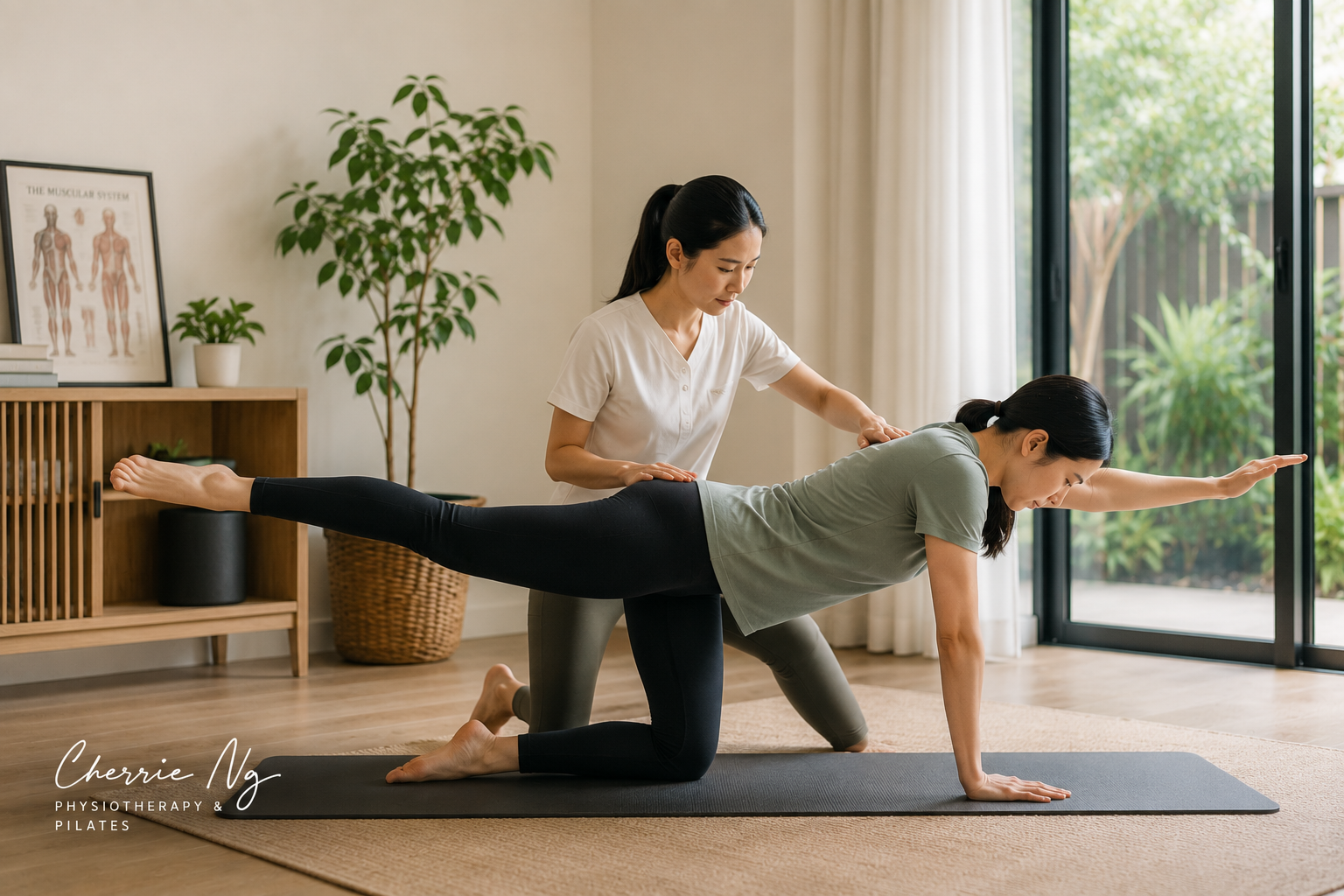
If you are looking for a physiotherapist in Petaling Jaya, Cherrie offers practitioner-led mobile physiotherapy and Pilates-informed rehabilitation, with each visit considered according to your needs, exact address and travel arrangements. Support may be suitable for pain affecting daily activity, recovery after injury or surgery, a gradual return to exercise, or movement concerns after pregnancy.
This page describes a mobile service across selected PJ locations. It is not a walk-in clinic listing or a claim that Cherrie has a permanent treatment room in Petaling Jaya. Availability is confirmed case by case before booking.
Who may consider physiotherapy in Petaling Jaya?
It may be useful to discuss an assessment if you:
- Have back, neck, shoulder, hip, knee or ankle symptoms affecting daily life
- Are returning to gym training, running, Pilates or sport after injury
- Need a rehabilitation plan after surgery, with medical precautions confirmed
- Find walking, stairs, balance, transfers or household tasks more difficult
- Want exercises adapted to your home or existing equipment
- Have postnatal movement concerns and are unsure how to restart activity
- Are uncertain whether physiotherapy, Pilates-informed exercise or medical review should come first
These examples do not identify a diagnosis. Similar symptoms can require different approaches, so the starting point should reflect your history, examination, goals and relevant medical information.
What happens during a mobile physiotherapy assessment?
The first session normally begins with a conversation. Cherrie may ask:
- When the concern began and how it has changed
- Which movements, positions or activities affect symptoms
- Whether symptoms spread, disturb sleep or change strength and confidence
- About previous injuries, operations, diagnoses and current medical advice
- What your work, exercise, caregiving and household routines involve
- Which activity you most want to regain
Relevant physical checks may include walking, balance, joint movement, strength, posture, stairs, squatting, reaching, lifting or another task connected to your goal. Not everyone needs the same tests.
Rehabilitation is intended to support function in the context of the person and their environment. The World Health Organization describes rehabilitation as highly person-centred and notes that it may be delivered in community settings such as a person’s home or workplace. World Health Organization rehabilitation fact sheet
What may a Petaling Jaya home session include?
The plan depends on the assessment and may include:
- Education about symptoms and appropriate activity
- Mobility, strengthening or balance exercises
- Walking, stair or transfer practice
- Movement coaching for work, lifting, gym or sport
- Review of a chair, desk, bed or home layout when relevant
- Manual therapy when appropriate and agreed
- Pilates-informed breathing, control and progressive exercise
- A manageable home programme for practice between sessions
The purpose is not to give every person the same routine. Exercise choice, load and progression should reflect current ability, symptom response and the activities that matter to you.
Why can assessment at home be useful?
A home visit allows the session to consider the environment where a difficulty actually occurs. This may include:
- The stairs you need to climb each day
- The chair or desk used for work
- The space available for walking or exercise
- The bed, floor or furniture involved in transfers
- The weights, bands or Pilates equipment you already own
- How family or caregiving responsibilities affect the plan
This context can make recommendations more practical. However, home care is not automatically better than clinic care. The appropriate setting depends on privacy, safety, space, equipment and whether a more specialised examination is required.
Can physiotherapy support lower-back pain?
For some people with low-back pain, physiotherapy may include tailored self-management advice and exercise selected around individual needs, preferences and capabilities. NICE recommends encouraging normal activity and considering exercise appropriate to the person rather than relying on a single standard programme. NICE guideline NG59
Manual therapy may be considered in some cases, but NICE recommends using it only within a treatment package that includes exercise. This is why a useful plan usually includes what you can do between appointments rather than only what happens during the session. NICE guideline NG59
Back symptoms have different presentations. Online information cannot determine the cause, and new, worsening or unexplained symptoms need appropriate screening.
What does “Pilates-informed care” mean?
Pilates-informed rehabilitation means that suitable Pilates principles may be used within an individual plan. Depending on your assessment, this might involve breathing coordination, trunk and hip control, mobility, balance or gradually increasing exercise load.
It does not mean every person needs a reformer, a fixed Pilates sequence or a promise of posture correction. Some people need physiotherapy screening before exercise; others may be medically stable and ready for a more exercise-focused session.
If you have a mat, resistance bands, small weights or Pilates equipment at home, mention them when enquiring. Cherrie can decide whether the equipment fits the goal and current stage.
Can mobile care support a postnatal return to movement?
A postnatal session may consider feeding and carrying positions, back or pelvic discomfort, breathing, abdominal and pelvic-floor symptoms, current medical advice and the activities you hope to restart. Some concerns require a pelvic-health specialist or medical review, particularly when an internal pelvic-floor assessment or obstetric care is needed.
WHO’s postnatal-care guideline emphasises consistent information, reassurance and support while recognising the needs and circumstances of each woman and baby. WHO recommendations on maternal and newborn care for a positive postnatal experience
Mobile physiotherapy should complement—not replace—appropriate postnatal medical care. The plan should be adapted to the birth history, healing, symptoms, energy and advice already provided by the maternity team.
How are Petaling Jaya visits arranged?
PJ covers a wide area, so travel feasibility and timing are confirmed individually. When you enquire, share:
- Your neighbourhood, residence, office or nearest landmark
- Your main symptom or rehabilitation goal
- Whether there was an injury, operation, pregnancy or medical diagnosis
- Relevant reports, precautions or post-surgery instructions
- Your preferred days or time range
- Parking, visitor registration, lift and security requirements
- Whether you want to use a home area, shared facility or office space
These details help Cherrie plan travel and prepare for the session. Being in Petaling Jaya does not guarantee that every address or requested time can be accommodated.
How should you prepare for a home visit?
Wear clothing that allows the relevant area to move. If possible, prepare a clear space where you can stand, walk a few steps and use a stable chair. A mat or place to lie down may be useful depending on the concern.
Keep medical reports, scan summaries, medication information and surgical or postnatal instructions available when relevant. You do not need to purchase exercise equipment before the first assessment.
When should medical care come first?
Routine physiotherapy should not replace urgent medical care. For back pain, seek urgent help if symptoms include pain, tingling, weakness or numbness in both legs; loss of feeling around the genitals or anus; bladder or bowel changes; chest pain; or pain following a serious accident. Severe pain that begins suddenly, worsens quickly or comes with feeling feverish or generally unwell also needs prompt medical advice. NHS back-pain guidance
During pregnancy or in the year after delivery, urgent warning signs include a severe or worsening headache, fainting, trouble breathing, chest pain, heavy bleeding, fever, severe abdominal pain, or severe swelling, redness or pain in one leg or arm. Seek immediate medical care if these occur. CDC urgent maternal warning signs
If you have major trauma, feel seriously unwell or believe the situation may be an emergency, contact an appropriate medical service instead of booking a routine rehabilitation session.
Frequently asked questions
Is there a walk-in physiotherapy clinic in Petaling Jaya?
This page does not represent a walk-in clinic or permanent PJ treatment room. Cherrie provides mobile sessions, with the address and travel arrangements confirmed before booking.
Which parts of Petaling Jaya are covered?
Coverage is checked from the exact address or nearest landmark because travel time, traffic, parking and building access vary. Share your location through WhatsApp before assuming a visit is available.
Can the session take place in a condominium gym?
Potentially, if the building permits it and the space provides suitable privacy, safety and equipment. Confirm visitor access and facility rules before booking.
Do I need Pilates equipment?
No. An assessment can often begin with clear floor space and a stable chair. Existing bands, weights or Pilates equipment can be reviewed before use.
How many sessions will I need?
There is no responsible fixed number without assessment. Frequency depends on the concern, medical context, goals, response and ability to practise independently.
Related reading
- Home Physiotherapy in Selangor: Who It Helps and How Sessions Work
- Lower Back Pain Physiotherapy in KL: Common Causes and Next Steps
- Post-Natal Physiotherapy in KL: A Gentle Return to Movement
Sources and clinical references
- World Health Organization: Rehabilitation
- NICE guideline NG59: Low back pain and sciatica
- WHO recommendations on maternal and newborn care for a positive postnatal experience
- NHS: Back pain
- CDC: Urgent maternal warning signs and symptoms
If you are looking for a physiotherapist in Petaling Jaya, WhatsApp Cherrie with your exact location, main concern and the activity you want help with. She can first clarify whether a mobile physiotherapy or Pilates-informed session is suitable and whether travel can be arranged.
Foundational clinical sources and further reading
These authoritative sources provide general background relevant to this topic; they are not claim-by-claim citations. This content is educational and does not replace individual assessment, diagnosis or emergency medical care.
- What is physiotherapy? — World Physiotherapy