Post-Natal
Post-Natal Physiotherapy in KL: A Gentle Return to Movement
A careful guide to post-natal physiotherapy in KL, including assessment, pelvic floor support, core recovery and safe return to exercise.
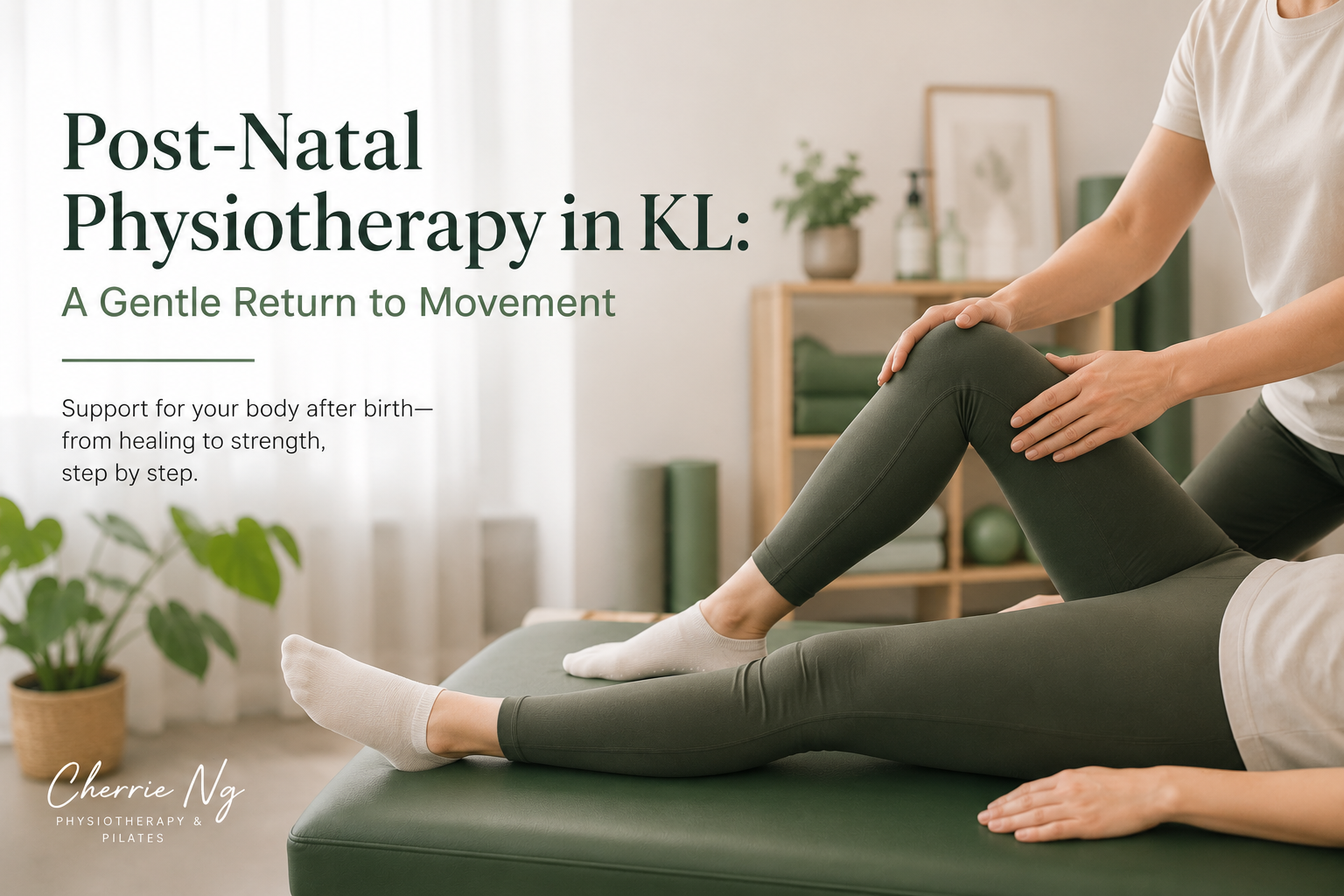
Post-natal physiotherapy can support a gentle return to movement after birth by helping you understand your breathing, pelvic floor, abdominal wall, posture, strength and daily loading. In Kuala Lumpur and Selangor, it may be especially helpful if you are unsure how to restart exercise, manage back or pelvic discomfort, or care for your body while feeding, carrying and recovering.
There is no single “right” timeline for every mother. A physiotherapy assessment can help you choose a safe starting point based on your birth experience, symptoms, sleep, energy, medical advice and goals.
Common post-natal concerns
Many new mothers seek physiotherapy because the body feels different after pregnancy and birth. Common concerns include:
- Lower back, hip or pelvic discomfort
- Neck, shoulder or wrist strain from feeding and carrying
- Heaviness, pressure or leaking during movement
- Difficulty reconnecting with the deep core or pelvic floor
- Abdominal separation concerns, often called diastasis recti
- C-section scar tightness or sensitivity after the wound has healed
- Feeling unsure about Pilates, gym training, running or lifting
- Fatigue and stiffness from long feeding positions or interrupted sleep
These symptoms are common, but they should not be dismissed as something you simply have to tolerate. The right first step depends on what you feel, how long it has been since birth, and whether symptoms are improving, staying the same or getting worse.
What a post-natal physiotherapy assessment may look at
A post-natal physiotherapy session usually starts with a conversation about your pregnancy, birth, current symptoms, daily routine and goals. Cherrie may ask about pain, bleeding, wound healing, feeding positions, sleep, carrying tasks, bladder or bowel symptoms, and what activities you want to return to.
The movement assessment may look at breathing, rib cage movement, posture, spinal and hip mobility, abdominal wall tension, pelvic control, strength, balance, walking and how you manage common tasks such as getting up, lifting a baby carrier or carrying your child.
If pelvic floor symptoms are present, the session may include education and screening questions. Some symptoms may need a pelvic health physiotherapist or medical review, especially when internal pelvic floor assessment is needed. A careful physiotherapy session should help you understand the next appropriate step rather than pushing through uncertainty.
How physiotherapy may support recovery
Post-natal physiotherapy often focuses on rebuilding confidence gradually. Depending on your situation, support may include:
- Breathing and relaxation strategies to reduce unnecessary bracing
- Gentle pelvic floor and deep core awareness
- Mobility work for the back, hips, ribs, neck and shoulders
- Strengthening for glutes, legs, upper back and arms
- Posture and setup ideas for feeding, carrying and desk work
- Gradual return to Pilates, gym training or walking
- Scar mobility education once a C-section wound is fully healed and cleared
- Pacing advice so recovery fits real life with a baby
The aim is not to rush back to a pre-pregnancy routine. It is to build enough control, strength and tolerance for the life you are living now.
When can you start moving again?
In the early weeks, many mothers begin with gentle breathing, short walks and comfortable daily movement if they have been medically cleared and symptoms allow. More structured strengthening, Pilates or higher-impact exercise usually needs a more gradual approach.
Your starting point may be different if you had a C-section, assisted delivery, significant tearing, pelvic girdle pain, ongoing bleeding, dizziness, infection symptoms, high blood pressure concerns, or pelvic floor symptoms such as leaking, heaviness or pressure.
Rather than focusing only on a calendar date, it is safer to look at how your body responds. Exercise should not increase bleeding, create pelvic heaviness, worsen pain, trigger leaking, or leave you significantly flared the next day.
When to seek assessment or medical care
Consider a post-natal physiotherapy assessment if you have pain that is not settling, pelvic pressure or heaviness, leaking, difficulty returning to exercise, abdominal separation concerns, C-section scar tightness after healing, or uncertainty about what is safe.
Seek medical care promptly if you have heavy bleeding, fever, wound redness or discharge, calf pain or swelling, chest pain, shortness of breath, severe headache, dizziness, fainting, sudden worsening pain, new numbness or weakness, or symptoms that feel unusual for you.
Related reading
- Scar Mobility After Surgery: When and How Should Movement Progress?
- Back Pain After Pregnancy: Why It Happens and What Helps
- Pelvic Floor Physiotherapy Basics: When to Ask for Support
- Diastasis Recti Physiotherapy: What New Mothers Should Know
- Postnatal Pilates in KL: How to Restart Safely After Birth
- Physiotherapist in Petaling Jaya: Mobile Rehab and Pilates-Informed Care
- What Happens During Your First Physiotherapy Session?
- Pilates for Back Pain in KL: When It Helps and When to Get Assessed
- Lower Back Pain Physiotherapy in KL: Common Causes and Next Steps
- Home Physiotherapy in Kuala Lumpur: What to Expect
If you are in Kuala Lumpur or Selangor and want a gentle, practical starting point after birth, you can WhatsApp Cherrie to ask whether post-natal physiotherapy, rehab Pilates or home-based support may be suitable.
Foundational clinical sources and further reading
These authoritative sources provide general background relevant to this topic; they are not claim-by-claim citations. This content is educational and does not replace individual assessment, diagnosis or emergency medical care.
- What is physiotherapy? — World Physiotherapy
- WHO guidelines on physical activity and sedentary behaviour — World Health Organization