Physiotherapy Basics
What Happens During Your First Physiotherapy Session?
A practical guide to what to expect in your first physiotherapy session in KL, from assessment to treatment planning and home exercises.
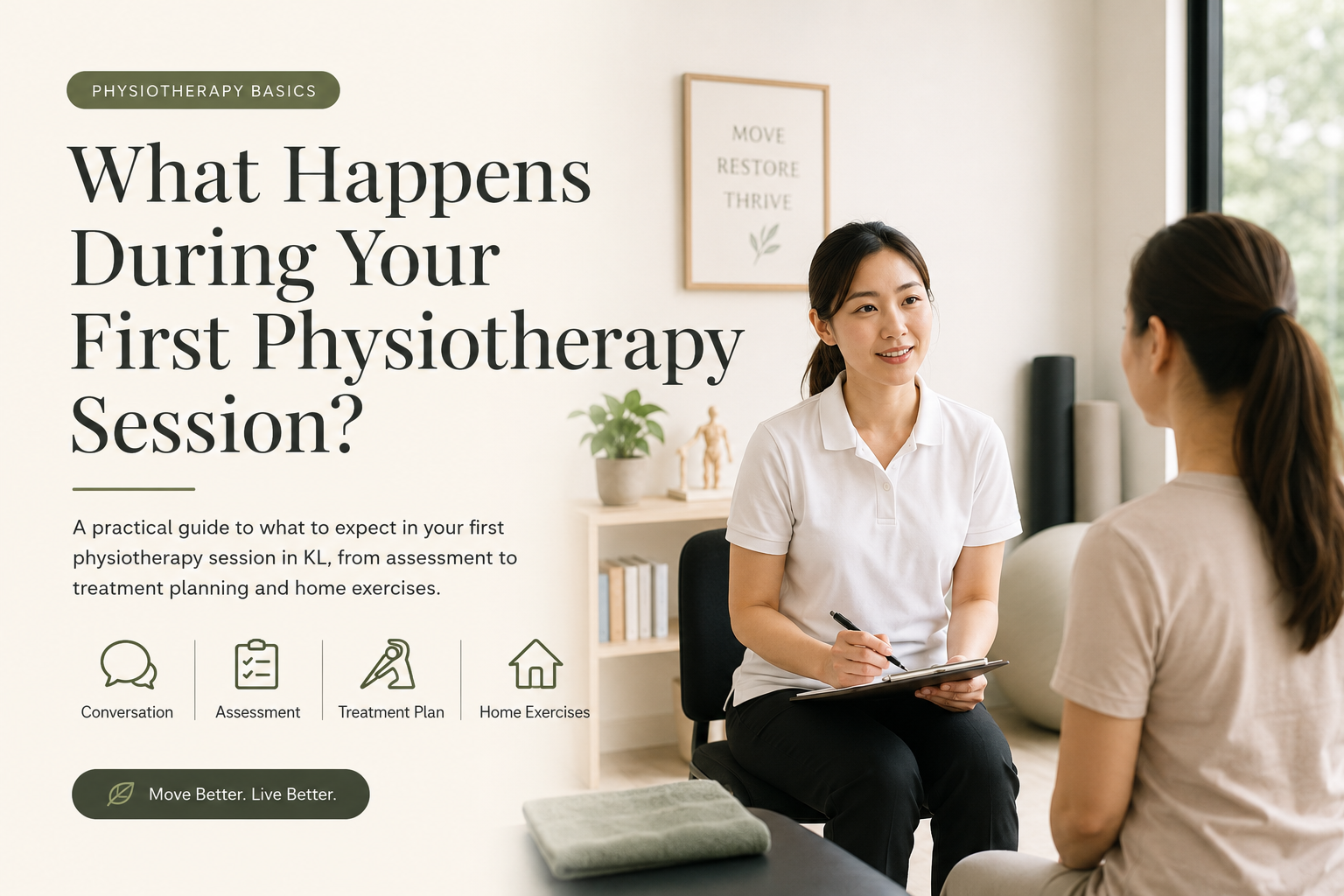
Your first physiotherapy session usually starts with a conversation, followed by movement assessment, simple tests where appropriate, an explanation of what may be contributing to your symptoms, and a plan for what to do next. It is not only about treatment on the day; it is also about understanding your body clearly enough to move forward safely.
If you are booking physiotherapy in Kuala Lumpur for pain, injury, posture concerns, stiffness, weakness or return to exercise, the first session helps Cherrie understand your goals and decide whether physiotherapy, rehab Pilates, home exercises, medical review or another care pathway is most suitable.
The session usually starts with your story
A physiotherapy session often begins with questions about what you are experiencing. This may include:
- Where you feel pain, stiffness, weakness or discomfort
- When the symptoms started and whether they are changing
- What makes symptoms better or worse
- Your work setup, daily routine and exercise habits
- Past injuries, surgery, medical history or current health conditions
- Your goals, such as walking better, returning to Pilates, sitting comfortably, exercising safely or managing daily tasks
This part matters because the same painful area can have different causes and different next steps. A sore back after a sudden fall is not assessed the same way as recurring desk-related back tension.
What the assessment may include
After the discussion, Cherrie may look at how you move. The assessment may include posture, walking, balance, joint movement, strength, flexibility, breathing pattern, coordination, control and how your symptoms respond to different positions or tasks.
For example, if you have knee pain, the session may look at stairs, squatting, hip strength, ankle movement and how you load the leg. If you have neck or shoulder discomfort, the assessment may include upper back mobility, shoulder blade control, desk posture habits and whether symptoms spread into the arm.
The goal is not to make the session feel like a test you can pass or fail. It is to find a safe starting point and understand what your body is ready for today.
Will there be treatment in the first session?
Often, yes, but it depends on your condition and how your body responds during assessment. Treatment may include education, movement retraining, gentle mobility work, strengthening, manual therapy, posture advice, pacing strategies, breathing work, rehab Pilates principles or a simple home exercise plan.
Some people expect physiotherapy to be only massage or manual treatment. Hands-on work can be useful in the right situation, but it is usually only one part of the plan. A good session should also help you understand what to do between appointments, because recovery and confidence are built through daily choices and gradual progression.
What you may receive after the session
By the end of the first session, you should have a clearer idea of:
- What may be contributing to your symptoms
- Which movements are currently comfortable or sensitive
- What activities may need temporary modification
- Which exercises or habits to practise first
- Whether follow-up sessions, rehab Pilates, home physiotherapy or medical review may be appropriate
The plan does not need to be complicated. In many cases, a few targeted actions done consistently are more useful than a long exercise list that is difficult to maintain.
How to prepare for your first physiotherapy session
Wear comfortable clothing that allows you to move. If the concern is related to a specific activity, such as running, gym training, Pilates, lifting, stairs or desk work, it can help to mention that during the appointment.
You may also bring medical reports, scans, referral letters or exercise videos if you have them. These are helpful, but not always required. A physiotherapy assessment can still begin with your history, symptoms and movement.
When physiotherapy may not be the first step
Some symptoms need medical care before or alongside physiotherapy. Seek medical attention promptly if pain follows major trauma, worsens quickly, comes with fever, unexplained weight loss, new numbness or weakness, loss of bladder or bowel control, chest pain, sudden severe headache, dizziness, fainting, or symptoms that feel unusual for you.
If anything in the first session suggests that medical review is more appropriate, a physiotherapist should guide you accordingly.
Related reading
- Physiotherapy Cost in KL: What Affects Session Fees?
- Physiotherapist Near Me in KL: How to Choose the Right Service
- On-Site Physiotherapy for Offices in KL: What HR Teams Should Know
- Corporate Wellness Workshop vs On-Site Physiotherapy: Which Does Your Team Need?
- Post-Surgery Physiotherapy: When Should You Start Rehab?
- When Should You See a Physiotherapist in Kuala Lumpur?
- What to Prepare Before a Physiotherapy Assessment
- Home Physiotherapy vs Clinic Physiotherapy: Which Is Better for Your Situation?
- Home Physiotherapy in Kuala Lumpur: What to Expect
- Physiotherapy Home Visit Cost in KL: What Affects Pricing?
- Manual Therapy vs Exercise Rehab: Why Both May Matter
- Should Exercises Hurt During Rehab? How to Understand Pain Signals
- How Often Should You Do Physiotherapy Sessions?
- Home Exercise Programs in Physiotherapy: How to Practise Safely Between Sessions
- What Should You Wear to Physiotherapy? A Practical Guide
If you are in Kuala Lumpur or Selangor and are unsure what to expect from your first physiotherapy session, you can WhatsApp Cherrie and share your main concern before booking.
Foundational clinical sources and further reading
These authoritative sources provide general background relevant to this topic; they are not claim-by-claim citations. This content is educational and does not replace individual assessment, diagnosis or emergency medical care.
- What is physiotherapy? — World Physiotherapy