Post-Surgery
Post-Surgery Physiotherapy: When Should You Start Rehab?
Learn when post-surgery physiotherapy may begin, what affects timing, what early rehab includes and which warning signs need medical review.
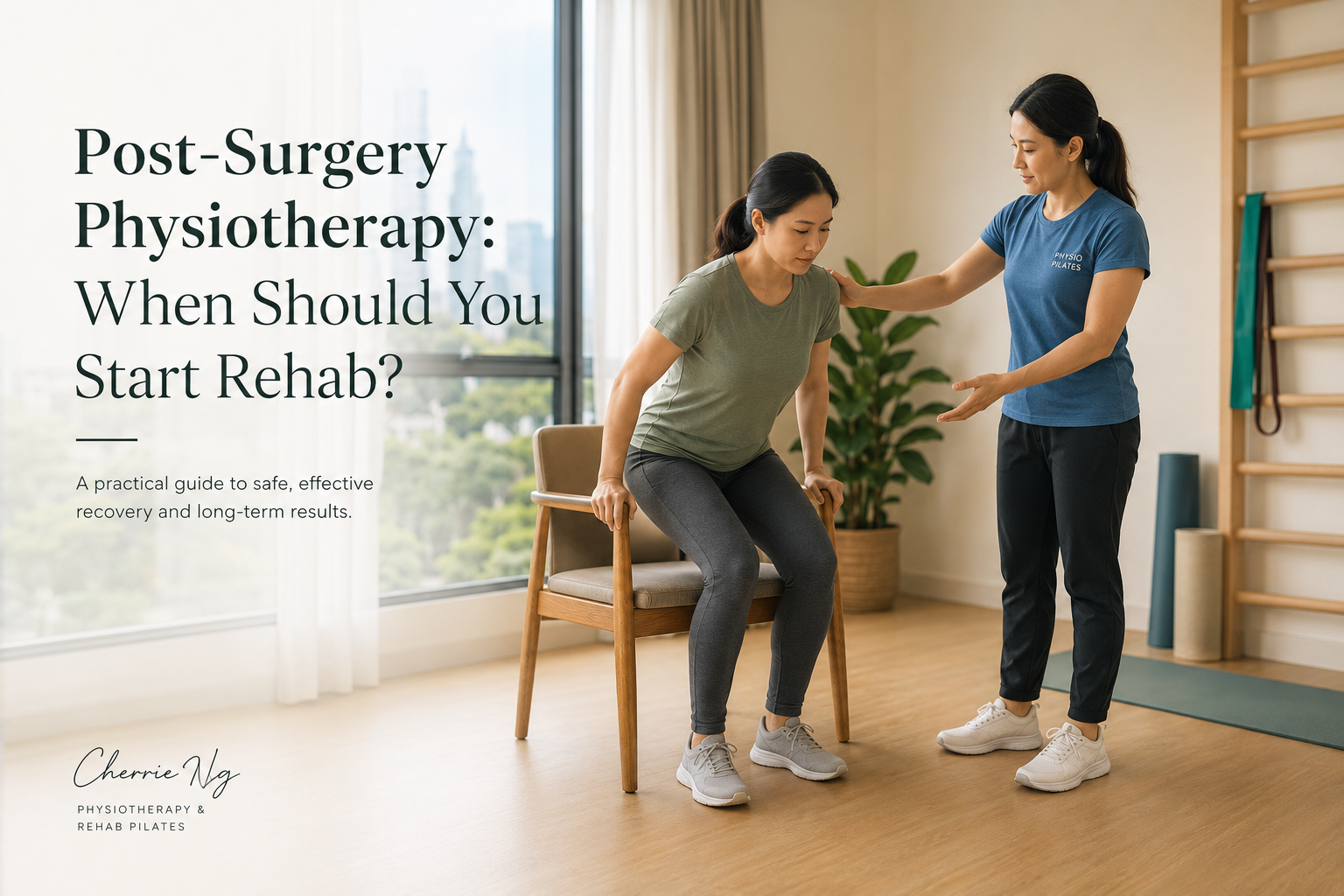
Post-surgery physiotherapy may begin as early as the hospital stay for some operations, while other people start after discharge or at a surgeon-approved follow-up. The safest answer is not one fixed number of days: timing depends on the operation, repair or implant, weight-bearing status, movement restrictions, wound condition, complications and your surgeon’s instructions.
“Start early” usually means beginning the right level of movement at the right stage—perhaps breathing, circulation exercises, bed mobility, standing or short assisted walks. It does not mean ignoring pain, removing a brace, loading repaired tissue or starting strengthening without clearance.
Why is there no universal start date?
“Surgery” covers very different procedures. An arthroscopy, joint replacement, fracture fixation, tendon repair, abdominal operation and spinal operation do not share the same tissue-healing demands or precautions. Even two people with the same operation may have different instructions because of surgical findings, health conditions or complications.
The NICE guideline on perioperative care recommends enhanced recovery programmes for elective major or complex surgery, with preoperative, intraoperative and postoperative components. This supports coordinated rehabilitation around surgery, but it is not a universal exercise prescription.
Before progressing rehab, clarify:
- What procedure was performed and on what date?
- Is weight bearing full, partial, touch-down or restricted?
- Are there limits on joint range, bending, lifting, pushing or pulling?
- Must a brace, sling, splint or walking aid be used, and for how long?
- Are there wound, drain or dressing precautions?
- When is the next surgeon review, and what milestones matter before progression?
If these instructions are unclear, contact the surgical team rather than guessing from another person’s recovery plan.
What can early physiotherapy include?
The NHS guide to care after surgery explains that some patients see a physiotherapist before leaving hospital and receive advice about exercises and equipment. Depending on the operation and medical status, this early phase may focus on:
- Comfortable breathing and circulation movements prescribed by the hospital team
- Rolling, getting in and out of bed, and transferring to a chair
- Standing and walking with the correct aid and weight-bearing status
- Safe use of stairs where needed for discharge
- Maintaining movement in areas that are allowed to move
- Understanding precautions, pacing and the home programme
- Planning equipment, caregiver support and the home environment
This is already rehabilitation, even if there are no resistance bands or gym exercises yet. The aim is to make the next necessary task safer and more manageable while respecting the operation.
The NHS also advises trying to move around as soon as possible while following the doctor’s advice on becoming active again. The wording matters: movement should be medically appropriate and guided, not forced through uncertainty. NHS recovery guidance
What happens after discharge?
After discharge, physiotherapy often shifts from basic safety towards rebuilding function. A first community or home session may review:
- The discharge summary, operation note or surgeon’s rehabilitation protocol
- Pain, swelling, wound-related instructions and medication considerations
- Walking aid height and technique
- Transfers, stairs, bathing access and essential home tasks
- Allowed joint movement and muscle activation
- Strength, balance and endurance within current precautions
- Your goals for work, driving, caregiving, exercise or sport
Cherrie can use this information to choose a practical starting point for musculoskeletal rehabilitation in Kuala Lumpur or selected Selangor areas. She does not replace the surgeon or hospital team, change surgical restrictions, manage an unhealed wound, or provide acute inpatient care.
Is earlier always better?
Earlier is only better when the activity suits the operation and the person. A 2023 systematic review of early mobilisation after gastrointestinal surgery found substantial variation among procedures and mobilisation protocols. In randomised trials, early mobilisation alone did not significantly reduce overall complications or hospital stay, although it may have supported earlier gastrointestinal recovery. The authors concluded that evidence did not support one specific early-mobilisation protocol as an isolated intervention.
That is a useful caution against slogans. Rehab works within a larger recovery plan that may include medical monitoring, pain management, nutrition, wound care, equipment, family support and procedure-specific progression.
A practical way to think about rehabilitation stages
These are broad stages, not a calendar that overrides your surgeon’s plan:
- Protect and move safely: follow restrictions, practise transfers, use walking aids correctly and maintain allowed movement.
- Restore everyday function: improve walking tolerance, joint movement and basic strength while monitoring symptoms and wound guidance.
- Build capacity: progress resistance, balance, stairs, longer walking and meaningful daily tasks when cleared.
- Return to higher demand: prepare for work, lifting, driving, gym training, running or sport using relevant criteria rather than time alone.
Progress is not always linear. Swelling, fatigue or pain may vary from day to day. A useful programme has clear boundaries: what is expected, what means reduce the dose, and what requires contacting the surgical team.
When might rehab Pilates fit?
Rehab Pilates may be considered later when the wound is managed, medical restrictions are clear and the person can participate safely. It can provide a structured way to work on breathing, mobility, trunk and limb control, strength and confidence.
Pilates is not a substitute for procedure-specific rehabilitation. After a tendon repair, spinal operation, joint replacement or abdominal surgery, familiar Pilates exercises may still need significant modification. The exercise name matters less than the load, range, position and tissue being stressed.
What should you bring to the first session?
Bring or send any available:
- Discharge summary or operation report
- Surgeon referral and rehabilitation protocol
- Weight-bearing or movement restrictions
- Follow-up date and recent imaging report, if relevant
- List of medication and important health conditions
- Brace, sling, splint, crutches or walker you were issued
If you were given no written protocol, tell the physiotherapist exactly what the surgical team said and provide the team’s contact details where possible. Do not remove dressings, test the incision or stop prescribed equipment just to prepare for physiotherapy.
When should exercise stop and medical review come first?
Contact the surgical team promptly if the wound becomes increasingly red or painful, develops cloudy drainage, or you develop fever; these are listed by the CDC as possible surgical-site infection signs. Follow the wound and dressing instructions from your own team rather than general online advice.
After surgery, new pain or swelling in one leg, warmth or colour change needs urgent medical advice, according to the NHS recovery guidance. Sudden difficulty breathing, chest or upper-back pain, a very fast heartbeat, coughing blood or fainting can be signs of a pulmonary embolism and require emergency care. NHS pulmonary embolism guidance
Also contact your surgical or emergency team for uncontrolled or rapidly worsening pain, sudden loss of function, a fall onto the operated area, new numbness or weakness, unexpected bleeding, a wound that opens, or any symptom your discharge instructions identify as urgent.
Frequently asked questions
Do I need to wait until the stitches are removed?
Not always. Walking, transfers or approved exercises may begin while stitches or dressings are still present. However, wound contact, scar work, water exposure and exercise progression must follow the surgical team’s instructions.
Can physiotherapy start the day after surgery?
For some operations, hospital mobilisation begins the same day or the next day. For others, movement or loading is restricted. The procedure-specific order and your medical stability determine what “starting” means.
What if I started physiotherapy late?
Do not assume the opportunity has been lost. An assessment can establish your current mobility, strength, symptoms and goals, then create an appropriate plan. Tell the physiotherapist why rehab was delayed and share any restrictions or complications.
Can a physiotherapist change my surgeon’s restrictions?
No. A community physiotherapist should work within the surgeon’s protocol and contact or refer back to the surgical team when instructions are unclear, symptoms are concerning or progression requires medical approval.
Related reading
- Scar Mobility After Surgery: When and How Should Movement Progress?
- Knee Replacement Physiotherapy in KL: Mobility, Strength and Confidence
- What Happens During Your First Physiotherapy Session?
- What to Prepare Before a Physiotherapy Assessment
- Home Physiotherapy in Kuala Lumpur: What to Expect
- Home Physiotherapy vs Clinic Physiotherapy: Which Is Better for Your Situation?
- How Often Should You Do Physiotherapy Sessions?
If you are preparing to leave hospital or have returned home after surgery in Kuala Lumpur or Selangor, you can WhatsApp Cherrie with the procedure, surgery date, area, current walking ability and written restrictions. She can advise whether community physiotherapy or a home visit may be appropriate, subject to surgical clearance and scope.
Sources and clinical references
Foundational clinical sources and further reading
These authoritative sources provide general background relevant to this topic; they are not claim-by-claim citations. This content is educational and does not replace individual assessment, diagnosis or emergency medical care.
- What is physiotherapy? — World Physiotherapy