Home Visits
Home Physiotherapy vs Clinic Physiotherapy: Which Is Better for Your Situation?
Compare home physiotherapy and clinic physiotherapy in KL/Selangor so you can choose the setting that fits your mobility, goals and safety needs.
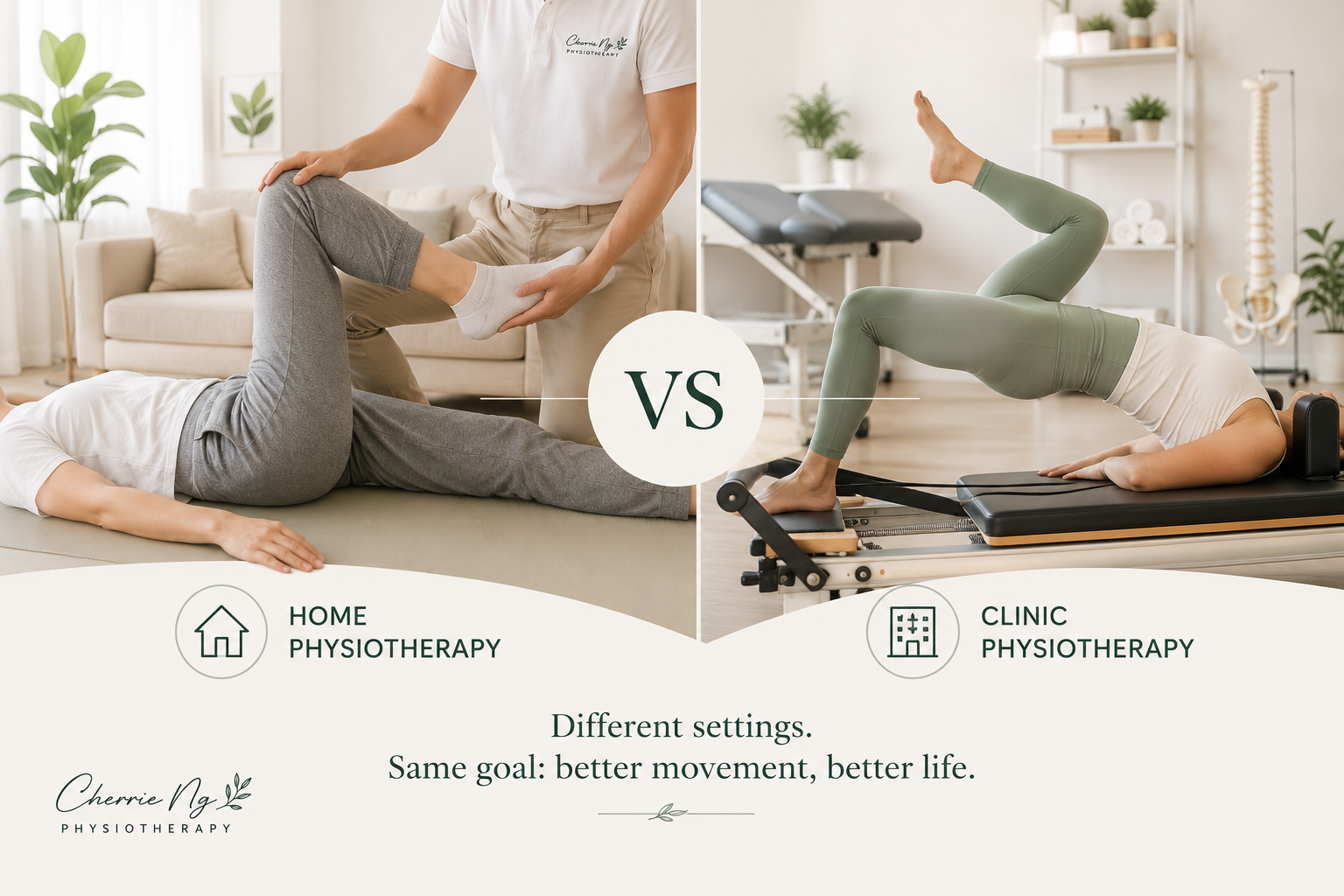
Home physiotherapy and clinic physiotherapy can both support assessment, movement retraining and rehab planning. The better choice depends on your mobility, symptoms, goals, safety needs, access to equipment and whether your home environment is part of the problem.
For clients in Kuala Lumpur and Selangor, Cherrie may suggest home visits when travelling is difficult, daily tasks need to be assessed in the real space, or family members need practical guidance. A clinic-based session may be more suitable when specialised equipment, a more controlled environment, or certain treatment setups are needed.
When home physiotherapy may be more suitable
Home physiotherapy may be a good option when the setting itself matters. This is common when symptoms affect walking, stairs, transfers, balance, desk setup, sleep position, or confidence moving around the house.
It may be especially practical for:
- Older adults who struggle with transport, walking distance or stairs
- People recovering after surgery, illness or a painful flare-up
- Clients with back, knee, shoulder or neck pain who find travelling uncomfortable
- Families who need guidance on safe transfers, walking support or daily movement
- Busy adults who need a plan that fits their home routine
- People whose main goals involve home tasks, such as getting out of bed, climbing stairs or moving safely around furniture
The main advantage is context. Cherrie can see the chair you use, the stairs you climb, the bed you sleep on, the desk where symptoms build up, and the space where exercises need to happen between sessions.
When clinic physiotherapy may be more suitable
Clinic physiotherapy may be useful when the appointment needs a more controlled setting, access to clinic equipment, or fewer distractions. Some people also prefer leaving home for a dedicated rehab space because it helps them focus.
A clinic setting may be worth considering when:
- You can travel safely and comfortably
- Your goals involve gym-style progression or equipment-based strengthening
- You need a treatment setup that is easier to manage in a clinic
- You prefer a private space away from family, work or home interruptions
- Your symptoms need close reassessment with equipment or facilities not available at home
The right setting is not about which one sounds more advanced. It is about where assessment and progression can be done safely, clearly and consistently.
What a physiotherapy assessment may look at in either setting
Whether the session happens at home or in a clinic, the clinical reasoning should still start with your story and movement. Cherrie may ask about your symptoms, health history, daily routine, work setup, exercise background and goals.
The assessment may then look at:
- Pain behaviour and symptom patterns
- Joint mobility, strength, balance and movement control
- Walking, stairs, sitting, standing or task-specific movements
- Posture, breathing, coordination and load tolerance
- Red flags that may need medical review
- How confident you feel with daily activity or exercise
From there, the plan may include education, activity modification, mobility work, strengthening, balance training, rehab Pilates principles, home exercises, pacing advice or referral for medical review when needed.
How to choose between home and clinic physiotherapy
A simple way to decide is to ask what needs to be assessed most clearly.
Choose home physiotherapy if the main challenge happens at home, if transport is a barrier, or if you need practical coaching in your real environment. This is often helpful for elderly care, post-surgery support, mobility confidence, home exercise setup and family caregiver guidance.
Choose clinic physiotherapy if you can travel comfortably, prefer a dedicated rehab setting, or need access to equipment and treatment space that is easier to provide in a clinic.
Some people use both at different stages. For example, early sessions may happen at home while movement is limited, then later sessions may move toward a clinic, Pilates studio or gym-style strengthening plan when travel and loading feel more manageable.
When to seek medical care first
Some symptoms need medical attention before or alongside physiotherapy. Seek medical care promptly if pain follows major trauma, worsens quickly, comes with fever, unexplained weight loss, new numbness or weakness, loss of bladder or bowel control, chest pain, sudden severe headache, dizziness, fainting, severe shortness of breath, or symptoms that feel unusual for you.
If a physiotherapy assessment suggests that medical review, imaging or urgent care is more appropriate, a physiotherapist should guide you accordingly.
Related reading
- Mobile Physiotherapist in KL: When Home-Based Care Makes Sense
- Home Physiotherapy in Kuala Lumpur: What to Expect
- Home Physiotherapy in Selangor: Who It Helps and How Sessions Work
- What Happens During Your First Physiotherapy Session?
If you are unsure whether a home visit or clinic session is more suitable, you can WhatsApp Cherrie with your main concern, location, mobility level and goals. She can help you think through the safest starting point.
Foundational clinical sources and further reading
These authoritative sources provide general background relevant to this topic; they are not claim-by-claim citations. This content is educational and does not replace individual assessment, diagnosis or emergency medical care.
- What is physiotherapy? — World Physiotherapy