Local SEO
Mobile Physiotherapist in KL: When Home-Based Care Makes Sense
Learn when a mobile physiotherapist in KL may be useful, what home visits can assess, and when medical care should come first.
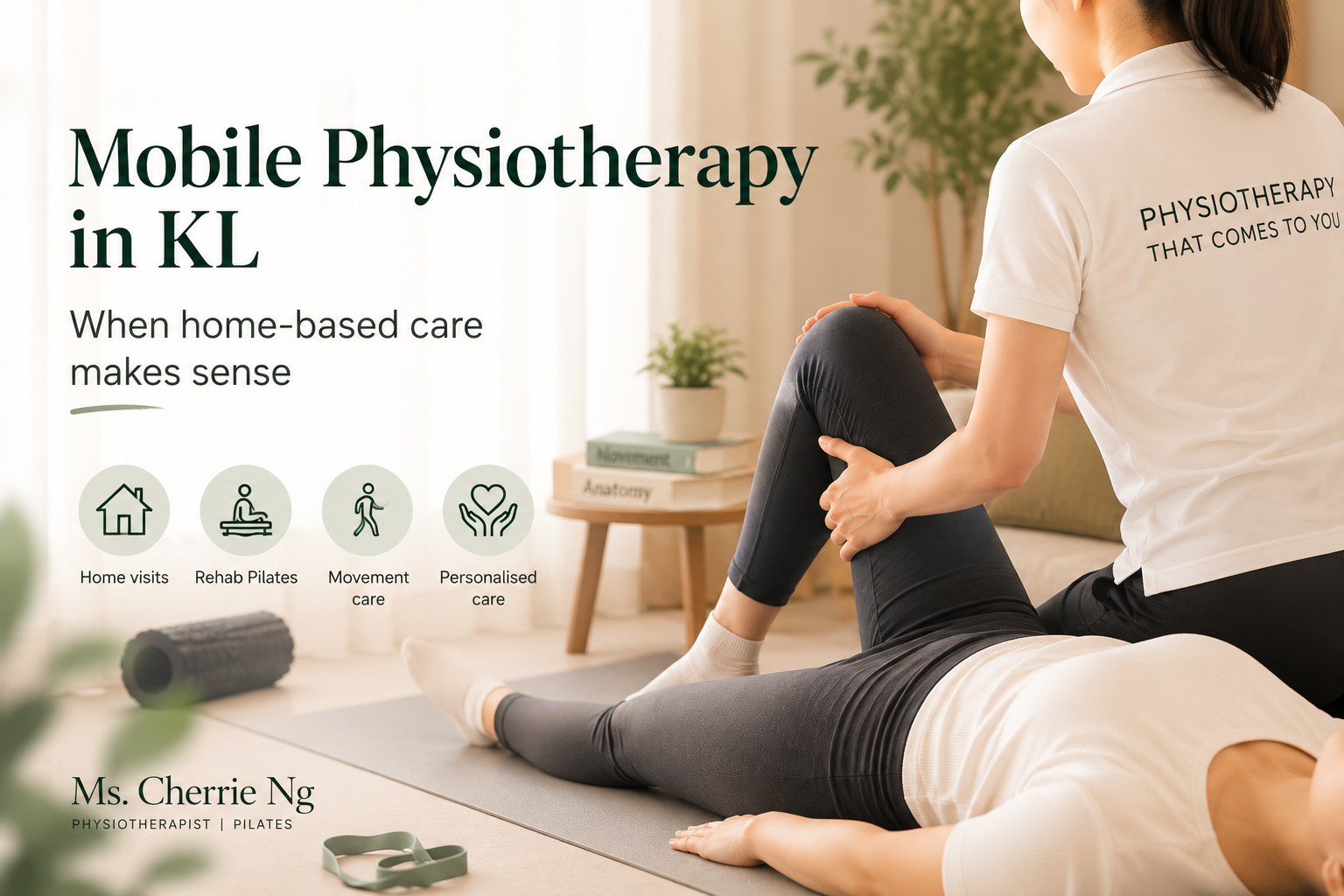
A mobile physiotherapist in KL may be useful when pain, mobility limits, busy schedules or home-specific problems make clinic visits difficult. Instead of only discussing symptoms in a treatment room, a home-based session can look at how you move, sit, climb stairs, work, sleep and exercise in the space where those activities actually happen.
For Cherrie’s home visits, coverage is confirmed case by case. It helps to share your area, condo or office location, main concern and mobility level through WhatsApp before booking.
Who may benefit from a mobile physiotherapist?
Mobile physiotherapy may be suitable for:
- Older adults who find transport, stairs or walking distance difficult
- People recovering after surgery, illness or a painful flare-up
- Clients with back, neck, shoulder, hip or knee pain who struggle to travel
- Busy working adults who need care arranged around home or office routines
- Families who need guidance for transfers, walking or daily movement support
- People whose symptoms are strongly linked to their desk, bed, stairs or home setup
- Clients who need a realistic exercise plan using the space and equipment they already have
It is not only for severe cases. Sometimes a mobile physiotherapist is useful because the most important questions are practical: how you get out of bed, how you climb stairs, how you sit at your desk, or how safely you can repeat exercises between sessions.
What can be assessed during a home visit?
A mobile physiotherapy session usually starts with your symptom history, daily routine, medical background and goals. Cherrie may then assess movement, strength, joint mobility, balance, walking, posture, pain response and the daily tasks that matter most to you.
Depending on your concern, the session may include:
- Education about safe activity levels and pacing
- Mobility or strengthening exercises
- Walking, stair or transfer practice
- Balance and fall-risk related guidance
- Desk, chair, bed or home setup suggestions
- Pain-management strategies
- Rehab Pilates principles when appropriate
- A simple home exercise plan
The aim is to make the plan realistic for your environment. A few well-chosen exercises that you can repeat consistently often matter more than a long plan that does not fit your day.
Mobile physiotherapy vs clinic physiotherapy
Mobile physiotherapy is especially helpful when the home environment is part of the assessment. A physiotherapist can see your real stairs, chair, bed, walking space, desk height, bathroom access or exercise area.
Clinic physiotherapy may be more suitable when you need a controlled setting, clinic equipment, fewer home distractions or a dedicated rehab space. Some people use both at different stages: home visits early on when travel is difficult, then clinic, Pilates or gym-based progression later when movement confidence improves.
The better option is not about which setting sounds more advanced. It is about where your symptoms, goals and safety needs can be assessed most clearly.
How to prepare before a mobile physio visit
You do not need special equipment before the first session. A clear area where you can stand, walk a few steps, sit and lie down if needed is usually enough.
Helpful preparation includes:
- Wearing clothes that allow comfortable movement
- Keeping medical reports, medication lists or referral notes nearby if relevant
- Sharing which daily tasks are difficult, such as stairs, getting out of bed or sitting at work
- Preparing a chair, mat, towel or pillow if you already use them
- Asking a family member to be present if they help with care, walking or transfers
If you have resistance bands, weights, a yoga mat or Pilates equipment at home, Cherrie can decide whether they are appropriate. They are helpful, but not required.
When medical care should come first
Some symptoms need medical attention before or alongside physiotherapy. Seek medical care promptly if pain follows major trauma, worsens quickly, comes with fever, unexplained weight loss, new numbness or weakness, loss of bladder or bowel control, chest pain, sudden severe headache, dizziness, fainting, severe shortness of breath, or symptoms that feel unusual for you.
If a mobile physiotherapy assessment suggests that medical review, imaging or urgent care is more appropriate, a physiotherapist should guide you accordingly.
Related reading
- Physiotherapist Near Me in KL: How to Choose the Right Service
- On-Site Physiotherapy for Offices in KL: What HR Teams Should Know
- Home Physiotherapy in Kuala Lumpur: What to Expect
- Home Physiotherapy vs Clinic Physiotherapy: Which Is Better for Your Situation?
- Physiotherapy Home Visit Cost in KL: What Affects Pricing?
Frequently asked questions
Is a mobile physiotherapist the same as home physiotherapy?
They are often used to describe the same idea: a physiotherapist travels to your home, office or suitable private space for assessment and rehab guidance. The exact arrangement depends on location, access, safety and the service needed.
What areas in KL can a mobile physiotherapist cover?
Coverage should be confirmed case by case. Share your suburb, condo, office area or nearest landmark through WhatsApp so Cherrie can check travel time, parking, access needs and whether the service fits your concern.
Do I need equipment at home?
Not for the first session. A clear space, comfortable clothing and any relevant medical information are usually enough. If you already have bands, weights, mats or Pilates equipment, they can be assessed for suitability.
If you are in Kuala Lumpur or nearby Selangor and want to ask whether mobile physiotherapy is suitable, you can WhatsApp Cherrie with your location, main concern, mobility level and goals.
Foundational clinical sources and further reading
These authoritative sources provide general background relevant to this topic; they are not claim-by-claim citations. This content is educational and does not replace individual assessment, diagnosis or emergency medical care.
- What is physiotherapy? — World Physiotherapy