Physiotherapy Basics
When Should You See a Physiotherapist in Kuala Lumpur?
Know when to see a physiotherapist in KL for pain, injury, posture, mobility, recovery, home visits, or rehab Pilates support.
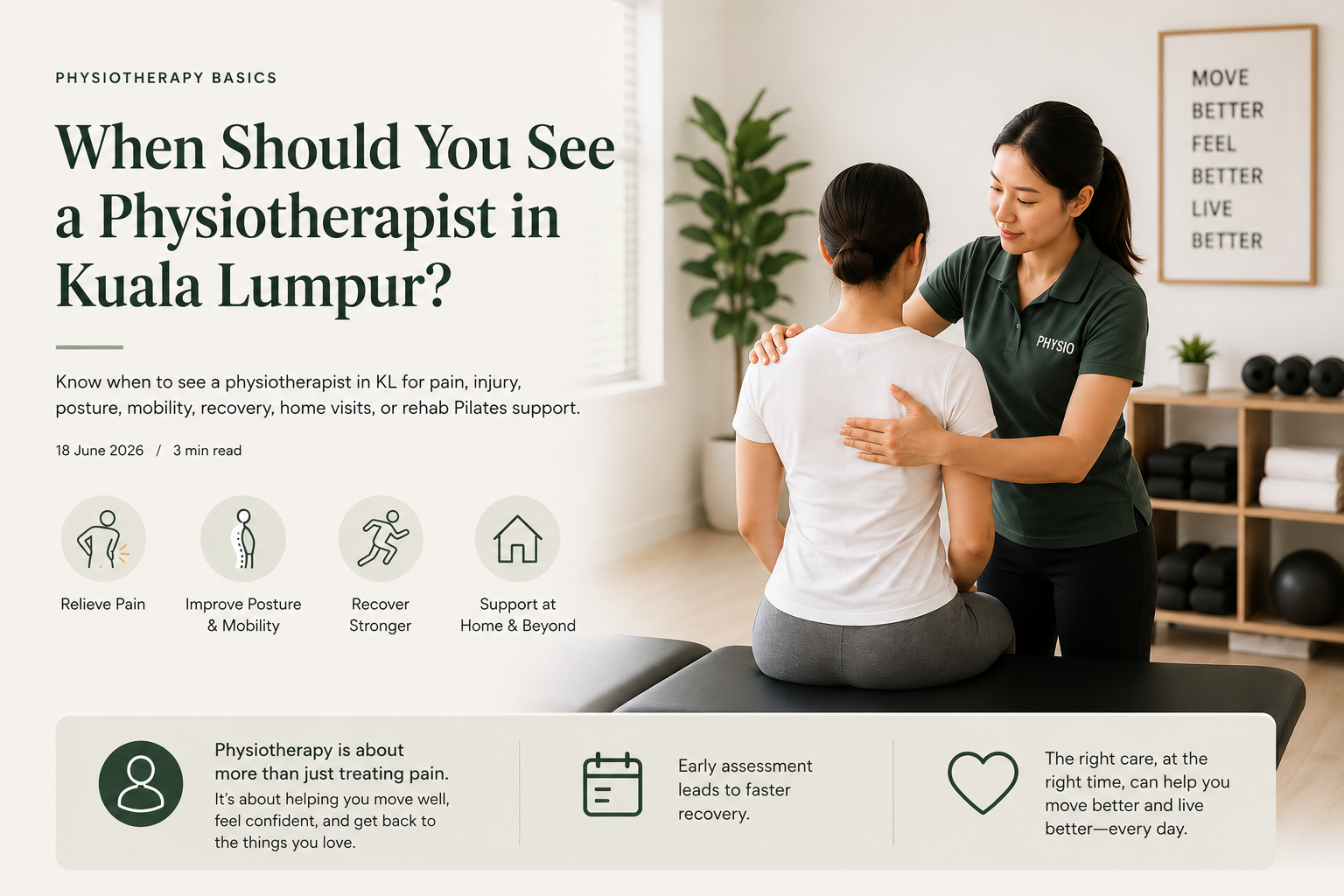
You should consider seeing a physiotherapist in Kuala Lumpur when pain, stiffness, injury, posture strain, weakness, balance changes or movement fear starts affecting your daily life. You do not need to wait until symptoms become severe; an early assessment can often clarify what is happening and what steps are suitable.
Physiotherapy is not only for sports injuries or post-surgery recovery. It can also support desk-related neck and back strain, recurring discomfort, post-natal movement concerns, elderly mobility, home-based rehab and safer return to exercise.
Common signs it may be time to book an assessment
It may be worth seeing a physiotherapist if you notice:
- Pain that lasts more than a few days or keeps returning
- Neck, shoulder or back discomfort from desk work
- Knee, ankle, hip or shoulder pain during stairs, walking or exercise
- Stiffness that limits normal movement
- Numbness, tingling or weakness that needs screening
- Reduced confidence after a fall, injury or flare-up
- Difficulty returning to gym, Pilates, sport or daily activity
- Post-surgery or post-natal movement questions
- Balance, walking or mobility concerns for an older adult
The goal of assessment is not just to name a painful area. It is to understand how your symptoms connect with movement, strength, mobility, habits, recovery stage and goals.
What a physiotherapy assessment may look at
A physiotherapy assessment usually begins with a conversation about your symptoms, health history, daily activities, work setup, exercise routine and what you want to return to.
Cherrie may then look at movement patterns, strength, joint mobility, posture, balance, walking, breathing strategy and how your symptoms respond to different positions or tasks.
For example, two people with shoulder pain may need different plans. One may need mobility work and gradual strengthening. Another may need to modify training load, improve shoulder blade control or screen symptoms that suggest medical review.
What physiotherapy may help with
Physiotherapy may help by giving you a clearer starting point. Depending on your condition, sessions may include education, movement retraining, strength work, mobility exercises, manual therapy, posture advice, pacing strategies, rehab Pilates or a home exercise plan.
For some clients in KL and Selangor, home physiotherapy may be more practical, especially after surgery, for older adults, or when travel and traffic make clinic visits difficult.
The best plan should feel specific to your body. It should explain what you can do now, what to avoid or modify, and how to progress safely.
When to seek medical care urgently
Some symptoms need medical attention before or alongside physiotherapy. Seek medical care promptly if pain follows major trauma, worsens quickly, comes with fever, unexplained weight loss, new numbness or weakness, loss of bladder or bowel control, chest pain, sudden severe headache, dizziness, fainting, or symptoms that feel unusual for you.
If you are unsure whether your symptoms are suitable for physiotherapy, it is reasonable to ask first. A physiotherapist can guide whether assessment, medical review, rehab Pilates, home exercises or another care pathway is more appropriate.
Related reading
- Physiotherapist Near Me in KL: How to Choose the Right Service
- Back Pain Red Flags: When to Seek Medical Care Quickly
- Physiotherapy vs Massage: Which One Do You Need?
- What Happens During Your First Physiotherapy Session?
- Home Physiotherapy in Kuala Lumpur: What to Expect
- Physiotherapist in Cheras: Home Visits, Rehab Pilates and Movement Care
- Physiotherapist-Led Pilates in KL: Who Is It Suitable For?
If you are in Kuala Lumpur or Selangor and want to understand whether physiotherapy is suitable for your concern, you can WhatsApp Cherrie and share what you are experiencing.
Foundational clinical sources and further reading
These authoritative sources provide general background relevant to this topic; they are not claim-by-claim citations. This content is educational and does not replace individual assessment, diagnosis or emergency medical care.
- What is physiotherapy? — World Physiotherapy