Back Pain
Core Strength for Back Pain: What People Often Get Wrong
A careful guide to core strength for back pain, including common mistakes, safer progressions and when to get assessed in KL.
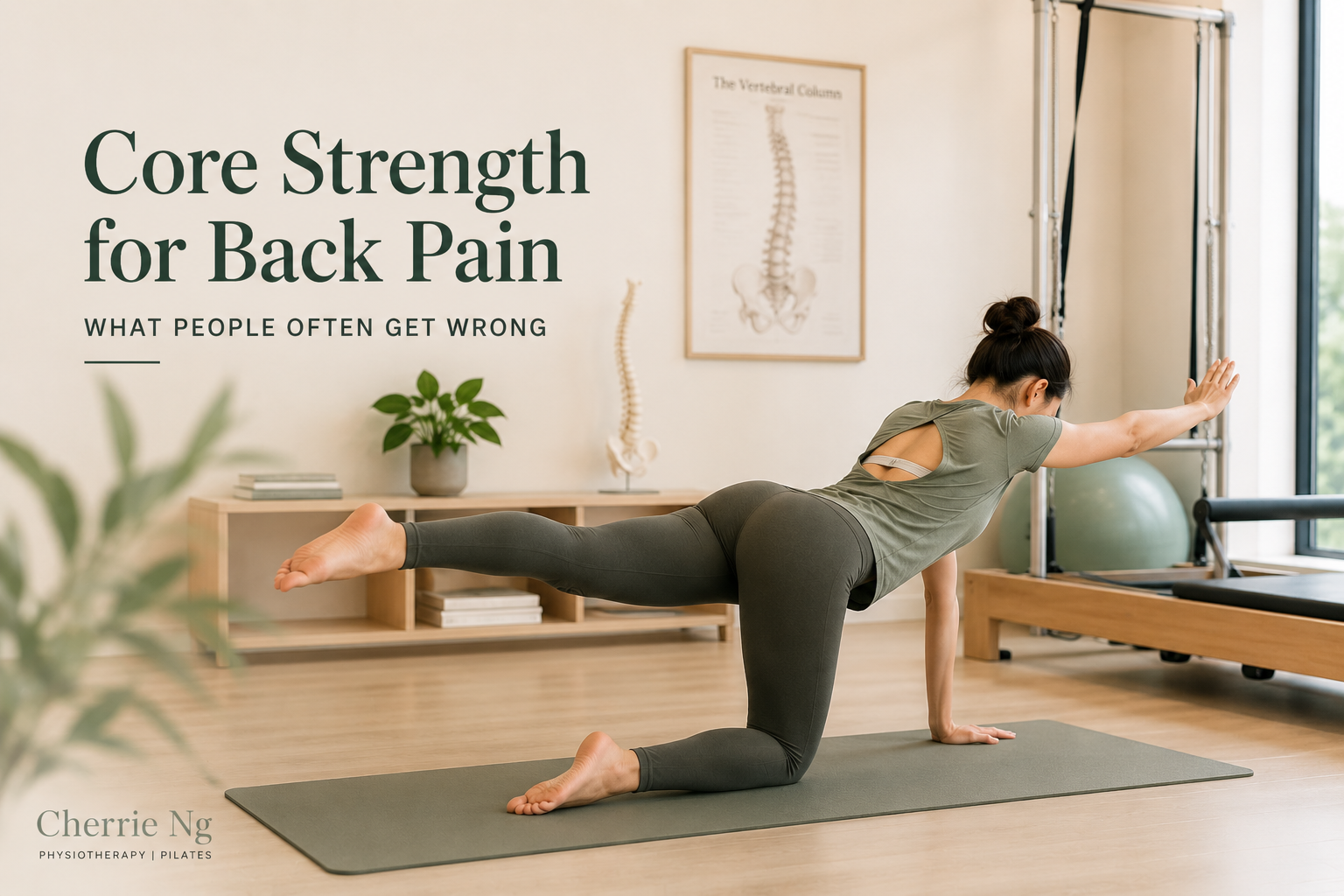
Core strength can help some people with back pain, but it is often misunderstood. The goal is not to brace your stomach all day, do the hardest abdominal exercises, or chase a six-pack. For back pain rehab, core work usually means learning how your trunk, hips, breathing and movement control work together during real daily tasks.
In Kuala Lumpur and Selangor, a physiotherapy or rehab Pilates assessment can help decide which core exercises are suitable for your back, and which ones may be too much too soon.
What people often get wrong about core strength
Many people start core exercises because they have been told their back pain comes from a “weak core.” Sometimes strength is part of the picture, but it is rarely the whole story.
Common mistakes include:
- Holding the stomach tight all day
- Starting with planks, sit-ups or leg raises when symptoms are irritable
- Ignoring hip, glute and leg strength
- Moving too stiffly because every exercise feels like a test
- Doing exercises that increase leg symptoms, numbness or sharp pain
- Thinking core strength alone will permanently prevent every flare-up
Back pain can involve strength, mobility, sleep, stress, training load, sitting habits, fear of movement, previous injury and general health. Core work is useful when it fits that larger picture.
What core strength really means in rehab
In rehab, core strength is less about one muscle and more about coordination. Your back, pelvis, hips, ribs, breathing and abdominal muscles all need to share load during bending, lifting, walking, sitting, carrying and exercise.
Good core training may help you:
- Breathe without excessive bracing
- Move the spine and hips with more control
- Build tolerance for bending, lifting and carrying
- Improve balance and single-leg control
- Return to Pilates, gym or sport gradually
- Feel less guarded during daily movement
The best exercise is not always the hardest one. It is the one your body can perform with good control and recover from well.
What a physiotherapy assessment may look at
A physiotherapy assessment may look at your pain history, what movements trigger symptoms, sitting and lifting habits, hip and spine mobility, strength, walking, balance, breathing strategy and whether symptoms spread into the leg.
Cherrie may also ask what you want core strength for: desk comfort, carrying a child, gym training, Pilates, running, housework, sport or feeling more confident after a flare-up.
From there, the starting point can be more specific. Some people may begin with breathing and gentle pelvic control. Others may work on hip strength, loaded carries, Pilates-based control, squats, hinges or sport-specific progressions.
How to start more safely
If your back pain is mild and not worsening, start with exercises that feel manageable and repeatable. You should be able to breathe, control the movement and recover without a strong flare-up.
Early core work may include:
- Comfortable breathing with gentle abdominal awareness
- Pelvic tilts or supported spinal mobility
- Dead bug-style movements with small ranges
- Glute bridges or hip strength exercises
- Side-lying or standing control work
- Practising bending and lifting with appropriate load
Mild effort is normal. Sharp pain, spreading leg symptoms, increasing numbness, weakness or pain that escalates after each session are signs to pause and seek advice.
Where rehab Pilates may fit
Rehab Pilates can be helpful because it usually focuses on breathing, control, gradual resistance and movement quality rather than forcing high-intensity abdominal work from the start.
For back pain, Pilates may help bridge the gap between simple home exercises and returning to more demanding daily activity or training. The key is that exercises should be adapted to your symptoms, not copied from a generic core workout.
When to seek assessment or medical care
Consider physiotherapy if back pain keeps returning, limits work or sleep, spreads into the leg, affects walking, or makes you unsure which core exercises are safe.
Seek medical care promptly if pain follows major trauma, worsens quickly, comes with fever, unexplained weight loss, new numbness or weakness, loss of bladder or bowel control, numbness around the groin or anus, chest pain, severe abdominal pain, or symptoms that feel unusual for you.
Related reading
- Pilates for Back Pain in KL: When It Helps and When to Get Assessed
- Lower Back Pain Physiotherapy in KL: Common Causes and Next Steps
- Deep Core vs Six-Pack Abs: Why Rehab Pilates Focuses on Control
- Back Pain Red Flags: When to Seek Medical Care Quickly
If you are in Kuala Lumpur or Selangor and are unsure which core exercises are suitable for your back, you can WhatsApp Cherrie to ask whether physiotherapy or rehab Pilates assessment may be suitable.
Foundational clinical sources and further reading
These authoritative sources provide general background relevant to this topic; they are not claim-by-claim citations. This content is educational and does not replace individual assessment, diagnosis or emergency medical care.
- What is physiotherapy? — World Physiotherapy
- Musculoskeletal health — World Health Organization
- Low back pain and sciatica in over 16s: assessment and management (NG59) — National Institute for Health and Care Excellence