Back Pain
Sciatica Physiotherapy in KL: Symptoms, Exercises and When to Seek Help
Understand sciatica-like leg pain, when physiotherapy may help, and when symptoms need medical attention in Kuala Lumpur.
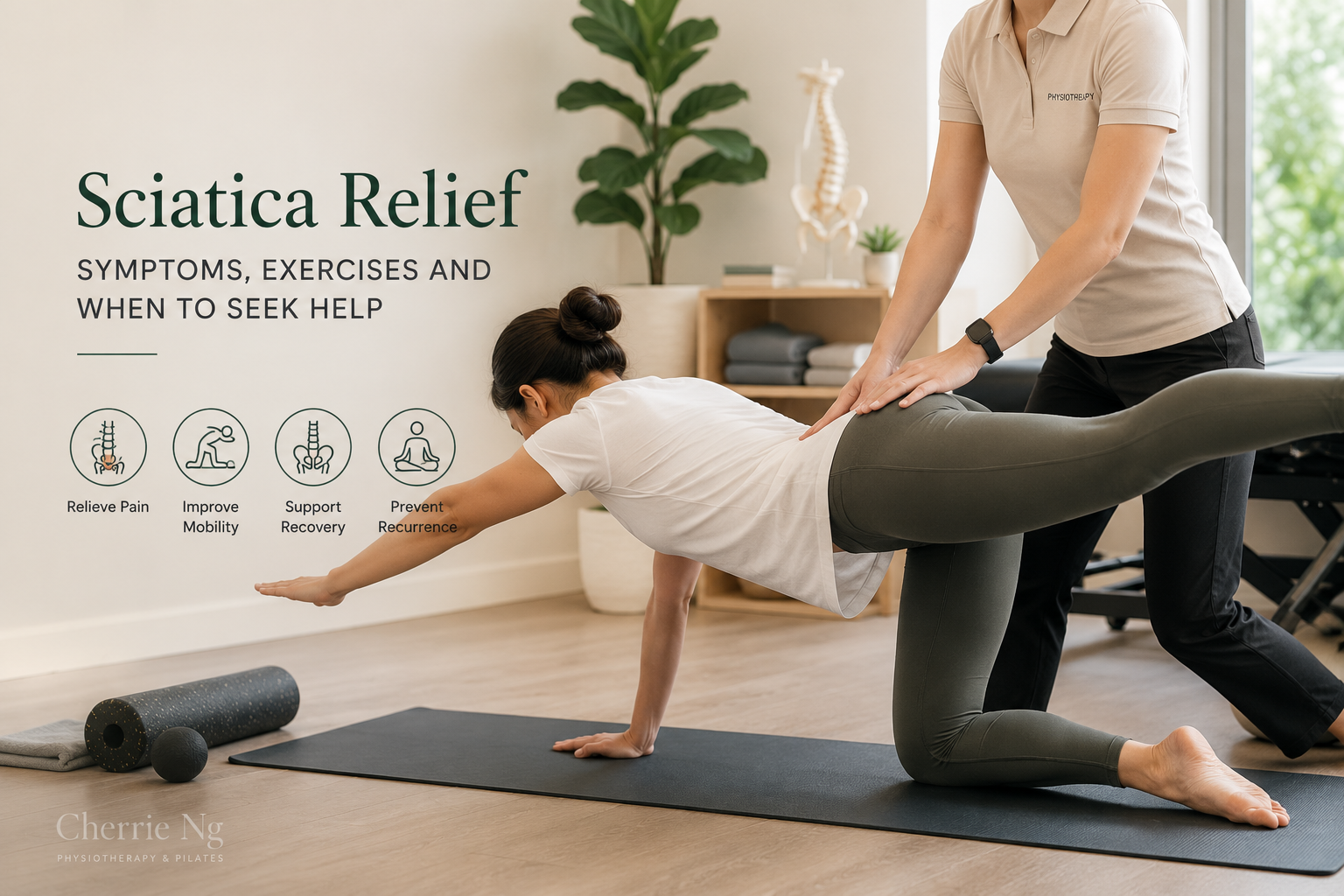
Sciatica physiotherapy in KL can help when leg pain, tingling, numbness or nerve-like discomfort may be related to the lower back or irritation along the sciatic nerve pathway. The first step is assessment, because not every leg symptom is true sciatica and not every case needs the same exercises.
Sciatica-like symptoms can feel worrying, especially when pain travels from the back or buttock into the thigh, calf or foot. A physiotherapy assessment helps clarify what movements are sensitive, what positions ease symptoms, and whether medical review is needed.
What sciatica-like symptoms may feel like
People often describe sciatica-like symptoms as:
- Pain travelling from the lower back or buttock into the leg
- Tingling, pins and needles or numbness
- Burning, electric or shooting discomfort
- Symptoms that worsen with sitting, bending, coughing or long driving
- Leg heaviness, weakness or reduced confidence walking
- Back pain with symptoms spreading below the knee
These symptoms can have different contributors, including disc irritation, nerve sensitivity, joint or muscle-related referral, load changes, prolonged sitting or previous injury. This is why guessing from symptoms alone is not ideal.
Why assessment matters
A physiotherapy assessment may look at your symptom history, walking, lower back movement, hip mobility, nerve sensitivity, strength, reflex-related concerns when appropriate, posture, sitting tolerance and daily activity demands.
The goal is to understand whether symptoms behave like a nerve-related issue, a muscle or joint referral pattern, or something that needs medical review. This guides whether you need gentle movement, strength work, pacing, manual therapy, posture changes, medical referral or a different care plan.
What physiotherapy may include
Depending on your symptoms, physiotherapy may include:
- Education about nerve sensitivity and activity pacing
- Positions or movements that may calm symptoms
- Gentle mobility work for the back, hips or legs
- Gradual strengthening for the hips, trunk and legs
- Guidance on sitting, driving, lifting and sleeping positions
- Walking or daily activity progression
- Rehab Pilates principles when symptoms are stable enough
- A simple home plan that can be adjusted as symptoms change
Exercises should match your current irritability. For some people, a small amount of gentle movement is useful. For others, certain stretches or intense core exercises may worsen symptoms if introduced too early.
Exercises are not one-size-fits-all
Online sciatica exercises can be confusing because different bodies respond differently. One person may feel better with extension-based movement. Another may need hip mobility, walking progression, load reduction or nerve-sensitive pacing.
If an exercise increases leg pain, numbness, tingling or symptoms spreading further down the leg, it may not be the right starting point. A physiotherapist can help you choose movements that are safer for your current stage.
When to seek help quickly
Consider physiotherapy if leg symptoms last more than a few days, keep returning, affect sitting, walking, sleep or work, or make you unsure which exercises are safe.
Seek urgent medical care if you have new or worsening leg weakness, numbness around the groin or saddle area, loss of bladder or bowel control, severe symptoms after trauma, fever, unexplained weight loss, rapidly worsening pain, or symptoms that feel unusual for you.
Related reading
- Nerve Pain vs Muscle Pain: How to Tell the Difference
- Is Walking Good for Lower Back Pain?
- Back Pain Red Flags: When to Seek Medical Care Quickly
- Lower Back Pain Physiotherapy in KL: Common Causes and Next Steps
- Pilates for Back Pain in KL: When It Helps and When to Get Assessed
- Slipped Disc Physiotherapy in KL: Assessment, Exercise and When to Seek Medical Care
If you are in Kuala Lumpur or Selangor and leg symptoms are making you unsure how to move safely, you can WhatsApp Cherrie to ask whether physiotherapy assessment is suitable.
Foundational clinical sources and further reading
These authoritative sources provide general background relevant to this topic; they are not claim-by-claim citations. This content is educational and does not replace individual assessment, diagnosis or emergency medical care.
- What is physiotherapy? — World Physiotherapy
- Musculoskeletal health — World Health Organization
- Low back pain and sciatica in over 16s: assessment and management (NG59) — National Institute for Health and Care Excellence