Local SEO
Posture Correction in KL: Assessment, Exercises and Realistic Expectations
A practical guide to posture correction in KL, including physiotherapy assessment, exercise options and realistic goals beyond sitting straight.
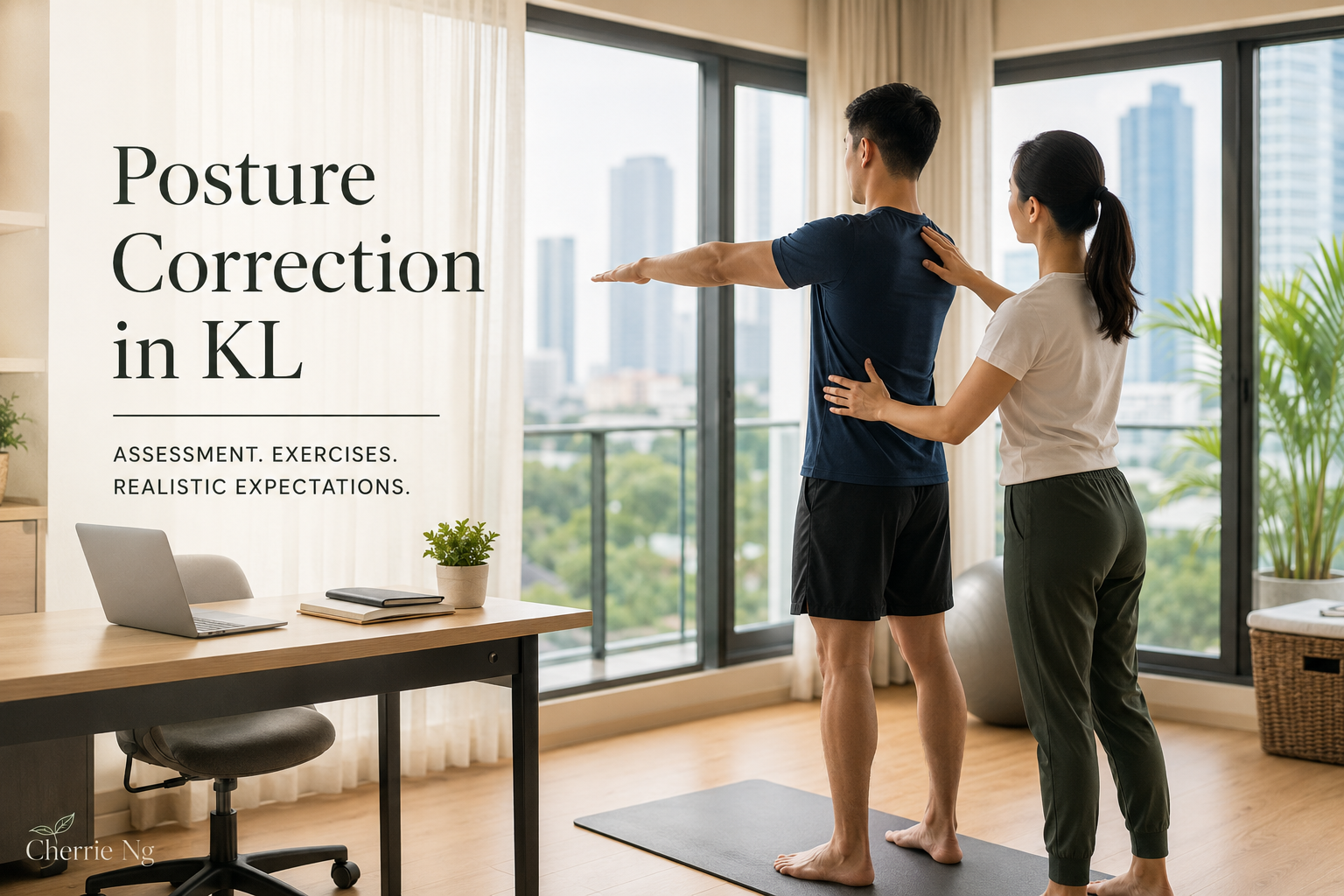
Posture correction in KL should not mean forcing your body into one “perfect” position. A useful physiotherapy plan looks at why a position concerns you, whether it affects pain or function, and which combination of movement, strength, endurance, task changes and exercise may help.
Some people want support for neck or back discomfort at work. Others notice rounded shoulders, a forward head position, unevenness or difficulty maintaining a comfortable position during exercise. The right starting point depends on the person, not on a standard before-and-after photo.
What does posture correction really mean?
Posture changes throughout the day. The position you use for typing is not the same as the one you use for lifting, walking, driving, resting or training.
There is no strong evidence that one posture alone causes neck pain or that everyone needs one correct sitting or standing position. Comfortable support and regular position changes may be more practical than holding yourself rigidly. Hull University Teaching Hospitals NHS Trust neck-pain guidance
In practice, “posture correction” may mean:
- Finding more comfortable options for work or daily tasks
- Improving the ability to move out of a sustained position
- Building strength and endurance for sitting, standing, reaching or lifting
- Adjusting a desk, screen or repeated task
- Practising a movement that currently feels awkward or tiring
- Reducing fear about normal body variation
Visible alignment may change, but it is not the only useful outcome.
When might posture assessment be helpful?
An assessment may be useful when:
- Neck, shoulder or back symptoms keep returning during desk work
- Sitting or standing tolerance is limiting your day
- A posture or movement consistently reproduces symptoms
- You feel stiff or tired when trying to sit upright
- Gym, Pilates or household tasks repeatedly feel uncomfortable
- You notice a new, fixed or progressing change in body shape
- Generic online posture exercises have not matched your problem
- You are unsure whether the concern is postural, movement-related or something that needs medical review
A visible forward head, rounded shoulder or uneven hip does not automatically need treatment. The finding becomes more relevant when it connects with your symptoms, goals or task limitations.
What happens during a posture correction assessment in KL?
Cherrie may begin by asking about your symptoms, work routine, activity, sleep, previous injuries, medical history and what you want to do more comfortably. If the issue appears during laptop work, driving, lifting or training, the assessment should consider that task rather than only a relaxed standing pose.
The physical assessment may include:
- Observation in relaxed sitting and standing
- Neck, shoulder, upper-back, lower-back and hip movement
- Strength or endurance relevant to the affected task
- How symptoms respond when you change position or receive support
- A squat, reach, lift, desk setup or exercise that matters to you
- Breathing and unnecessary muscle bracing
- Balance, walking or foot position when relevant
- Neurological screening when numbness, tingling or weakness is present
The aim is to test which findings are meaningful. A posture photograph can document one moment, but it cannot show your movement choices, capacity or symptom response by itself.
Which exercises may be included?
There is no universal posture routine. Exercise selection should follow the assessment and may combine several types of work.
Mobility
Gentle neck, upper-back, shoulder, hip or ankle movements may be used when a relevant range is limited or a position has been held for a long time. Mobility work should create useful options rather than force a joint into an ideal angle.
Strength and endurance
Rows, presses, carries, trunk exercises, squats or other resistance exercises may help build capacity for work and daily activities. The exercise should match the person’s symptoms, current ability and goals.
Movement control and task practice
Some people benefit from practising how to reach, lift, sit, stand or use the shoulder in more than one way. Rehab Pilates may also support movement awareness, breathing and graded control when it suits the assessment.
Movement variety
Brief position changes, walking or breaking a long task into smaller blocks may be more realistic than trying to hold an upright posture all day. For low-back pain, NICE advises tailored self-management, continuation of normal activity and exercise chosen around the person’s needs, preferences and capabilities. NICE guideline NG59
Can exercises actually change posture?
Exercise can change some measured posture outcomes in selected groups, but this does not mean every asymmetry needs correction or that a visual change guarantees pain relief.
A systematic review of seven randomized trials involving people classified with forward-head posture found that therapeutic exercise could improve one common head-position measurement and may moderately improve neck pain. The authors also noted that the relationship between forward-head posture, pain and changes after exercise remained uncertain. Systematic review and meta-analysis of therapeutic exercise for forward-head posture
This is why a programme should measure outcomes that matter to you. These could include:
- Fewer interruptions during work
- Better tolerance for sitting, standing or driving
- More comfortable neck or shoulder movement
- Improved strength or exercise confidence
- Easier lifting, reaching or household tasks
- More freedom to change position without worry
How long does posture correction take?
There is no reliable one-size-fits-all timeline. A screen or chair adjustment may be tested immediately, while strength, endurance, movement confidence and task tolerance usually require gradual practice.
Progress also depends on what is being addressed. A flexible habit, a painful work task, a long-standing structural shape and recovery after injury are different situations. Before-and-after photos may be useful when appearance is a relevant and agreed goal, but they should not replace comfort and function.
Be cautious with programmes that promise to permanently straighten the body in a fixed number of days. A realistic plan explains what is being trained, how progress will be checked and how exercises will be adjusted.
What can you try before booking?
If symptoms are mild and there are no warning signs, you could:
- Notice which tasks or positions bring symptoms on
- Change position before discomfort becomes intense
- Bring the screen and frequently used items into an easier viewing and reaching range
- Try a short walk or gentle movement break
- Avoid forcing the shoulders back or bracing the abdomen all day
- Record which adjustments help, do nothing or make symptoms worse
Stop an exercise and seek advice if it causes sharp or rapidly increasing pain, new numbness or tingling, weakness, dizziness, or symptoms that feel unusual.
When should you seek medical care?
Seek prompt medical advice if pain is severe and starts suddenly, worsens quickly, or comes with feverishness or feeling generally unwell.
For back pain, seek emergency care if there is pain, tingling, weakness or numbness in both legs; loss of feeling around the genitals or anus; bladder or bowel changes; chest pain; or symptoms after a serious accident. NHS back-pain guidance
A new or rapidly changing spinal shape, progressive weakness, worsening balance, unexplained weight loss or persistent night pain also deserves medical assessment rather than a generic posture programme.
Related reading
- Pilates for Posture Correction: What It Can and Cannot Do
- Posture Assessment in KL: What Physiotherapists Look For
- Neck and Shoulder Pain from Desk Work: What You Can Do
Sources and clinical references
- Hull University Teaching Hospitals NHS Trust: Neck Pain
- NICE guideline NG59: Low back pain and sciatica recommendations
- Effectiveness of Therapeutic Exercise on Forward Head Posture: A Systematic Review and Meta-analysis
- NHS: Back pain
Frequently asked questions
Do I need posture correction if I do not have pain?
Not necessarily. If a posture is comfortable and does not limit the activities that matter to you, a visible difference alone may not require treatment. You may still choose assessment if the change is new, progressing or causing concern.
Is physiotherapy or Pilates better for posture?
Physiotherapy assessment may be a useful first step when pain, nerve symptoms, injury, uncertainty or a changing body shape is present. Rehab Pilates may be included when movement practice, strength, breathing and graded control fit the plan.
Will I be told to sit straight all day?
Usually, no. Advice should help you find supported positions, move regularly and build enough capacity for your tasks rather than hold one rigid posture.
Can posture correction help desk-related neck and shoulder pain?
It may help when the plan addresses the factors relevant to you, such as task duration, movement variety, workstation reach, strength and symptom response. Posture should be considered as one part of the picture, not assumed to be the only cause.
If posture, desk strain or movement confidence is affecting your day in Kuala Lumpur or Selangor, you can WhatsApp Cherrie to ask whether physiotherapy assessment or rehab Pilates may be a suitable starting point.
Foundational clinical sources and further reading
These authoritative sources provide general background relevant to this topic; they are not claim-by-claim citations. This content is educational and does not replace individual assessment, diagnosis or emergency medical care.
- What is physiotherapy? — World Physiotherapy