Rehab Pilates
Clinical Pilates vs Regular Pilates: Which Is Better for Recovery?
Understand how clinical Pilates differs from regular Pilates, when each may suit you, and why assessment matters for recovery in KL and Selangor.
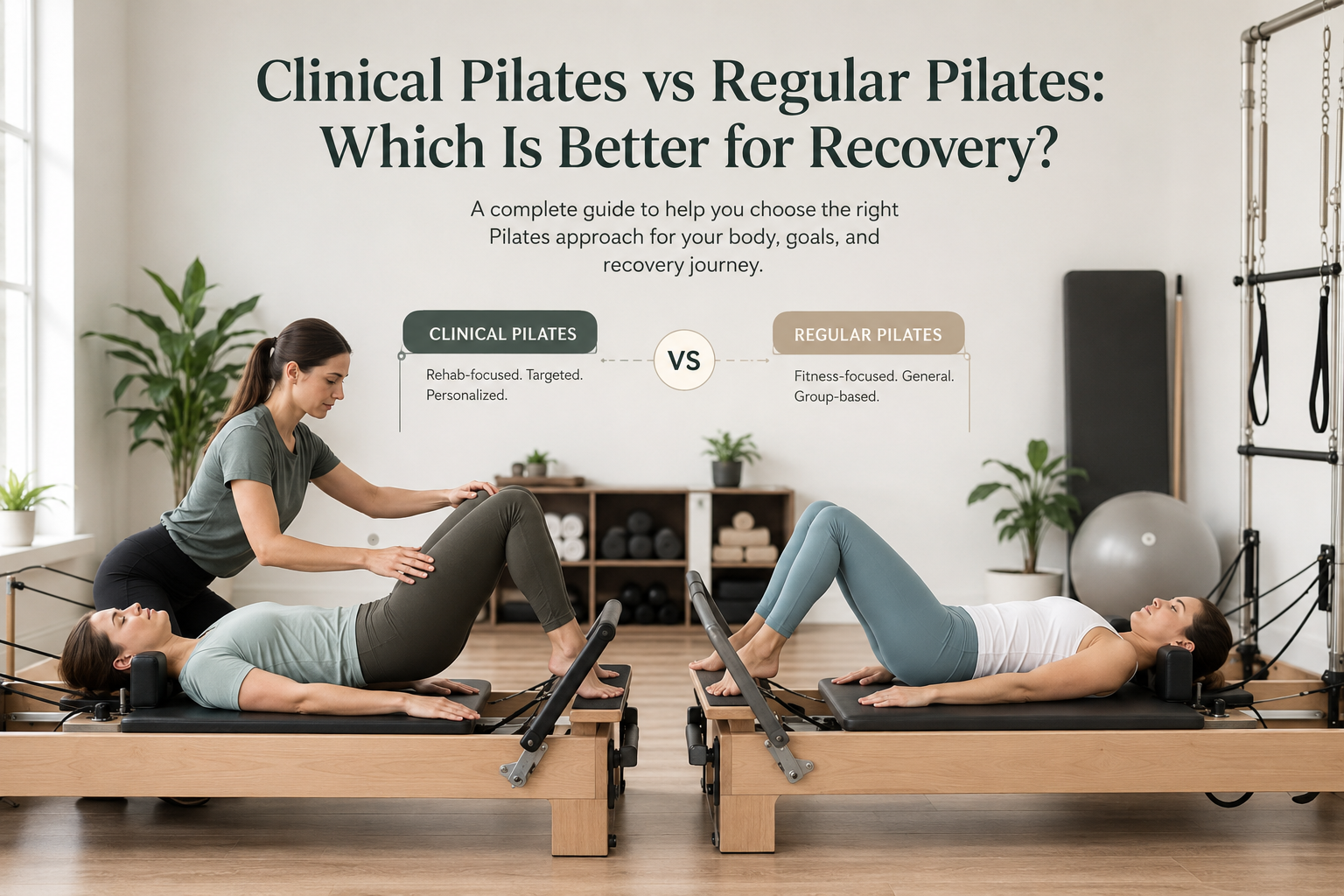
Clinical Pilates is usually better for recovery when you need exercises adapted around pain, injury, posture concerns, surgery history or confidence with movement. Regular Pilates can still be a good option when your body is generally settled and you want fitness, flexibility and body awareness in a class setting.
The difference is not that one is always “better” than the other. The better choice depends on your symptoms, goals, current strength, movement control and whether you need a physiotherapy assessment before exercising.
What regular Pilates usually focuses on
Regular Pilates classes often focus on general conditioning. You may work on core strength, flexibility, coordination, breathing, balance and posture awareness through mat or reformer exercises.
For many people, this is a positive way to stay active. It may suit you if:
- You have no current pain or your symptoms are well managed
- You can follow group instructions safely
- You want general strength, mobility and fitness
- You enjoy a structured class environment
- You do not need individual changes for a specific injury
Class quality still matters. A good instructor should offer clear cues, sensible progressions and options when an exercise feels too difficult.
What clinical Pilates changes
Clinical Pilates starts from a more individualised point. In Cherrie’s rehab Pilates approach, the session is guided by how you move, what symptoms you notice, what your body can tolerate and what you want to return to.
That may mean a smaller range of motion, slower tempo, a different position, lower resistance, more support from the reformer, or a stronger focus on breathing and alignment before adding challenge.
Clinical Pilates may be more suitable if you are managing:
- Lower back, neck, shoulder, hip or knee discomfort
- Desk-related posture strain
- Recovery after injury or surgery, once medically cleared
- Post-natal return to exercise
- Scoliosis-informed movement needs
- Fear of movement after pain or a flare-up
- Uncertainty about which exercises are safe
The aim is not to make exercise overly cautious. It is to choose the right level of challenge so your body can build capacity without repeatedly provoking symptoms.
What a physiotherapy-led assessment may look at
Before deciding which Pilates exercises are appropriate, a physiotherapy assessment may look at your symptom history, daily activities, movement patterns, strength, mobility, balance, breathing strategy and goals.
For example, two people with back pain may need different starting points. One person may need hip mobility and gradual strength work. Another may need to reduce sensitivity first, improve confidence with bending, or learn how to pace sitting and lifting during the day.
This is why clinical Pilates is not just a list of “safe exercises”. It is a way of selecting, adapting and progressing movement based on what your body shows during assessment.
Which one should you choose?
Choose regular Pilates if you are generally well, enjoy group exercise and want a structured way to improve strength and mobility.
Choose clinical Pilates if you want Pilates-informed exercise that is adjusted around recovery, pain, posture, post-natal needs or movement confidence.
Choose physiotherapy first if your pain is new, worsening, linked to trauma, limiting daily activities, or comes with symptoms such as numbness, weakness or unexplained changes. Pilates can support recovery, but it should not replace proper clinical screening when symptoms need assessment.
What may help you start safely
If you are unsure, start with a lower-intensity session and pay attention to how your body responds during the exercise and over the next 24 hours. Mild muscle effort can be normal, but sharp pain, spreading symptoms, increasing numbness or a strong flare-up are signs to stop and seek advice.
It can also help to tell your instructor or physiotherapist about old injuries, surgery history, pregnancy or birth history, current exercise level and what movements feel worrying. The more specific the information, the easier it is to choose useful exercises.
Seek medical care promptly if pain follows major trauma, worsens quickly, comes with fever, unexplained weight loss, new numbness or weakness, loss of bladder or bowel control, chest pain, or symptoms that feel unusual for you.
Related reading
- Private vs Group Rehab Pilates: Which Setting Fits You Better?
- What Is Rehab Pilates and How Is It Different from Regular Pilates?
- Beginner Pilates After Injury: How to Start Safely with Rehab-Focused Guidance
- Reformer Pilates for Rehab in KL: Who It Helps and What to Ask Before Booking
- Reformer Pilates in KL: Fitness, Rehab and What to Ask Before Booking
- Physiotherapist-Led Pilates in KL: Who Is It Suitable For?
- Pilates for Posture Correction: What It Can and Cannot Do
If you are in Kuala Lumpur or Selangor and want to understand which option fits your body, you can WhatsApp Cherrie to ask about physiotherapy, rehab Pilates or a home-based assessment.
Foundational clinical sources and further reading
These authoritative sources provide general background relevant to this topic; they are not claim-by-claim citations. This content is educational and does not replace individual assessment, diagnosis or emergency medical care.
- What is physiotherapy? — World Physiotherapy
- WHO guidelines on physical activity and sedentary behaviour — World Health Organization