Rehab Pilates
Beginner Pilates After Injury: How to Start Safely with Rehab-Focused Guidance
A practical guide to starting Pilates after injury, including when to get assessed, how to pace exercise, and what beginners should avoid.
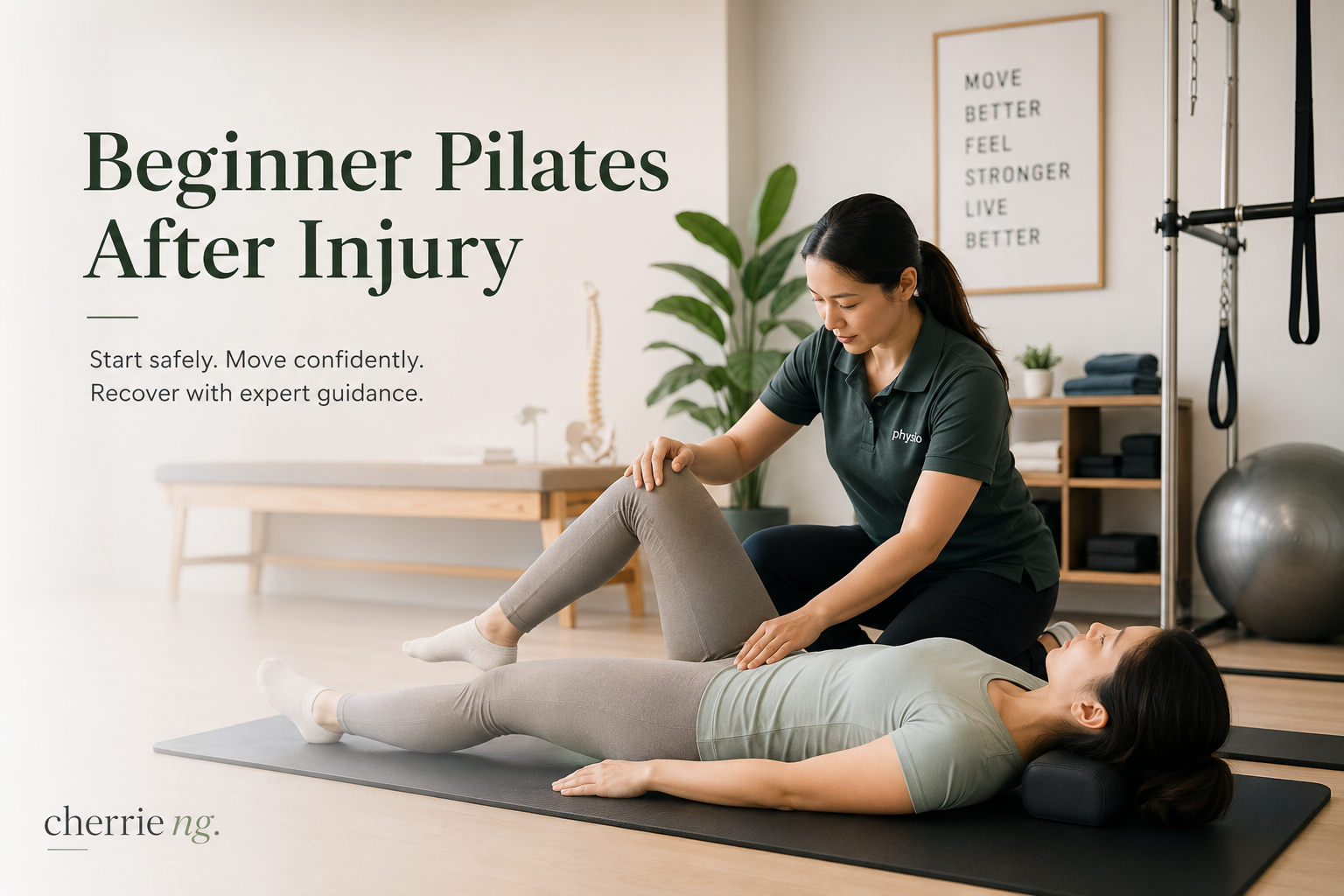
Beginner Pilates after injury can be helpful when the exercises are adapted to your symptoms, healing stage, strength and confidence. The safest starting point is not the hardest class you can tolerate, but a clear plan that helps you move without repeatedly provoking symptoms.
If you are in Kuala Lumpur or Selangor and want to restart exercise after pain, injury or a flare-up, a physiotherapy or rehab Pilates assessment can help clarify what your body is ready for.
When is it safe to start Pilates after injury?
It depends on the injury, symptoms and recovery stage. Some people can begin gentle breathing, mobility and control work early. Others may need medical clearance, physiotherapy assessment or a period of load management before Pilates is appropriate.
Pilates may be more suitable when:
- Pain is settling instead of worsening
- Swelling, bruising or sharp pain is improving
- Daily activities are becoming easier
- You can move gently without strong symptom increase
- You understand what movements to avoid or modify
- You have guidance on how to progress
If you are unsure, start with assessment. Guessing can lead to doing too much too soon, or avoiding movement longer than needed.
What a rehab-focused Pilates assessment may look at
A physiotherapy-led Pilates session may look at your symptom history, injury timeline, movement patterns, strength, mobility, balance, breathing strategy, posture and goals.
The assessment helps decide whether you should begin with mat exercises, reformer support, mobility drills, strength work, balance training or a simpler home programme.
For example, someone returning after a back pain flare-up may need gentle spinal mobility and hip strength. Someone recovering from a knee or ankle injury may need step control, balance and lower-limb strength before moving into more complex Pilates positions.
The aim is not just to choose exercises that look safe. It is to choose exercises that match what your body can control today.
How beginners can start safely
Start with low-intensity exercises that allow steady breathing, controlled movement and a comfortable range. You should feel effort, but not sharp pain, spreading symptoms or a strong flare-up afterward.
Useful early goals may include:
- Rebuilding confidence with basic movement
- Improving breathing and trunk control
- Restoring comfortable mobility
- Practising balance and coordination
- Gradually increasing strength and load
- Learning what symptoms mean during exercise
Progress should usually be gradual. A small increase in resistance, range, time or balance challenge can be enough at the beginning.
What to avoid when restarting
Avoid treating Pilates as a test of willpower. Pushing through sharp pain, rushing to advanced movements or joining a class that cannot be modified may slow your progress.
It is also worth being careful with:
- Exercises that reproduce your exact injury pain strongly
- Fast transitions when balance or control is not ready
- High-resistance reformer springs too early
- Long holds that make symptoms build
- Comparing your level with other people in class
- Doing extra home exercises without knowing how your body responds
This does not mean movement should feel perfect. Mild muscle effort or gentle stiffness can be normal. The key is whether symptoms settle and your capacity improves over time.
When physiotherapy should come first
Choose physiotherapy assessment before Pilates if pain is new, worsening, linked to trauma, spreading down the arm or leg, or affecting daily activities. Assessment should also come first if you notice numbness, weakness, balance changes, unexplained symptoms or pain that feels unusual for you.
Seek medical care promptly if pain follows major trauma, worsens quickly, comes with fever, unexplained weight loss, new numbness or weakness, loss of bladder or bowel control, chest pain, or symptoms that feel unusual for you.
Pilates can support recovery, but it should not replace medical review or physiotherapy assessment when symptoms need screening.
How to know you are progressing well
Good progress often looks quiet at first. You may notice less fear with movement, better control, fewer flare-ups, improved daily comfort, or the ability to do slightly more without symptoms increasing.
As your body adapts, exercises can progress from supported control to more strength, balance, resistance and task-specific movement. For some people, that may include reformer Pilates. For others, mat exercises and home practice may be enough.
The best plan is the one you can repeat consistently and adjust when symptoms change.
Related reading
- What Is Rehab Pilates and How Is It Different from Regular Pilates?
- Clinical Pilates vs Regular Pilates: Which Is Better for Recovery?
- Physiotherapist-Led Pilates in KL: Who Is It Suitable For?
- Mat Pilates vs Reformer Pilates: Which Is Better for Beginners and Rehab?
- Why Breathing Matters in Pilates-Based Rehab
- Should Exercises Hurt During Rehab? How to Understand Pain Signals
Frequently asked questions
Can I start Pilates while I still have pain?
Sometimes, but the exercises should be adapted and symptoms should be monitored. If pain is worsening, sharp, spreading or unclear, assessment should come before starting.
Is reformer Pilates safer after injury?
Not automatically. Reformer Pilates can provide support and resistance, but the exercise choice matters more than the equipment. A poorly matched reformer exercise can still be too much.
How often should beginners do Pilates after injury?
Frequency depends on the injury, symptoms and recovery stage. Many people do better with shorter, consistent sessions and gradual progression instead of intense sessions that create flare-ups.
If you are unsure how to restart after injury, you can WhatsApp Cherrie to ask whether physiotherapy, rehab Pilates or a guided assessment is the better first step.
Foundational clinical sources and further reading
These authoritative sources provide general background relevant to this topic; they are not claim-by-claim citations. This content is educational and does not replace individual assessment, diagnosis or emergency medical care.
- What is physiotherapy? — World Physiotherapy
- WHO guidelines on physical activity and sedentary behaviour — World Health Organization