Rehab Pilates
Mat Pilates vs Reformer Pilates: Which Is Better for Beginners and Rehab?
Compare mat and reformer Pilates for beginners, rehab and pain-sensitive movement, with guidance on when assessment should come first.
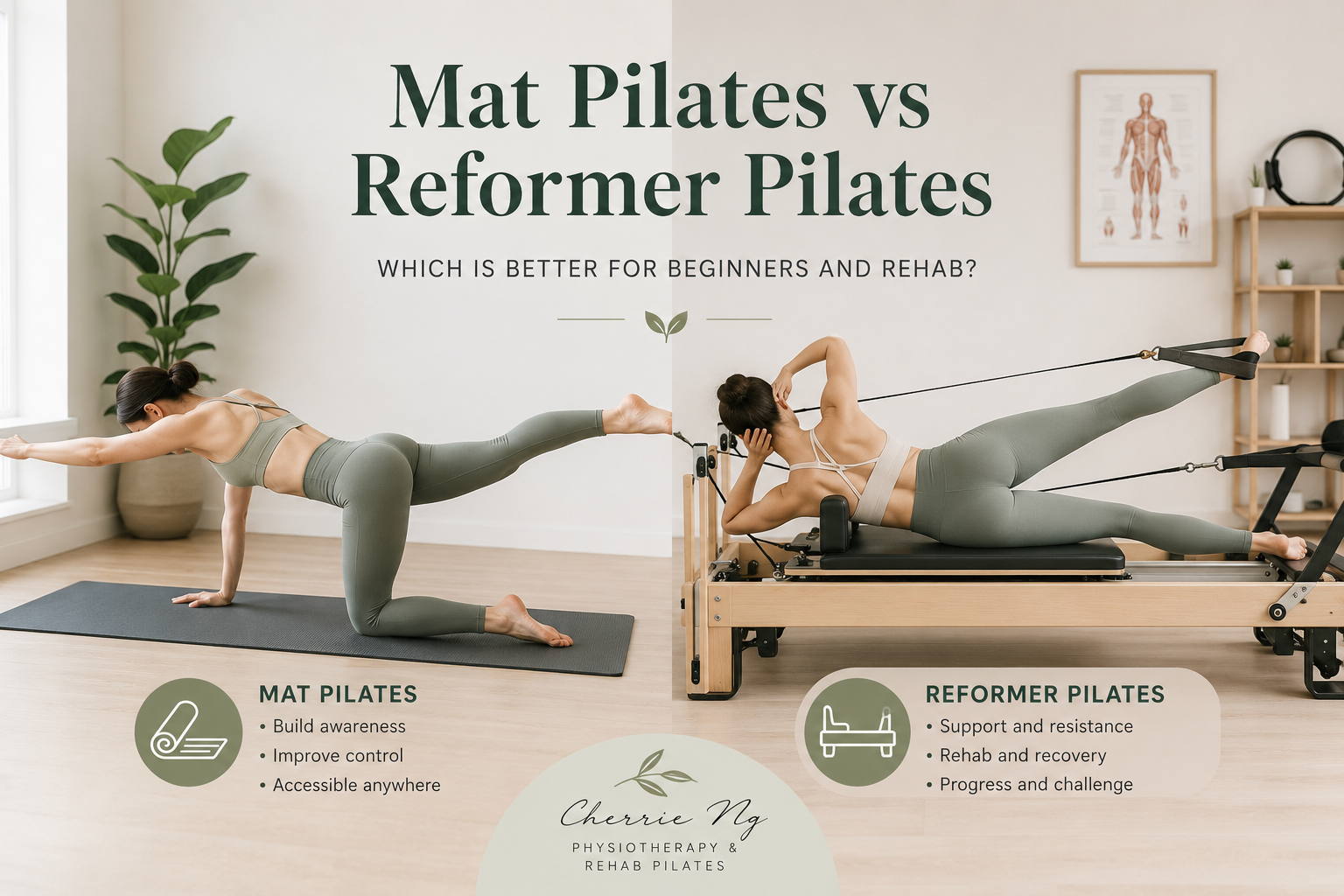
Mat Pilates and reformer Pilates can both be useful for beginners and rehab, but neither is automatically better. The better choice depends on your symptoms, confidence, strength, mobility, goals and whether you need assessment before starting.
For people in Kuala Lumpur or Selangor who are recovering from pain, injury or posture strain, the safest starting point is usually the one that can be adapted clearly to your current body.
What mat Pilates usually offers
Mat Pilates uses your body weight, gravity and sometimes small props such as bands, balls or rings. It can be simple, portable and easy to practise at home once you understand the exercises.
Mat work may suit you if:
- You want simple exercises that do not need equipment
- Your symptoms are settled enough for floor-based movement
- You want to build body awareness, breathing and control
- You prefer a lower-cost or home-practice option
- You need a programme that can continue outside the studio
The challenge is that mat Pilates can be harder than it looks. Some exercises require strong control against gravity, and beginners may need modifications before attempting classic Pilates movements.
What reformer Pilates changes
Reformer Pilates uses a spring-loaded carriage, straps and pulleys. The equipment can provide support, feedback or resistance depending on how it is set up.
For rehab-focused sessions, reformer work may help when you need:
- More support while learning a movement
- Adjustable resistance for strength work
- Options to exercise lying down, sitting, kneeling or standing
- More feedback for alignment and control
- A gradual way to progress balance, coordination and load
This does not mean reformer Pilates is always easier. Some reformer exercises are very challenging. What matters is whether the instructor or physiotherapist can choose the right version for your current stage.
Which is better for beginners?
For a healthy beginner with no pain or major movement concerns, either mat or reformer Pilates can be a good starting point. A clear instructor, sensible progressions and the right class level matter more than the equipment.
Mat Pilates may be easier to continue at home. Reformer Pilates may give more support and variety in the studio. Some people benefit from starting with reformer work to understand control, then using mat exercises for home practice.
If you feel anxious about movement, have old injuries, or are not sure what your body can tolerate, a one-to-one assessment may help you choose more safely.
Which is better for rehab?
For rehab, the best choice is the one that matches your assessment. A physiotherapist-led session may look at your symptoms, movement patterns, strength, mobility, breathing strategy, posture, daily activities and goals before deciding whether mat, reformer or a mix of both makes sense.
For example, someone with back pain may start with gentle mat-based breathing and mobility, then move to reformer resistance later. Another person may use reformer support early because floor exercises are uncomfortable or too difficult.
The method is less important than the clinical reasoning. Rehab Pilates should not be a fixed list of “safe” exercises. It should be adjusted based on how your body responds.
When physiotherapy should come first
Start with physiotherapy assessment if your pain is new, worsening, linked to trauma, spreading down the arm or leg, or affecting daily activities. You should also seek assessment if you have numbness, weakness, balance changes, unexplained symptoms or pain that feels unusual for you.
Seek medical care promptly if pain follows major trauma, worsens quickly, comes with fever, unexplained weight loss, new numbness or weakness, loss of bladder or bowel control, chest pain, or symptoms that feel unusual for you.
Pilates can support recovery, but it should not replace medical review or physiotherapy assessment when symptoms need screening.
A simple way to decide
Choose mat Pilates if you want accessible exercises, home practice and simple movement control, and your body is ready for floor-based work.
Choose reformer Pilates if you want equipment support, adjustable resistance and more studio-based guidance.
Choose physiotherapy-led rehab Pilates if you need exercise adapted around pain, injury history, post-natal recovery, surgery history or movement confidence.
If you are unsure, begin with assessment rather than guessing which equipment is better. The right starting point should feel clear, controlled and matched to your current capacity.
Related reading
- What Is Rehab Pilates and How Is It Different from Regular Pilates?
- Reformer Pilates for Rehab in KL: Who It Helps and What to Ask Before Booking
- Beginner Pilates After Injury: How to Start Safely with Rehab-Focused Guidance
Frequently asked questions
Is reformer Pilates better than mat Pilates for beginners?
Not always. Reformer Pilates can offer support and adjustable resistance, but mat Pilates can be simpler and easier to practise at home. The better choice depends on your body, goals and class level.
Is mat Pilates enough for rehab?
Mat Pilates may support rehab when the exercises are chosen carefully and progressed gradually. If symptoms are persistent, unclear or worsening, assessment should guide the plan.
Can I do both mat and reformer Pilates?
Yes. Many people use reformer sessions for guided progression and mat exercises for home practice. The mix should match your symptoms, strength and recovery stage.
If you are in Kuala Lumpur or Selangor and want help choosing between mat Pilates, reformer Pilates and physiotherapy-led rehab, you can WhatsApp Cherrie to ask what starting point may suit your situation.
Foundational clinical sources and further reading
These authoritative sources provide general background relevant to this topic; they are not claim-by-claim citations. This content is educational and does not replace individual assessment, diagnosis or emergency medical care.
- What is physiotherapy? — World Physiotherapy
- WHO guidelines on physical activity and sedentary behaviour — World Health Organization