Post-Natal
Postnatal Pilates in KL: How to Restart Safely After Birth
Learn when and how to restart postnatal Pilates in KL, with gradual progressions, symptom checks and guidance on when to seek care.
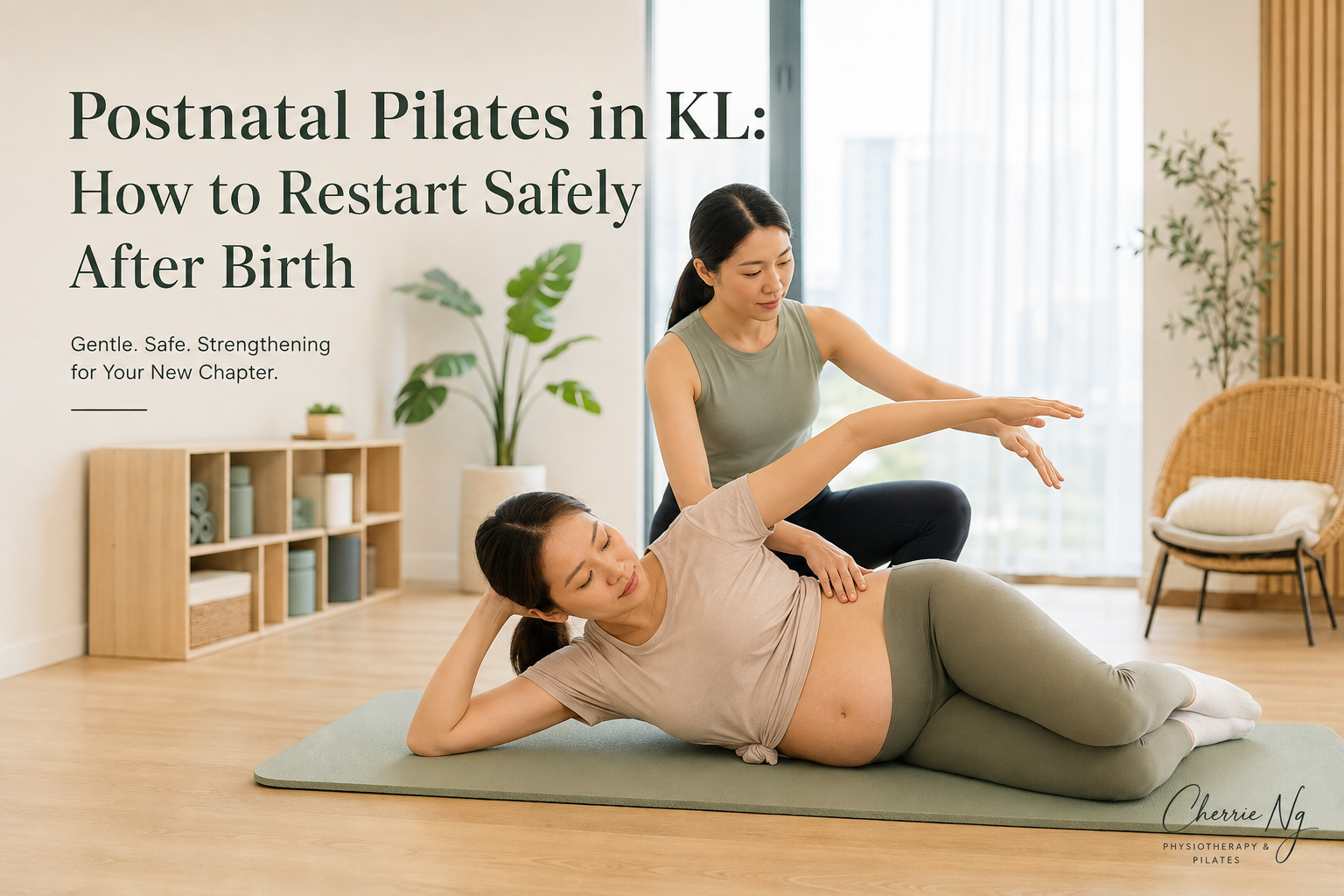
Postnatal Pilates can be a gentle way to reconnect with movement after birth, but the safest starting point is not the same for everyone. Your delivery, wound healing, bleeding, pain, pelvic-floor symptoms, sleep, previous exercise and medical advice all matter more than reaching a particular week on the calendar.
For some mothers, an early session may mean breathing, comfortable mobility and short periods of low-load movement. For others, especially after a caesarean birth or complications, structured Pilates may need to wait or be adapted. This guide provides general education; it does not replace postnatal medical review or an individual exercise assessment.
When can you start postnatal Pilates?
There is no universal date. The American College of Obstetricians and Gynecologists advises that exercise can resume gradually when medically safe, with timing influenced by whether the birth was vaginal or caesarean and whether medical or surgical complications are present.
The NHS guidance on exercise after birth similarly says that gentle movement may begin when you feel ready after a straightforward birth, while strenuous or high-impact exercise needs more caution and professional advice after a complicated delivery or caesarean birth.
In practice, this means:
- Gentle breathing, pelvic-floor awareness, comfortable walking and easy mobility may be appropriate early for some people
- A six-to-eight-week review can be a useful checkpoint, but it is not an automatic clearance for every exercise
- Caesarean wounds, significant tearing, assisted delivery, infection, heavy bleeding, blood-pressure concerns or other complications can change the timeline
- Returning to running, jumping, heavy lifting or demanding Pilates usually needs more preparation than returning to quiet mat-based movement
If your obstetrician, doctor or midwife has given specific restrictions, follow those first.
What makes Pilates “postnatal”?
Postnatal Pilates is not simply an easier version of a general class. It should account for recovery after pregnancy and birth, current symptoms, feeding and carrying demands, and the large variation in energy from one day to another.
A suitable session may use Pilates principles—breathing, alignment, controlled movement and progressive resistance—without assuming that every mother needs the same “core activation” routine. The pelvic floor and abdominal wall need to coordinate with breathing, hips, back and whole-body movement; they do not work as isolated switches.
The aim is also not to flatten a “mum tummy,” force an abdominal gap closed or rush back to a pre-pregnancy body. Useful goals are often more practical: getting up comfortably, walking farther, carrying your baby, returning to work, lifting with confidence or preparing for a preferred sport.
What might a first session include?
A postnatal Pilates or physiotherapy assessment may begin with questions about your pregnancy and birth, current bleeding, wound recovery, pain, bladder or bowel changes, pelvic heaviness, feeding positions, sleep and the activities you want to regain.
Movement screening may consider:
- Breathing and rib-cage movement without excessive bracing
- Pelvic-floor coordination and whether effort causes bearing down
- Abdominal-wall tension, control and any noticeable doming
- Back, hip and shoulder mobility
- Leg, hip and upper-body strength for carrying and lifting
- Balance, walking and everyday tasks such as rolling, rising and picking items up
- How symptoms respond during the session and later that day
An external movement assessment does not replace specialist pelvic-health evaluation. Persistent leaking, pelvic pressure, pain with intercourse, bowel concerns or symptoms requiring an internal examination may need referral to an appropriately trained pelvic-health physiotherapist or doctor.
A gradual postnatal Pilates progression
Progress is better guided by response than by completing a fixed list. A practitioner may move through stages such as:
- Reconnect: relaxed breathing, gentle pelvic-floor coordination, supported mobility and comfortable position changes.
- Build control: heel slides, bent-knee opening, bridges, side-lying hip work or other low-load movements suited to the assessment.
- Develop strength: squats, hinges, rows, carries and progressively harder trunk, hip and upper-body work.
- Prepare for real demands: lifting a baby carrier, longer walks, returning to gym training, and later impact or sport-specific tasks where relevant.
The exercise name alone does not determine whether it is safe. Range, load, speed, breath strategy, symptoms and recovery all matter. A roll-up or plank is not permanently forbidden after birth, but it may be too demanding at one stage and appropriate later.
Research should also be interpreted carefully. A 2025 systematic review of postpartum exercise found that pelvic-floor muscle training during the first postpartum year reduced the odds of urinary incontinence and pelvic-organ prolapse in the included evidence. However, the authors noted important limitations, including limited evidence for exercise without pelvic-floor training and low-certainty evidence for some abdominal-separation outcomes. Pilates should therefore be individualised rather than promoted as a guaranteed cure.
Signs that the session needs adjusting
Pause, reduce the challenge or seek an assessment if movement causes:
- Increasing pelvic heaviness, pressure or a vaginal bulging sensation
- Urine or bowel leakage that is new or becoming more frequent
- Pelvic, abdominal, back or wound pain
- Increased postnatal bleeding during or after exercise
- Repeated abdominal doming that you cannot comfortably manage
- Dizziness, unusual breathlessness or feeling faint
- A flare that affects normal function or does not settle with recovery
These signs do not always mean you must stop exercising altogether. They mean the current dose, technique or activity may not suit you yet, or that another healthcare review is needed.
When Pilates should wait and medical care comes first
Some symptoms are not Pilates problems. The CDC Hear Her campaign advises immediate medical care for urgent maternal warning signs during pregnancy or within a year after birth. These include heavy bleeding, chest pain or a fast-beating heart, trouble breathing, severe headache, vision changes, fainting, fever, severe persistent abdominal pain, and swelling, redness or pain in one leg. Thoughts of harming yourself or your baby also require urgent help.
If something feels seriously wrong—even if it is not on a checklist—stop exercising and contact emergency or maternity care. Tell the healthcare team that you gave birth recently.
Choosing a postnatal Pilates session in KL
Before joining a general class, ask whether the instructor routinely works with postnatal clients, how they screen for symptoms, and whether exercises can be modified. A small or one-to-one setting may be useful when you have pain, pelvic-floor symptoms, caesarean recovery concerns, abdominal-wall questions or uncertainty about your starting level.
Cherrie’s physiotherapy-led approach can combine movement assessment with rehab Pilates principles for clients in Kuala Lumpur and selected Selangor areas. Suitability, location and whether home-based or private support is available are confirmed case by case through WhatsApp.
Frequently asked questions
Do I have to wait six weeks before doing any Pilates?
Not necessarily. Some gentle movement may be appropriate sooner after an uncomplicated birth, while some mothers need longer. Six weeks is a common review point, not a universal pass for every exercise. Follow your medical advice and let symptoms, healing and the exercise demand guide progression.
Is postnatal Pilates safe after a caesarean birth?
It can be suitable once medically safe, but a caesarean is abdominal surgery and recovery varies. Wound healing, pain, complications and daily function should be considered before adding load. Early work may focus on breathing, walking and supported movement rather than demanding abdominal exercise.
Can Pilates close diastasis recti?
Exercise may improve abdominal function and can change inter-rectus distance for some people, but no Pilates programme can promise to “close the gap.” Comfort, tension, strength and function are more useful measures than appearance or finger width alone.
What if I leak urine during exercise?
Leaking is a reason to adjust and seek assessment, not something you have to accept as normal forever. The exercise dose, breathing, pelvic-floor strategy and impact level may need to change, and a pelvic-health physiotherapist may be appropriate.
Related reading
- Back Pain After Pregnancy: Why It Happens and What Helps
- Pelvic Floor Physiotherapy Basics: When to Ask for Support
- Diastasis Recti Physiotherapy: What New Mothers Should Know
- Post-Natal Physiotherapy in KL: A Gentle Return to Movement
- Deep Core vs Six-Pack Abs: Why Rehab Pilates Focuses on Control
- Why Breathing Matters in Pilates-Based Rehab
- What Is Rehab Pilates and How Is It Different from Regular Pilates?
If you are in Kuala Lumpur or Selangor and want a symptom-aware way to restart movement after birth, you can WhatsApp Cherrie to ask whether postnatal physiotherapy or one-to-one rehab Pilates may suit your current stage.
Sources
- ACOG: Physical Activity and Exercise During Pregnancy and the Postpartum Period
- NHS: Keeping Fit and Healthy with a Baby
- British Journal of Sports Medicine: Impact of Postpartum Exercise on Pelvic Floor Disorders and Diastasis Recti Abdominis
- CDC Hear Her: Providing Support for Pregnant or Postpartum Women
Foundational clinical sources and further reading
These authoritative sources provide general background relevant to this topic; they are not claim-by-claim citations. This content is educational and does not replace individual assessment, diagnosis or emergency medical care.
- What is physiotherapy? — World Physiotherapy
- WHO guidelines on physical activity and sedentary behaviour — World Health Organization