Post-Natal
Back Pain After Pregnancy: Why It Happens and What Helps
A practical guide to back pain after pregnancy, including daily-load changes, safe movement, physiotherapy and warning signs to seek care.
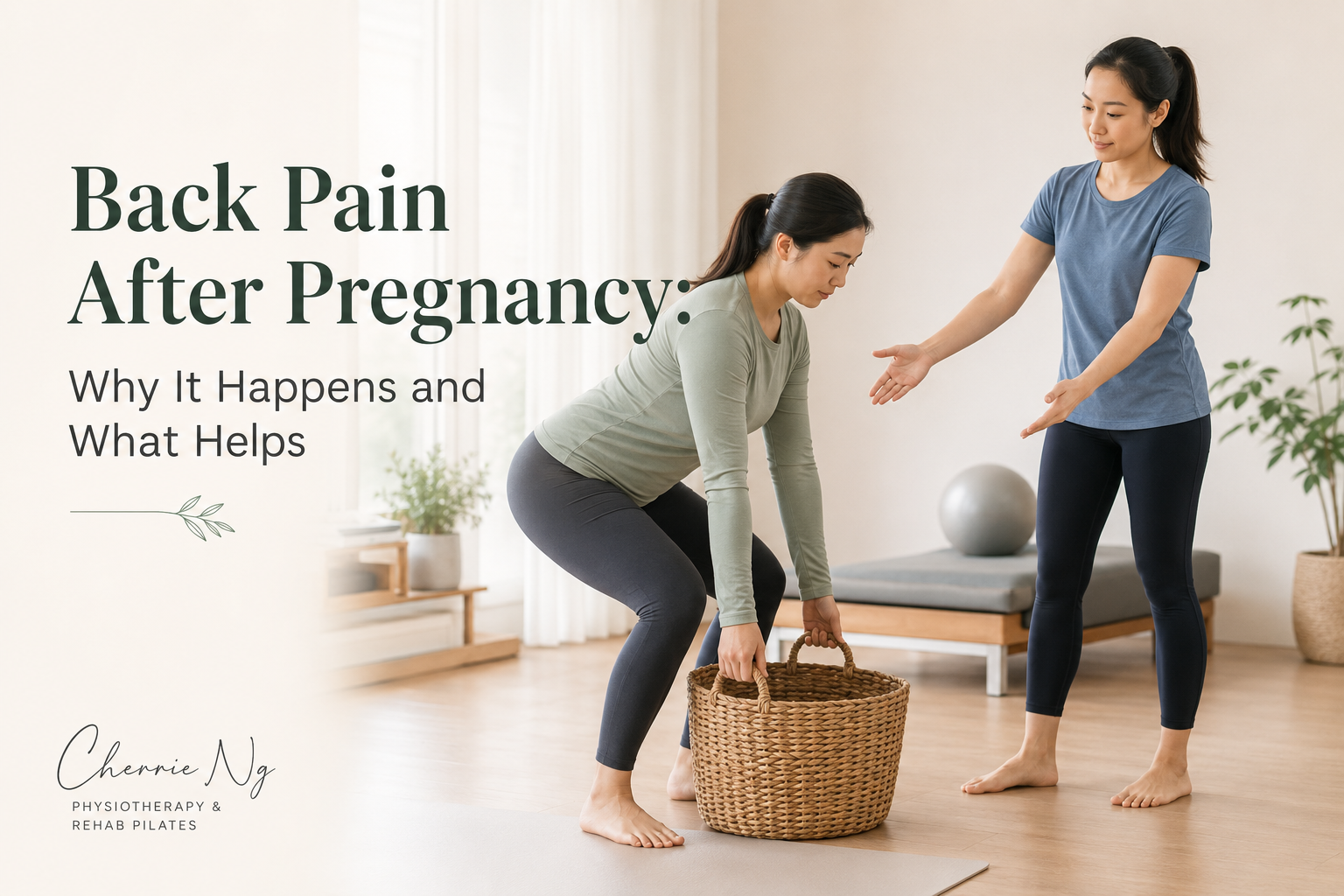
Back pain after pregnancy can be linked to recovery from pregnancy or birth, a previous episode of pain, and the new physical demands of feeding, carrying, bending and lifting. It does not automatically mean your core is damaged or your posture is wrong. What helps depends on where the pain is, what brings it on, whether it travels, and how your body is recovering.
For many mothers in Kuala Lumpur and Selangor, a useful first step is to make daily tasks more manageable and return to movement gradually. Pain that is severe, worsening, accompanied by other postnatal warning signs or associated with new neurological symptoms needs medical assessment rather than an exercise plan alone.
Why can your back hurt after pregnancy?
There is rarely one explanation that applies to everyone. The NHS guide to the post-pregnancy body notes that physical problems after birth may relate to pregnancy, birth, or childcare tasks such as lifting and bending.
Your back may be responding to a combination of:
- Repeated feeding, settling or changing positions that are held for longer than feels comfortable
- Frequent lifting from a cot, floor, car seat or low surface
- Carrying mainly on one side
- A quick increase in walking, housework or exercise after a quieter recovery period
- Reduced sleep and fewer opportunities to change position or recover
- Back or pelvic girdle pain that began during pregnancy and has not yet settled
- Guarding after a caesarean birth, perineal injury or a painful delivery experience
These are possible contributors, not a diagnosis. The same task may be comfortable for one person and provocative for another. A single posture is also unlikely to explain the whole problem; comfort, variation, load, symptoms and recovery matter more than trying to hold a “perfect” position all day.
What can you try first?
If the pain is mild, stable and not accompanied by warning signs, start with small changes that reduce repeated strain without making you afraid to move:
- Support feeding positions: use pillows so the baby comes towards you, support your feet and back, and change sides or positions when practical.
- Bring the load closer: move close to the cot, basket or changing surface before lifting instead of reaching from a distance.
- Use your legs and hips: a squat, split stance, kneel or hip hinge may feel easier than repeatedly bending from one fixed position.
- Share and vary carrying: switch sides, use two hands where possible, and check that a carrier or sling fits comfortably.
- Take short movement breaks: a brief walk, gentle mobility or simply changing position can be more realistic than waiting for a full workout.
- Build activity gradually: increase walking, lifting or exercise in steps, and use your response later that day and the next day to guide the dose.
The NHS post-pregnancy guidance includes practical ideas such as supporting the back during feeding, raising changing tasks when safe, and using the knees when lifting. These are options to test for comfort, not rigid rules that you have failed if your back occasionally rounds.
Should you rest or exercise?
Complete rest is rarely the only answer for uncomplicated low back pain. The NICE guideline on low back pain and sciatica recommends tailored self-management, encouragement to continue normal activities, and exercise chosen around the person’s needs, preferences and capabilities.
After pregnancy, that may begin with comfortable walking, breathing, gentle trunk or hip movement, and low-load strength work. It does not have to begin with planks, sit-ups or intense “core activation.” A manageable programme may later build towards squats, hinges, rows, carries and the specific tasks you need for childcare, work or exercise.
A 2025 systematic review and meta-analysis of postpartum lumbopelvic pain included 37 randomised trials and found short-term pain and disability benefits from stabilisation exercise, while the included interventions and results varied substantially. This supports exercise as a possible part of care, not one universal core routine or a guaranteed result.
What might a physiotherapy assessment look at?
A physiotherapy assessment can help distinguish a manageable activity-related pattern from symptoms that need a different care pathway. Cherrie may ask about:
- When the pain began and whether it is improving, recurring or worsening
- Whether pain stays around the back or spreads into the buttock or leg
- Pregnancy, delivery, wound recovery and medical advice
- Feeding, sleeping, lifting, carrying, work and exercise demands
- Pelvic-floor symptoms, abdominal-wall concerns and pelvic pain
- Your previous activity level and what you want to return to
Movement assessment may include walking, getting up, spinal and hip movement, breathing, balance, strength, and a relevant lifting or carrying simulation. The goal is not to grade your posture as good or bad. It is to identify modifiable tasks, choose tolerable movement, and build enough capacity for daily life.
If symptoms suggest an internal pelvic-floor assessment or specialist postnatal care, Cherrie can recommend referral to an appropriately trained pelvic-health physiotherapist or doctor rather than working outside scope.
Can postnatal Pilates help back pain?
Postnatal or rehab Pilates may be useful when it is adjusted to your healing, symptoms and current capacity. A session might use supported mobility, breathing, hip and trunk control, and progressive resistance before moving towards more demanding exercises.
Pilates should not be sold as a way to “put everything back into place.” It is one way to practise graded movement. If an exercise increases pain sharply, produces spreading leg symptoms, causes pelvic heaviness or leakage, increases bleeding, or creates a flare that does not settle, the session needs adjusting and further assessment may be appropriate.
When should you get assessed?
Consider a physiotherapy or medical assessment if back pain is persistent, keeps returning, disturbs sleep, limits walking or childcare, travels into a leg, or leaves you unsure how to move. Seek advice earlier if you had significant pregnancy-related pelvic girdle pain, birth complications, a fall, or symptoms that are getting worse.
Get urgent medical care for postnatal warning signs
The CDC urgent maternal warning-sign guidance advises immediate medical care during pregnancy and up to one year after birth for symptoms including severe or worsening headache, fainting, fever of 38°C or higher, trouble breathing, chest pain, severe persistent abdominal or back pain, heavy bleeding, or severe one-sided leg swelling, redness or pain. If something feels seriously wrong, seek urgent care and tell the healthcare team that you gave birth within the past year.
Back pain also needs emergency assessment if it comes with loss of feeling around the genitals or anus, new bladder or bowel changes, or pain, tingling, weakness or numbness in both legs, according to the NHS back-pain guidance.
Frequently asked questions
Is back pain normal after giving birth?
It is a recognised postnatal concern, but “common” does not mean you must ignore it. Mild symptoms may settle as tasks are adjusted and activity is rebuilt. Persistent, worsening or unusual pain deserves assessment.
Is weak core the cause of postpartum back pain?
Not by itself. Trunk capacity can be one useful part of an assessment, but pain may relate to several factors, including previous symptoms, activity changes, repeated tasks, recovery and general health. Treatment should not be based on one muscle label alone.
Can I lift my baby if my back hurts?
Many people can continue necessary lifting with a closer load, a comfortable stance, help when available and gradual practice. If lifting causes severe or spreading pain, or you feel unsafe, seek individual advice rather than repeatedly pushing through.
How long should postpartum back pain last?
There is no reliable deadline for every person. Look at the direction of change and its impact on function instead of waiting for a fixed week. Pain that is not improving, keeps recurring or limits daily life is a reasonable reason to be assessed.
Related reading
- Post-Natal Physiotherapy in KL: A Gentle Return to Movement
- Postnatal Pilates in KL: How to Restart Safely After Birth
- Pilates for Back Pain in KL: When It Helps and When to Get Assessed
- Diastasis Recti Physiotherapy: What New Mothers Should Know
- Pelvic Floor Physiotherapy Basics: When to Ask for Support
If you are in Kuala Lumpur or Selangor and back pain is making feeding, carrying, sleep or your return to exercise harder, you can WhatsApp Cherrie to ask whether a physiotherapy assessment, home visit or one-to-one rehab Pilates session may suit your current stage.
Sources and clinical references
Foundational clinical sources and further reading
These authoritative sources provide general background relevant to this topic; they are not claim-by-claim citations. This content is educational and does not replace individual assessment, diagnosis or emergency medical care.
- What is physiotherapy? — World Physiotherapy
- WHO guidelines on physical activity and sedentary behaviour — World Health Organization