Corporate Wellness
How to Build a Workplace Movement-Break Programme Employees Can Actually Use
A practical HR guide to an inclusive workplace movement-break programme with realistic prompts, manager support and useful follow-up.
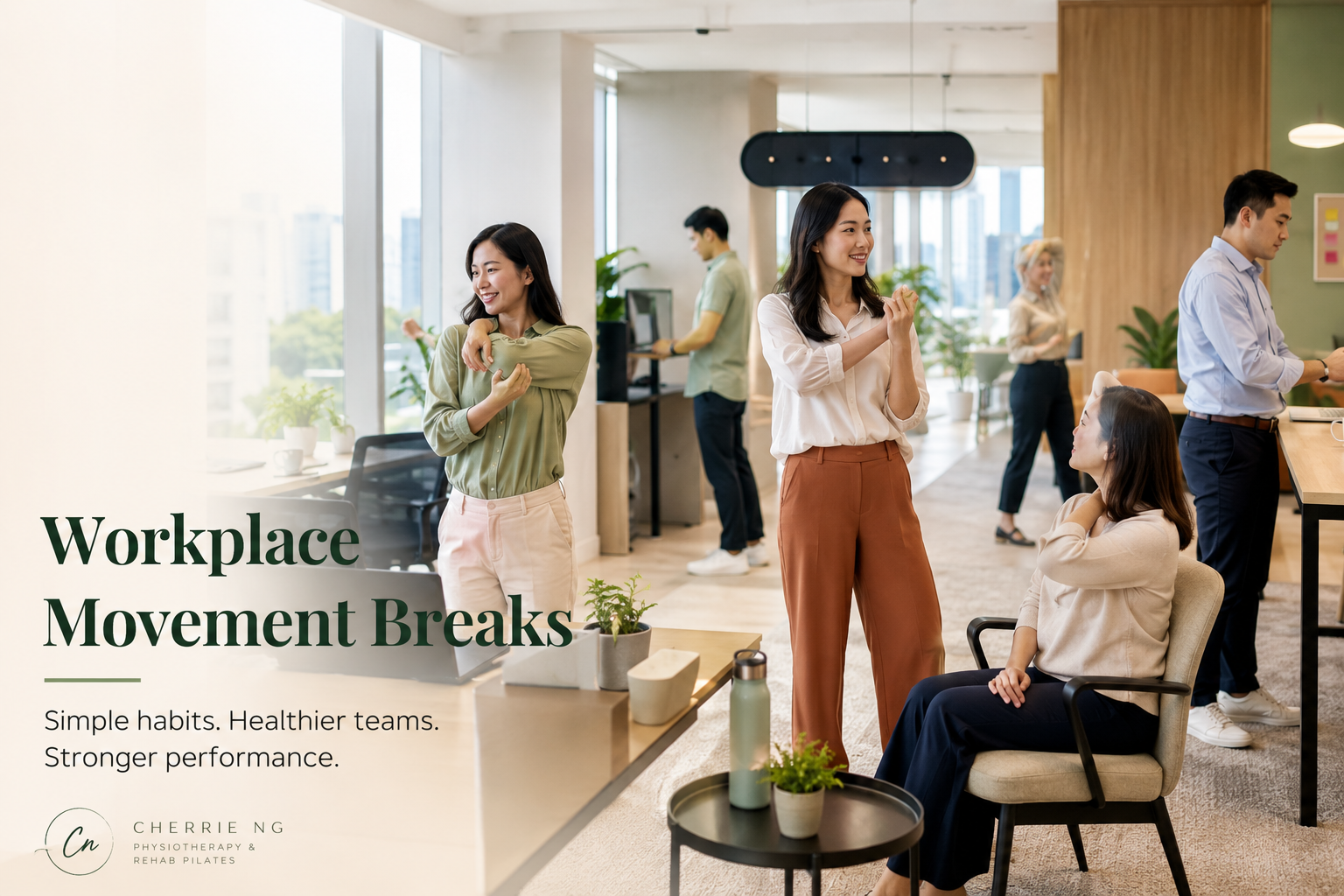
A workplace movement-break programme is most usable when it fits the work people already do. Instead of requiring every employee to perform the same stretch at the same time, give them several low-intensity ways to change position or task, connect those options to natural moments in the day, and make sure managers genuinely allow the time.
The goal is not to promise a pain-free workforce. It is to make comfortable movement and task variation easier during the working day. Start with employee input, test the idea with one team or workflow, then improve it using simple feedback.
What is a workplace movement-break programme?
It is a planned way to help employees interrupt prolonged, repetitive or screen-based work with a brief change in movement, posture or task. Depending on the role and workplace, that could mean:
- leaving the screen for a non-screen task
- standing for part of a phone call
- walking to refill water or speak to a colleague
- choosing a few comfortable seated or standing movements
- changing position between meetings
- taking a short, planned activity break when the job has no natural task change
Malaysia’s Department of Occupational Safety and Health (DOSH) recommends interspersing display-screen work with other office duties or productive rest breaks away from the screen. Its guidance also discusses job variety and rotation as ways to change posture and rest particular muscle groups. DOSH Malaysia 2024 display-screen equipment guideline
A programme is more than a poster, timer or one-off stretch class. Those can be useful components, but they do not address workload, meeting culture, space, manager expectations or whether employees feel comfortable participating.
Why one reminder does not solve the problem
An alert can remind someone to move, but it cannot create permission to pause an urgent task. Employees may dismiss reminders when they are in calls, serving customers, working in a small shared space or worried that leaving the desk will look unproductive.
The US Centers for Disease Control and Prevention (CDC) workplace health model recommends assessing employee needs and the work environment, involving employees early, and combining individual actions with organisational strategies. The World Health Organization (WHO) likewise notes that workplace physical-activity programmes need practical, context-specific approaches because organisations face different constraints. CDC workplace health programme model WHO workplace physical-activity guidance for small and medium-sized enterprises
This is why a usable programme changes the work pattern as well as giving people movement ideas.
How to build the programme step by step
1. Choose one realistic goal
Begin with a goal that the programme can reasonably influence. Examples include making it easier for screen-based staff to change position, adding task variety to a repetitive workflow, or giving employees a safe menu of movement options.
Avoid goals such as eliminating all back pain, preventing every injury or guaranteeing productivity gains. Pain, health and work performance have many influences, and a general group programme cannot control all of them.
2. Ask employees how the workday actually runs
Use a short anonymous survey, team conversation or observation of the workflow. Ask about:
- long periods with no natural task change
- calls, deadlines or service periods that make breaks difficult
- available space and clothing requirements
- useful moments for prompts
- preference for seated, standing, walking or task-change options
- accessibility, privacy and language needs
Do not ask employees to disclose diagnoses to the group. Symptom-specific concerns need a private route.
3. Create a movement menu, not one compulsory routine
Offer choices so employees can select an option that fits their role, space and comfort that day. A simple menu could include:
| Work moment | Possible movement break |
|---|---|
| After finishing a document | Look away from the screen, change position or walk to the printer |
| Between meetings | Stand, refill water or take a comfortable corridor walk |
| During a suitable phone call | Stand or walk if the task, privacy and safety allow it |
| When leaving the keyboard | Open and close the hands, move the shoulders or change the arm position |
| When standing is not suitable | Choose a comfortable seated trunk, ankle or shoulder movement |
| When movement exercises are not wanted | Switch to a productive non-screen task |
The CDC’s workplace physical-activity guide includes both seated and standing options and advises participants to select appropriate activities, start gradually and stop if an activity hurts. CDC workplace physical-activity break guide
4. Attach movement to natural work triggers
Choose events that already happen: finishing a call, sending a report, changing meeting rooms, returning from lunch or waiting for a document to load. This reduces dependence on a timer that employees may repeatedly dismiss.
If a role has no natural change of activity, HR and the manager may need to plan one. Practical UK Health and Safety Executive guidance says there is no universal break length or frequency: the pattern depends on the work, and shorter, more frequent breaks or task changes may be preferable to occasional long ones. It also says reminder software does not replace proper work planning. This is useful programme-design context, not Malaysian legal advice. HSE work-routine and break guidance
5. Make manager support visible
Managers influence whether the programme feels genuine. They can:
- tell staff when movement or task changes are acceptable
- avoid scheduling every minute of the day
- model brief position changes without turning them into a performance
- include movement options in long internal sessions
- protect employee privacy
- make clear that opting out will not be judged
If employees receive reminders while supervisors still expect continuous screen presence, the programme is unlikely to become part of normal work.
6. Keep participation voluntary and inclusive
Not everyone can or wants to stand, walk or stretch in a group. Provide seated and non-exercise options, consider mobility aids and balance needs, and make enough space for safe participation. Employees should be able to pause, modify or decline without explaining a health condition publicly.
General safety wording should be clear: choose a comfortable option, start gently, stop if an activity causes pain or difficulty, and follow individual medical or rehabilitation restrictions. Someone with a health condition or uncertainty about participation may need advice from an appropriate healthcare professional.
7. Pilot before launching widely
Test the programme with one department, meeting format or work pattern. Explain:
- why the organisation is testing it
- which movement and task-change options are available
- whether prompts will be used
- who to contact about access or comfort
- how feedback will be collected
A small pilot makes it easier to notice practical barriers before investing in a large campaign.
8. Measure usability, then adjust
Useful early questions include:
- Did employees know which options were available?
- Could they use an option without disrupting essential work?
- Did managers allow it in practice?
- Which prompts were helpful or annoying?
- Were seated and private options adequate?
- What should be changed for the next month?
Participation and usability data are more credible early measures than claiming the programme prevented pain or saved a specific amount of money. A Cochrane review of workplace interventions to reduce sitting found low- or very-low-certainty evidence for most approaches and insufficient evidence for many longer-term effects. That uncertainty supports testing and improving the programme without overstating its health impact. Cochrane review of workplace interventions for reducing sitting
Who should do what?
HR or the programme lead
Set the scope, collect employee input, coordinate privacy and accessibility, communicate the pilot and review feedback.
Managers
Make movement feasible within the workflow, model reasonable task changes and identify operational periods when alternatives are needed.
Workplace champions
Share reminders or ideas without policing participation. A champion is a contact point, not the person who decides whether someone is moving enough.
Employees
Choose comfortable options, follow relevant restrictions, report practical barriers and use the private support route for individual concerns.
Common mistakes to avoid
- Using one fixed timer for every role: customer-facing, clinical, warehouse and desk-based teams do not have the same workflow.
- Making a stretch routine compulsory: this can exclude people and encourage public disclosure of health concerns.
- Focusing only on posture: the programme should also consider task variety, workload, space and manager behaviour.
- Treating standing still as the complete solution: a standing desk provides another position, not a full movement-break programme.
- Launching without follow-up: even a good idea may need different prompts, clearer permission or more inclusive options.
- Promising pain prevention: a general programme cannot diagnose or manage every employee’s symptoms.
How a physiotherapist-led session can support the programme
For workplaces in Kuala Lumpur and selected Selangor areas, Cherrie can discuss an in-person corporate wellness session based on the team’s work pattern, space and goals. Depending on the agreed scope, a session may include movement-break education, comfortable seated and standing options, desk-health guidance, or a mat-based corporate Pilates activity.
The session can help HR introduce a practical movement menu and explain safe participation boundaries. It does not replace organisational changes, individual assessment or medical care. Format, location, group size and availability should be confirmed case by case.
When a group programme is not enough
An employee may benefit from individual assessment when pain keeps returning, is worsening, affects sleep or work, or comes with numbness, weakness or another change that needs personal review. A group session should not be used to identify the cause or prescribe one employee’s rehabilitation plan.
Urgent or severe symptoms should follow the organisation’s emergency and medical-care procedures rather than waiting for the next wellness activity.
Related reading
- Office Stretching Routine: Simple Movement Breaks for Desk Workers
- Corporate Wellness Ideas in KL: 8 Practical Activities for Office Teams
- Back Pain from Sitting Too Long: A Guide for Office Workers
- Corporate Wellness for Hybrid Teams in Malaysia: Supporting Home and Office Workers
- How to Choose an Office Wellness Workshop in KL
- Ergonomics Workshop vs Workstation Assessment: What Does Your Team Need?
Sources and clinical references
- DOSH Malaysia: Guidelines on Occupational Safety and Health for Working with Display Screen Equipment 2024
- CDC: Strategies for Building a Workplace Health Program
- CDC: Workplace Physical Activity Break Guide
- WHO: Physical activity programmes for small and medium-sized enterprises
- HSE: Work routine and breaks for display-screen work
- Cochrane: Workplace interventions for reducing time spent sitting at work
Frequently asked questions
How often should employees take a movement break?
There is no universal interval for every job. Start with the role’s natural task changes and operational needs, then test whether shorter, workable changes can occur more regularly. If no task change exists, managers and HR may need to plan one.
Should a workplace movement programme be mandatory?
No. Employees should have several options and be free to modify, pause or opt out without public explanation. Organisational support can be expected; participation in a particular exercise should not be forced.
Are reminder apps enough?
They can help employees remember, but they do not solve workload, meeting patterns or manager expectations. A reminder works best when it points to a movement option that the workflow genuinely allows.
Do we need standing desks first?
No. A programme can begin with task changes, short walks, seated movements and better use of existing spaces. Standing desks may add another position for some employees, but they are not required for a useful pilot.
What if an employee has pain?
They should not be asked to exercise through pain or discuss symptoms in front of colleagues. Offer a private pathway to appropriate assessment; the group programme remains general education.
Can this work for hybrid teams?
Yes, the organisation can use a shared movement menu while allowing different triggers and options at home and in the office. If discussing a facilitated event with Cherrie, confirm the current in-person format, location and scope before booking.
Want to plan a realistic movement-break programme for your KL or Selangor team? Explore Cherrie’s corporate wellness programmes and WhatsApp your office location, group size and work pattern to discuss a suitable in-person format.
Foundational clinical sources and further reading
These authoritative sources provide general background relevant to this topic; they are not claim-by-claim citations. This content is educational and does not replace individual assessment, diagnosis or emergency medical care.
- What is physiotherapy? — World Physiotherapy