Elderly Care
Elderly Home Physiotherapy in KL: Balance, Walking and Daily Confidence
Learn what elderly home physiotherapy in KL may assess, how sessions support mobility, and when falls or sudden changes need medical care.
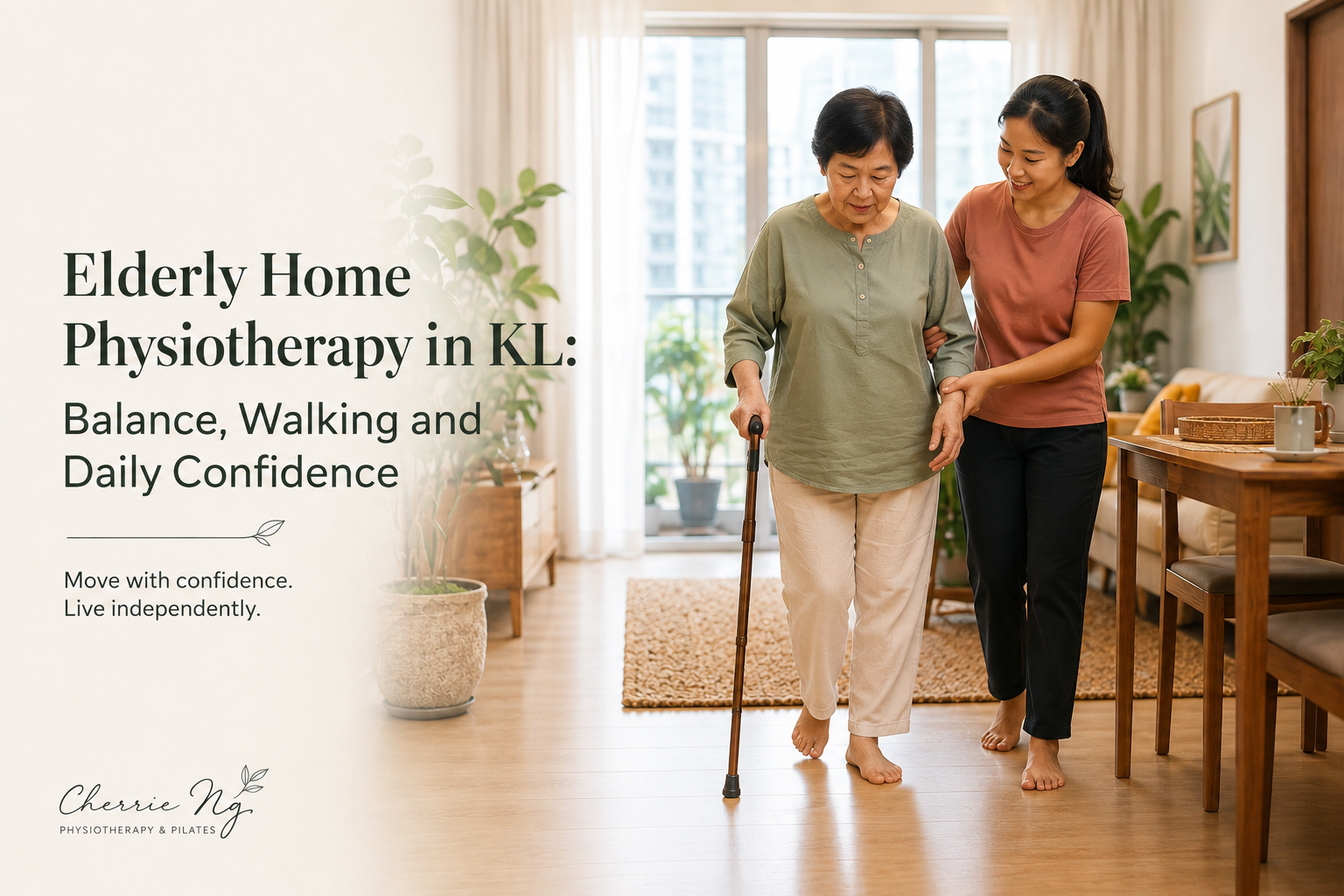
Elderly home physiotherapy in Kuala Lumpur brings mobility assessment and rehabilitation into the place where an older adult actually gets out of bed, walks to the bathroom, uses the stairs and manages daily routines. It may be practical when travelling is difficult, after hospital discharge, or when balance, strength or confidence has changed.
Age alone does not determine whether someone needs physiotherapy. The useful question is whether a change in movement is affecting safety, independence or a meaningful activity—and whether a medical issue needs attention first.
Who might benefit from a home assessment?
A home physiotherapy assessment may be worth considering when an older adult:
- Has become less steady or has had a fall or near-fall
- Walks less because of pain, weakness, breathlessness or fear
- Finds it harder to stand from a chair, get out of bed or use the toilet
- Is learning to use a cane, walking frame or other mobility aid
- Has returned home after surgery, hospital admission or a period of reduced activity
- Needs help rebuilding tolerance for stairs or short outdoor walks
- Relies on a family member for transfers or daily movement
- Has a gradual mobility change whose cause has already been medically reviewed
A sudden or unexplained decline is different. New weakness, confusion, fainting, chest symptoms, fever or an acute inability to walk should not be treated as routine deconditioning without medical assessment.
Why assess movement at home?
Clinic tests can provide useful information, but a home visit reveals the actual environment: the height of the bed and chairs, distance to the bathroom, narrow turns, steps, floor surfaces, lighting and where the walking aid is kept.
This allows the session to focus on real tasks rather than generic exercise alone. It can also show whether the current strategy is practical—for example, whether the person can turn with a walker in the corridor or stand from their usual chair without pulling on unstable furniture.
Home assessment is only one part of falls care. The 2025 NICE falls guideline recommends individualised management based on identified risk factors. A comprehensive assessment may need to consider gait, balance, strength, medication, vision, blood pressure, cognition, continence, footwear and home hazards, with referrals to the appropriate professionals.
What may happen during the first home visit?
Cherrie may first ask about the older adult’s health history, recent hospital stays, falls or near-falls, pain, dizziness, medication changes, usual walking level and goals. Please share discharge summaries, surgeon restrictions and the walking aid currently used when relevant.
With consent and appropriate safety support, movement assessment may include:
- Rolling and getting in or out of bed
- Standing up from the usual chair
- Walking speed, step pattern, turning and stopping
- Use and fit of a cane or walker
- Lower-limb movement and strength
- Balance during relevant supported tasks
- Toilet, bathroom, doorway or stair access
- Fatigue and symptom response over a short activity
- The assistance a family member currently provides
One score does not diagnose why someone is falling. The Malaysian Clinical Guidance on Management of Osteoporosis advises a broader fall evaluation for older people with recurrent falls or gait and balance abnormalities, including fall circumstances, medication, medical problems, mobility, vision, gait, balance, strength, neurological function and cardiovascular status.
Cherrie can contribute the musculoskeletal and functional physiotherapy assessment. She does not prescribe or change medication, diagnose the medical cause of a fall, provide emergency care, or replace a geriatric, neurological, cardiac, vision or occupational-therapy assessment when those are needed.
What can an elderly home physiotherapy plan include?
The plan should connect directly to a task the person wants or needs to do. Depending on assessment findings and medical guidance, it may include:
- Sit-to-stand practice using an appropriate chair height
- Lower-limb strengthening with stable support
- Balance and weight-shifting tasks matched to ability
- Walking practice with the correct aid
- Turning, doorway, bed or toilet-transfer practice
- Step or stair practice where medically appropriate
- Gradual activity and walking-tolerance progression
- A short home programme that can be repeated safely
- Family or caregiver guidance on cueing and guarding
Exercise can reduce falls among community-dwelling older adults, but the programme matters. A large Cochrane review found the clearest effect from balance and functional exercise, with multicomponent programmes commonly adding resistance work. Walking or strengthening alone should not automatically be presented as a complete fall-prevention plan.
No programme can guarantee that a person will not fall. Progress also depends on medical stability, practice between visits, symptoms, cognition, caregiver support and whether other fall-risk factors are addressed.
What does “building confidence” mean?
Confidence is not encouragement to walk without needed support. It means creating graded opportunities to complete a relevant task with an appropriate aid, environment and level of assistance.
For one person, progress may be standing from the dining chair with less help. For another, it may be reaching the lift, walking to the nearby shop or returning to a family outing. The programme can gradually adjust distance, support, speed, surface or task complexity while monitoring symptoms and safety.
If fear remains high after a fall, forcing the task can reinforce distress. The next step may need to be smaller, or medical, vision, vestibular or psychological input may be appropriate.
Is checking the home for hazards part of physiotherapy?
A physiotherapist can notice mobility-related issues such as a walking path blocked by furniture, an aid that cannot fit through a doorway, or a chair that is too low for the person’s current ability. However, a formal home-hazard assessment is a distinct intervention.
NICE recommends a home-hazard assessment using a validated tool and says it may be carried out by an occupational therapist or another appropriately trained professional. NICE NG249 recommendations Changes such as grab rails, bathroom equipment or major adaptations should therefore be recommended and installed through the appropriate pathway rather than improvised during exercise.
How can family members prepare for a visit?
Before the first session, it helps to:
- Keep the current medication list, medical reports and discharge instructions available
- Note any falls, near-falls, dizziness or sudden changes and when they happened
- Prepare the cane, walker, brace or footwear normally used
- Identify the two or three daily tasks that are most difficult
- Keep the usual chair and walking route unchanged so they can be assessed realistically
- Have the main caregiver present when transfer support or exercise supervision needs discussion
- Share building access, parking and lift information when arranging the KL home visit
Do not buy a walking aid or permanently alter the home solely from a generic online checklist. The person’s height, strength, cognition, condition and environment affect what is appropriate.
When should medical care come first?
After a fall, call Malaysia’s emergency service at 999 if the person may have injured the head, neck, back or hip, cannot get up, becomes unconscious, or appears seriously unwell. Do not try to lift them by yourself when injury is possible. The NHS falls guide supports urgent assessment for these situations, and Malaysia’s Ministry of Health identifies 999 as the national emergency response number for medical emergencies. MOH Malaysia emergency 999 statement
Sudden facial droop, weakness or numbness in one arm, or new slurred or confused speech can be stroke signs and require emergency help immediately—even if they improve. NHS stroke symptoms
Arrange prompt medical review for a new fall, recurrent falls, unexplained dizziness or fainting, a sudden change in walking, new pain after a fall, medication-related concerns, or a mobility decline that is not understood. Physiotherapy may follow or work alongside medical care once the situation is appropriate.
Frequently asked questions
Does an older adult need to have fallen before getting physiotherapy?
No. Assessment may be useful for a noticeable change in walking, transfers, strength or confidence before a fall occurs. Sudden or unexplained changes should receive medical review.
Can home physiotherapy teach someone to use a cane or walker?
It can assess how an aid fits and how the person uses it during real home tasks. The choice of aid should match the person’s physical and cognitive needs; some cases may also need medical or occupational-therapy input.
Should a family member attend?
It can be helpful when that person regularly assists with transfers, walking or exercise. The older adult’s consent, preferences and independence should remain central.
Is walking enough for balance?
Walking is valuable practice, but fall-prevention exercise often needs balance and functional tasks, and may include progressive strength work. The programme should be individualised rather than copied from a general video.
Related reading
- Elderly Physiotherapy After Hospital Discharge: A Home Recovery Checklist
- Walking Confidence for Older Adults: How Physiotherapy Can Help
- Balance Training for Elderly Adults: Why Strength Also Matters
- Fall Prevention Exercises for Elderly Adults: What to Practise Safely
- Home Physiotherapy in Kuala Lumpur: What to Expect
- Knee Replacement Physiotherapy in KL: Mobility, Strength and Confidence
If an older family member in Kuala Lumpur or selected Selangor areas is finding daily movement harder, you can WhatsApp Cherrie with the location, main mobility concern, recent medical history, current walking aid and whether a caregiver will attend. She can advise whether a home physiotherapy assessment is appropriate within her service scope.
Sources and clinical references
- NICE NG249: Falls—Assessment and Prevention
- Malaysian Osteoporosis Society and Ministry of Health Malaysia: Clinical Guidance on Management of Osteoporosis
- Cochrane: Exercise for Preventing Falls in Older People Living in the Community
- NHS: Falls
- Ministry of Health Malaysia: Emergency Call Service 999
- NHS: Symptoms of a Stroke
Foundational clinical sources and further reading
These authoritative sources provide general background relevant to this topic; they are not claim-by-claim citations. This content is educational and does not replace individual assessment, diagnosis or emergency medical care.
- What is physiotherapy? — World Physiotherapy