Elderly Care
Elderly Physiotherapy After Hospital Discharge: A Home Recovery Checklist
A practical checklist for older adults returning home: discharge instructions, medicines, mobility, falls safety and home physiotherapy in KL.
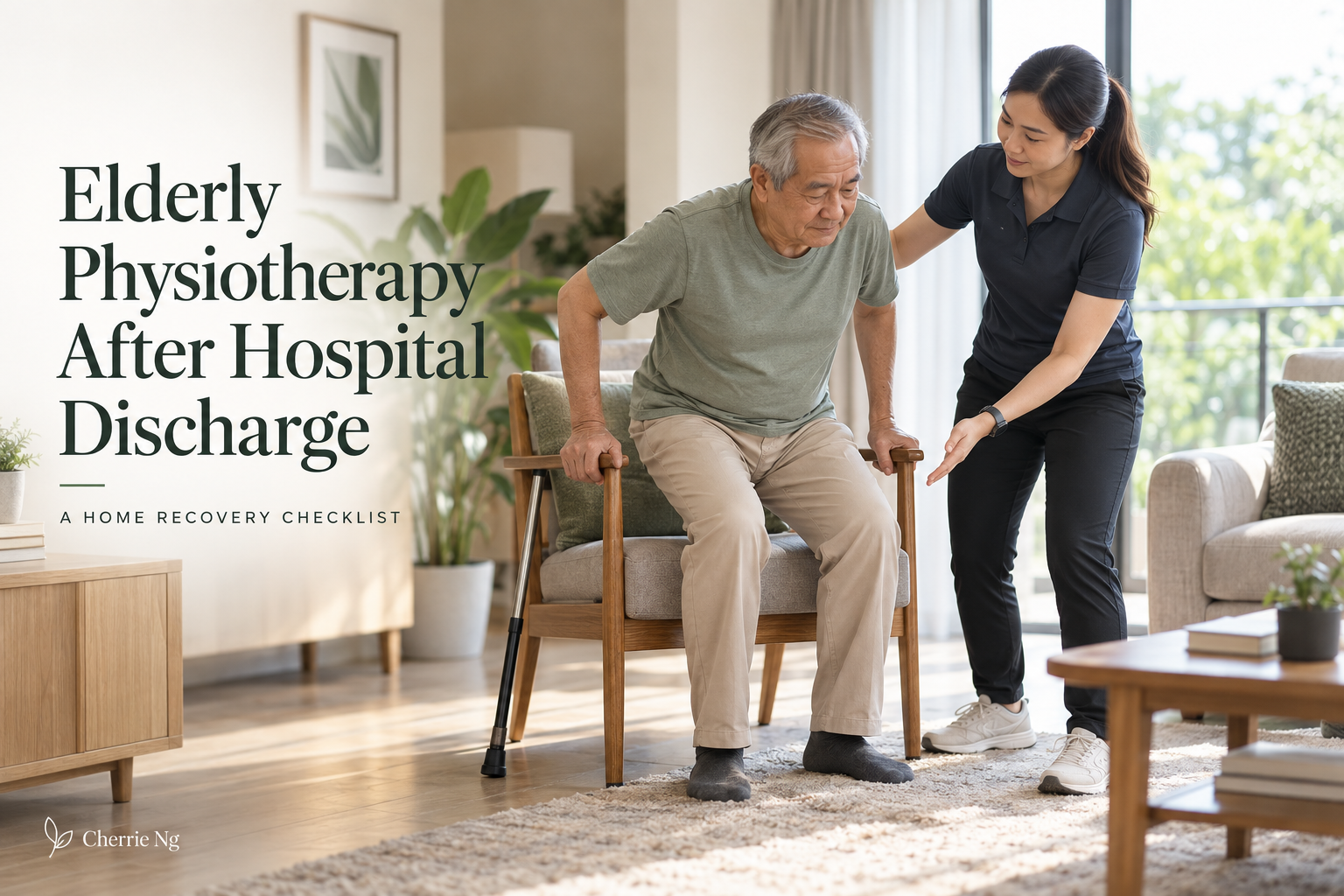
When an older adult returns home after hospital discharge, the safest starting point is the hospital’s written plan—not a generic exercise video. Confirm medicines, restrictions, equipment, follow-up appointments, warning signs and the help needed for everyday movement. Home physiotherapy may then support bed mobility, transfers, walking, strength and confidence within those instructions.
This checklist is for planning and conversation. It does not replace the discharge team, diagnose a new decline or override instructions from the doctor, surgeon, nurse, pharmacist or hospital therapist.
Before leaving hospital: collect the plan
Keep the discharge information together and make sure the older adult and main caregiver understand it. NICE recommends giving people information about their diagnosis and treatment, a complete medicine list, and coordinated arrangements for support after transfer home. It also recommends that essential specialist equipment and support be in place by discharge. NICE NG27 hospital-to-home transition guidance
Ask the hospital team to clarify:
- Why the person was admitted and what has changed
- Which medicines were started, stopped or changed
- Wound, weight-bearing, movement or lifting restrictions
- Whether a cane, walking frame, brace, commode or other equipment is required
- How much help is needed for getting out of bed, standing, walking, stairs and toileting
- Which exercises were prescribed and how often to perform them
- Follow-up appointments, tests and rehabilitation referrals
- Who to contact for routine questions, worsening symptoms and emergencies
- Whether the caregiver needs transfer or equipment training before discharge
Do not stop, restart or change a medicine because it seems to affect balance without speaking to the prescribing clinician or pharmacist.
First 24–72 hours at home: check the essentials
The first goal is not to complete a demanding workout. It is to make the transition understandable and workable.
1. Medicines and written instructions
Compare the medicine list with what is actually at home. Separate discontinued medicines so they are not taken accidentally, but ask a pharmacist how to handle or dispose of them. Use the written discharge instructions to track doses, follow-up dates and condition-specific warning signs.
2. Safe access to essential spaces
Check the real route between the bed, toilet, usual chair and kitchen. Keep it well lit and remove obvious loose clutter or cables. Make sure the prescribed walking aid is within reach rather than across the room.
For an older person who has fallen or is at higher risk, current NICE guidance recommends an individualised approach and may include a structured medication review and a validated home-hazard assessment by an appropriately trained professional. NICE NG249 falls recommendations
3. Transfers and supervision
Confirm whether the person can roll, sit up, stand from the usual chair and reach the toilet using the method taught in hospital. If the family is unsure how much help to give, do not improvise a heavy lift. Arrange guidance from the treating team or an appropriate rehabilitation professional.
4. Food, fluids, rest and symptoms
Follow any medical instructions about diet or fluid restriction. Note unusual dizziness, breathlessness, pain, fatigue, confusion, fever, wound changes or a sudden reduction in mobility and use the discharge contact pathway. Do not assume every decline is normal weakness after hospital.
A practical home-recovery checklist
Use this as a discussion list, adapting it to the person’s diagnosis and discharge plan.
Documents and contacts
- Discharge summary is available
- Current medicine list matches the medicines at home
- Follow-up dates and transport are arranged
- Routine and urgent contact numbers are easy to find
- The family knows the hospital’s condition-specific warning signs
Movement and equipment
- Weight-bearing and movement restrictions are understood
- Walking aid and other prescribed equipment are present and usable
- Bed, chair and toilet transfers have a clear method
- Required supervision is available at the relevant times
- The home exercise plan is understood; unclear exercises are paused until checked
Home setup
- Main walking routes are clear and well lit
- Frequently used items are within safe reach
- Loose rugs, cables and unstable furniture are addressed
- Suitable footwear is available
- Bathroom access and night-time toilet needs have been considered
Daily monitoring
- Pain, dizziness, breathlessness, fatigue and mobility changes are noted
- Falls and near-falls are recorded with what happened beforehand
- Eating, drinking and toileting follow the medical plan
- The caregiver knows when and whom to call
What can home physiotherapy assess?
A home physiotherapy assessment connects the hospital plan to the actual environment. With consent and when medically appropriate, Cherrie may review:
- Rolling, sitting up and getting out of bed
- Sit-to-stand from the person’s usual chair
- Walking, turning and stopping with the prescribed aid
- Access to the toilet, bathroom, doorway or steps
- Lower-limb movement, strength and balance during relevant tasks
- Fatigue, pain, dizziness or breathlessness during short activity
- How much cueing or physical assistance a caregiver currently provides
- A manageable exercise plan linked to daily goals
The session does not replace medical review, nursing care, wound care, medication management or occupational therapy. If the environment needs formal equipment prescription or modification, or if symptoms suggest a new medical problem, referral back to the appropriate professional may be needed.
NICE recommends coordinated support between hospital and community teams and says older people with identified social-care needs should be offered supported discharge with home care and rehabilitation. Family involvement should reflect the older adult’s consent and the caregiver’s actual ability to help. NICE NG27 recommendations
How should activity progress?
Progress should follow the medical condition, restrictions and response—not a fixed online timeline. Early goals may be as practical as reaching the toilet safely, standing with less help or walking a short indoor route. Later goals might involve stairs, longer walks or community activity.
For people who need falls management, the 2025 NICE guideline says exercise should be individualised, progressive and focused on identified needs; programmes commonly address balance, coordination, strength and functional tasks. NICE NG249 rationale and recommendations
More is not automatically better. Stop the activity and use the agreed medical contact pathway if there is an unexpected symptom change. A rehabilitation plan should leave enough capacity for essential daily tasks rather than exhausting the person for the rest of the day.
When is urgent medical help needed?
Follow the hospital’s specific emergency instructions. In Malaysia, call 999 for a medical emergency.
After a fall, seek emergency help if the person may have injured the head, neck, back or hip, cannot get up, becomes unconscious or appears seriously unwell. Do not try to lift the person by yourself when injury is possible. NHS falls guidance
Sudden facial droop, weakness or numbness in one arm, or slurred or confused speech can be signs of stroke and need emergency assessment immediately—even if the symptoms improve. NHS stroke symptoms
For new breathlessness, chest symptoms, fever, wound changes, unusual drowsiness, worsening confusion, fainting, uncontrolled pain or a sudden mobility decline, use the urgent instructions from the discharge team or seek prompt medical advice. Physiotherapy should not delay emergency or medical care.
Frequently asked questions
How soon should home physiotherapy start after discharge?
There is no single safe timeline. It depends on why the person was admitted, medical stability, restrictions and the hospital plan. Ask the discharge team whether rehabilitation has been prescribed and when activity or home visits may begin.
Should a family member be present?
It is often useful when that person will help with walking, transfers or exercises. The older adult’s consent and preferences remain central, and the caregiver should not be expected to perform assistance they cannot safely manage.
Is walking around the house enough rehabilitation?
Walking may be one useful task, but the plan may also need transfer practice, strength, balance, pacing or condition-specific exercises. Assessment helps identify what is relevant instead of adding exercises indiscriminately.
Can Cherrie change a walking aid or hospital restriction?
She can assess how movement and the current aid work in the home and communicate concerns, but hospital or prescriber restrictions should not be changed without the appropriate clinical clearance.
Related reading
- Elderly Home Physiotherapy in KL: Balance, Walking and Daily Confidence
- Walking Confidence for Older Adults: How Physiotherapy Can Help
- Fall Prevention Exercises for Elderly Adults: What to Practise Safely
If an older family member is returning home in Kuala Lumpur or selected Selangor areas, you can WhatsApp Cherrie with the location, reason for admission, discharge restrictions, current mobility aid, assistance required and planned follow-up. She can advise whether a home physiotherapy assessment may be appropriate within her service scope.
Sources and clinical references
Foundational clinical sources and further reading
These authoritative sources provide general background relevant to this topic; they are not claim-by-claim citations. This content is educational and does not replace individual assessment, diagnosis or emergency medical care.
- What is physiotherapy? — World Physiotherapy