Rehab Pilates
What Is Pilates? A Beginner's Guide to How It Works
Learn what Pilates is, what a beginner class may include, how mat and equipment Pilates differ, and when rehab Pilates or physiotherapy may be more suitable.
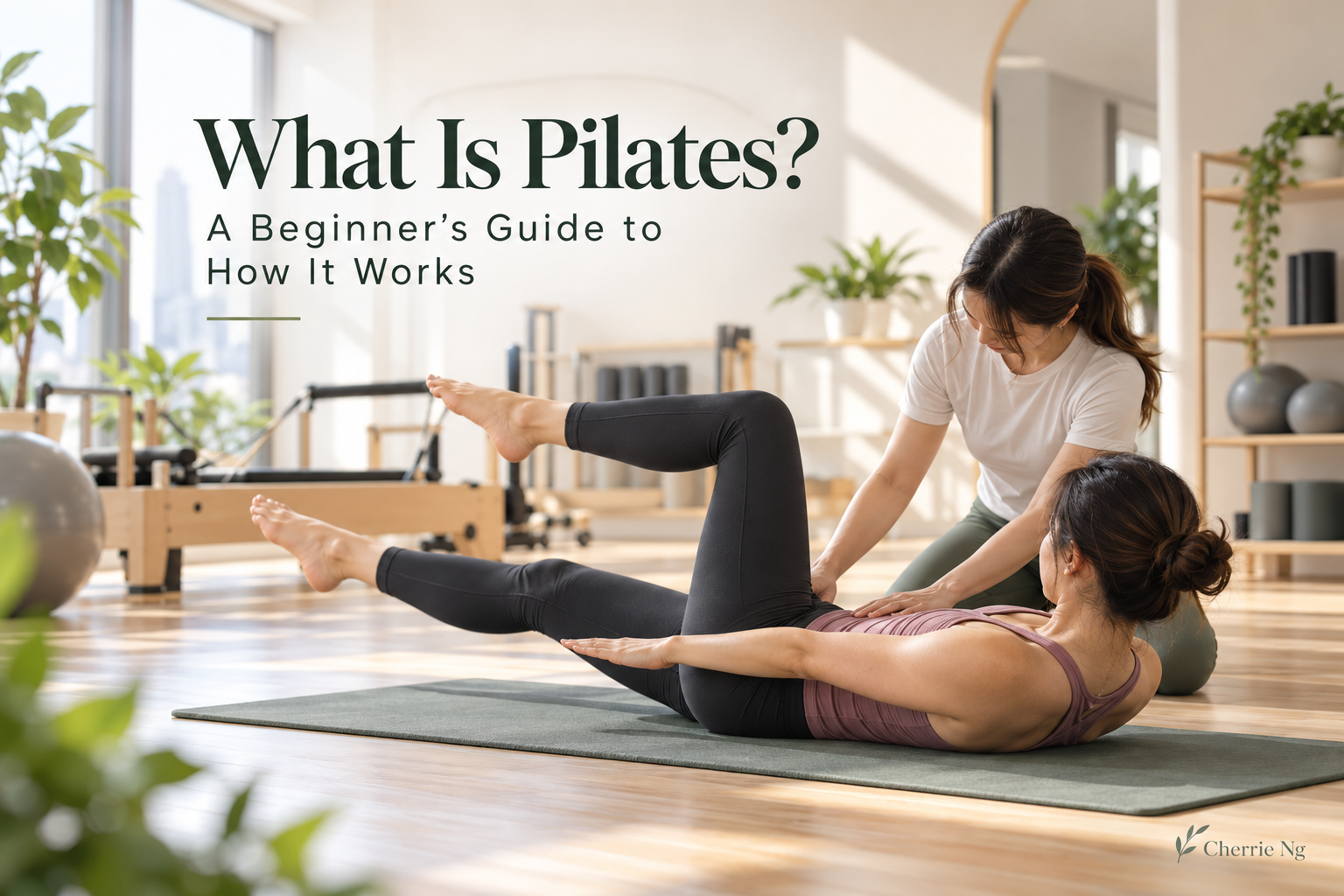
Pilates is a form of exercise that uses controlled movement, breathing, posture and concentration to train strength, mobility and body awareness. It can be performed on a mat or with equipment such as a Reformer. Exercises are adjusted by level, goals and physical ability rather than being one fixed routine for everyone.
Pilates can be a useful way to become more active, but it is not automatically a treatment for pain or injury. If you have symptoms, a physiotherapy assessment can help determine whether a general Pilates class, modified Pilates or rehab Pilates is a sensible starting point.
What does Pilates focus on?
A Pilates session may include exercises for trunk and hip strength, spinal and joint mobility, balance, coordination, breathing, movement control, posture and body awareness. The aim is not simply to make an exercise look elegant. Good instruction helps you understand the movement, control the range that suits you and progress when your body is ready.
Pilates is one form of physical activity. It can complement walking, resistance exercise and other enjoyable activities; it does not need to be your only form of exercise. The World Health Organization recommends regular physical activity for adults, with inactive people starting with small amounts and building up gradually. WHO physical activity guidance
Is Pilates suitable for beginners?
Many beginners can start with a basic mat class or an individual session. You do not need to be flexible, athletic or familiar with Pilates terminology. A suitable class should offer clear explanations, options for different ability levels and enough time to learn the fundamentals.
If you are pregnant, recently gave birth, recovering after surgery, managing a long-term condition or returning after an injury, tell the instructor before starting. You may need a more specific programme or medical clearance depending on your situation.
Mat Pilates vs equipment Pilates
Mat Pilates uses your body weight, the floor and sometimes small props. It is often convenient for home practice and can teach the basics of breathing, control and positioning.
Equipment Pilates may use springs, straps and a moving carriage to provide support or resistance. A Reformer is one example. Equipment does not automatically make a session more effective; the right choice depends on the person, exercise and instruction.
What is the difference between Pilates and rehab Pilates?
General Pilates is usually an exercise and movement class for people with a range of fitness goals. Rehab Pilates is more individualised and may be guided by a physiotherapist or clinically trained practitioner after considering symptoms, movement, strength, medical history and goals.
For example, rehab Pilates may be appropriate when someone is returning to exercise after an injury, managing posture-related discomfort or progressing after physiotherapy. The exercises, range, resistance and pace can be changed to match the current stage of recovery.
Read What Is Rehab Pilates and How Is It Different from Regular Pilates? for a more detailed comparison.
Can Pilates help with back or neck pain?
Some people with back or neck discomfort may find appropriately selected Pilates exercises useful as part of an active rehabilitation plan. However, there is no single Pilates routine that is suitable for every cause of pain, and Pilates should not be used to delay assessment when symptoms are persistent, worsening or unusual.
Consider physiotherapy assessment first if pain follows a significant injury, spreads into an arm or leg, is accompanied by numbness or weakness, or is affecting sleep and everyday activities. Seek urgent medical care for severe or rapidly worsening symptoms, major trauma, new loss of bladder or bowel control, or other concerning changes.
How should you choose a Pilates class?
Before booking, consider whether the class level fits your ability, whether the instructor offers modifications, whether you can disclose pain or injury privately, and whether an individual assessment is more suitable than a group class right now.
If you are generally well and want guided movement, a beginner class may be a good place to start. If you are unsure because of pain, injury or reduced confidence, ask whether a physiotherapy-led or rehab Pilates assessment is available.
Related reading
- Clinical Pilates vs Regular Pilates: Which Is Better for Recovery?
- Mat Pilates vs Reformer Pilates: Which Is Better for Beginners and Rehab?
- Physiotherapist-Led Pilates in KL: Who Is It Suitable For?
- Pilates for Back Pain in KL: When It Helps and When to Get Assessed
A gentle way to begin
Start at a level where you can breathe normally, understand the instructions and control the movement. Mild muscle effort can be expected, but sharp pain, increasing numbness, spreading symptoms or a clear worsening after exercise are reasons to stop and seek advice.
If you are in Kuala Lumpur or Selangor and are unsure whether regular Pilates, rehab Pilates or physiotherapy fits your needs, you can WhatsApp Cherrie with your main concern and movement goal.
Sources
Foundational clinical sources and further reading
These authoritative sources provide general background relevant to this topic; they are not claim-by-claim citations. This content is educational and does not replace individual assessment, diagnosis or emergency medical care.
- What is physiotherapy? — World Physiotherapy
- WHO guidelines on physical activity and sedentary behaviour — World Health Organization