Shoulder Pain
Rotator Cuff Rehab in KL: What Shoulder Exercises Should Focus On
Learn what rotator cuff rehab may focus on, why assessment matters, and when shoulder pain needs physiotherapy or medical care.
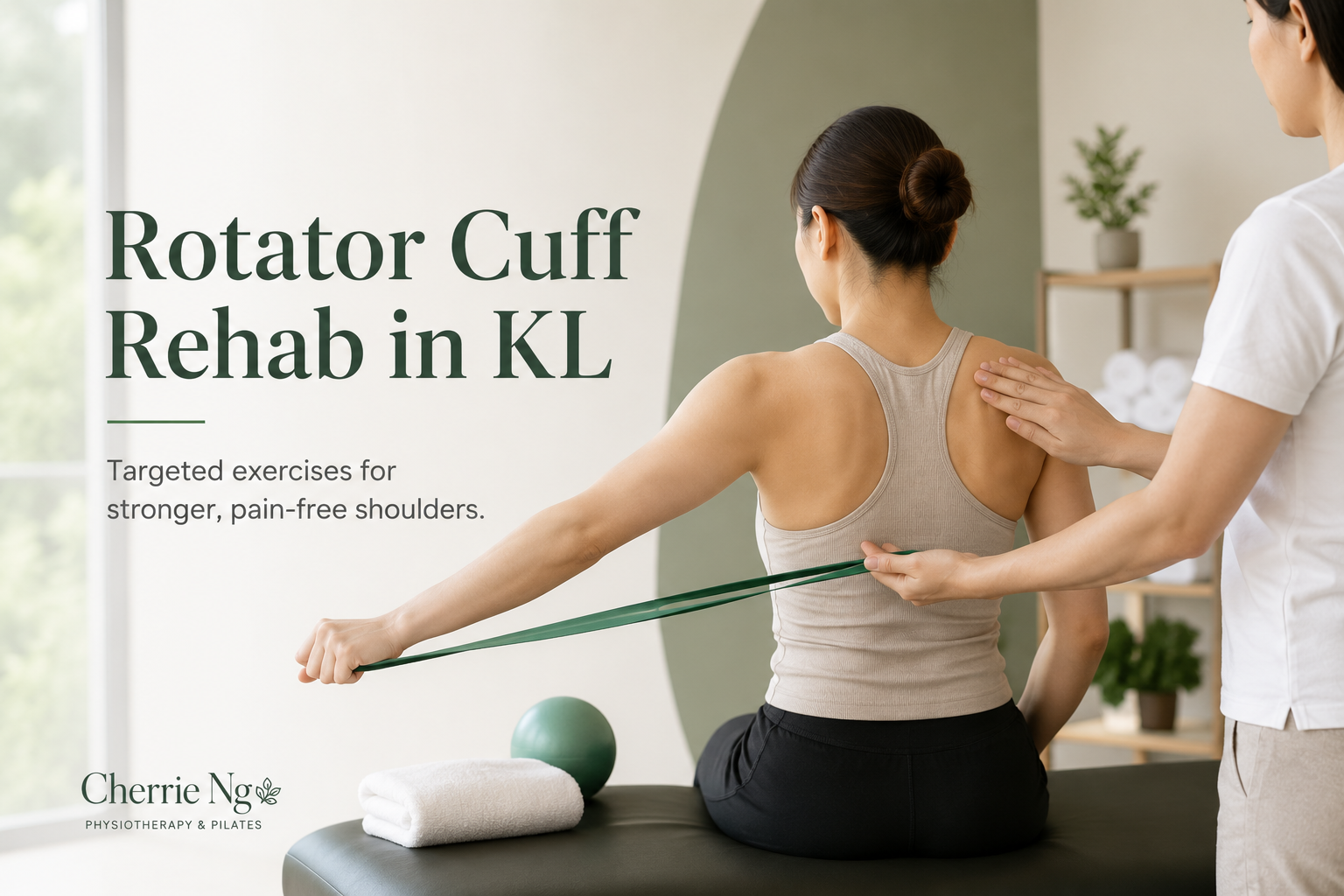
Rotator cuff rehab in KL usually focuses on restoring comfortable shoulder movement, rebuilding strength gradually, improving shoulder blade control and helping you return to lifting, gym, Pilates, swimming or daily tasks without guessing. The right exercises depend on what your shoulder can tolerate now, not just the name of the injury.
The rotator cuff is a group of muscles and tendons that helps control the shoulder joint. When it becomes painful or overloaded, people often feel pain with reaching, lifting, side sleeping, overhead movements or pushing exercises. A physiotherapy assessment can help decide whether symptoms seem related to tendon irritation, weakness, stiffness, neck referral, training load or something that needs medical review.
Common rotator cuff-related symptoms
Rotator cuff-related shoulder pain may show up as:
- Pain when reaching overhead or behind the back
- Pain when lying on the affected shoulder
- Weakness or discomfort during lifting
- Pain with gym pressing, push-ups, swimming or racket sports
- Shoulder pain that worsens after a sudden increase in training
- A painful arc when lifting the arm
- Reduced confidence using the arm above shoulder height
- Symptoms that settle with rest but return when loading resumes
These patterns can suggest the rotator cuff may be involved, but they do not confirm the exact cause. Neck symptoms, joint stiffness, frozen shoulder, shoulder impingement patterns and other medical issues can sometimes feel similar.
What shoulder exercises should focus on
Rotator cuff rehab is not only about doing band rotations forever. A useful programme often progresses through several goals:
- Calming symptoms: Reducing painful overload and choosing movements the shoulder can tolerate.
- Restoring movement: Improving shoulder and upper back mobility without forcing sharp pain.
- Rebuilding cuff strength: Starting with controlled, low-irritation resistance before progressing load.
- Improving shoulder blade control: Helping the shoulder blade and upper back support reaching and lifting.
- Training useful tasks: Practising movements that match your work, sport, gym routine or daily life.
- Progressing overhead tolerance: Gradually rebuilding confidence above shoulder height when appropriate.
The starting point matters. If the shoulder is highly irritable, jumping straight into heavy strengthening may flare symptoms. If pain has already settled but weakness remains, only stretching may not be enough.
What a physiotherapy assessment may look at
A rotator cuff rehab assessment usually starts with your symptom story: when pain began, whether there was a fall or sudden pull, which movements hurt, how sleep is affected and what activities you want to return to.
Cherrie may then assess shoulder range of motion, strength, painful positions, shoulder blade control, neck movement, upper back mobility and how the shoulder responds to different loading options.
This helps identify a safe starting point. Some people need early symptom management. Others may be ready for strengthening, gym modification, Pilates-based control work or sport-specific progressions.
What may help during rehab
Depending on the assessment, physiotherapy may include:
- Education about shoulder pain and load management
- Short-term modification of painful lifting or overhead work
- Gentle mobility for the shoulder, neck or upper back
- Rotator cuff and shoulder blade strengthening
- Gradual return to push, pull, carry and overhead tasks
- Manual therapy when appropriate
- Rehab Pilates principles for trunk, rib cage and shoulder control
- A home plan that progresses as symptoms and strength improve
Progress is usually not a straight line. A good plan should give you clear signs for when to increase, maintain or reduce exercise load.
When to seek assessment or medical care
Consider physiotherapy if shoulder pain lasts more than a few days, keeps returning with exercise, affects sleep, limits reaching or lifting, or makes you unsure which exercises are safe.
Seek medical care promptly if shoulder pain follows a fall or major trauma, comes with obvious deformity, sudden major weakness, inability to lift the arm after injury, chest pain, shortness of breath, fever, unexplained weight loss, worsening numbness, severe night pain that does not change with position, or symptoms that feel unusual for you.
Related reading
- Shoulder Pain When Lifting Your Arm: What Could It Mean?
- Shoulder Mobility Exercises: Safe Progressions for Stiff Shoulders
- Shoulder Impingement: How Physiotherapy Can Help Movement Control
- Shoulder Pain Physiotherapy in KL: When Pain Is More Than Tight Muscles
- Frozen Shoulder Physiotherapy: Stages, Exercises and Recovery Expectations
- Sports Injury Rehab in KL: Why Rest Alone Is Usually Not Enough
- Neck and Shoulder Pain from Desk Work: What You Can Do
- Physiotherapy vs Massage: Which One Do You Need?
If you are in Kuala Lumpur or Selangor and shoulder pain is affecting sleep, lifting, gym, Pilates or sport, you can WhatsApp Cherrie to ask whether rotator cuff rehab assessment is suitable.
Foundational clinical sources and further reading
These authoritative sources provide general background relevant to this topic; they are not claim-by-claim citations. This content is educational and does not replace individual assessment, diagnosis or emergency medical care.
- What is physiotherapy? — World Physiotherapy
- Musculoskeletal health — World Health Organization