Shoulder Pain
Shoulder Mobility Exercises: Safe Progressions for Stiff Shoulders
Learn how to approach shoulder mobility exercises safely, when to progress, and when stiff shoulders need physiotherapy assessment.
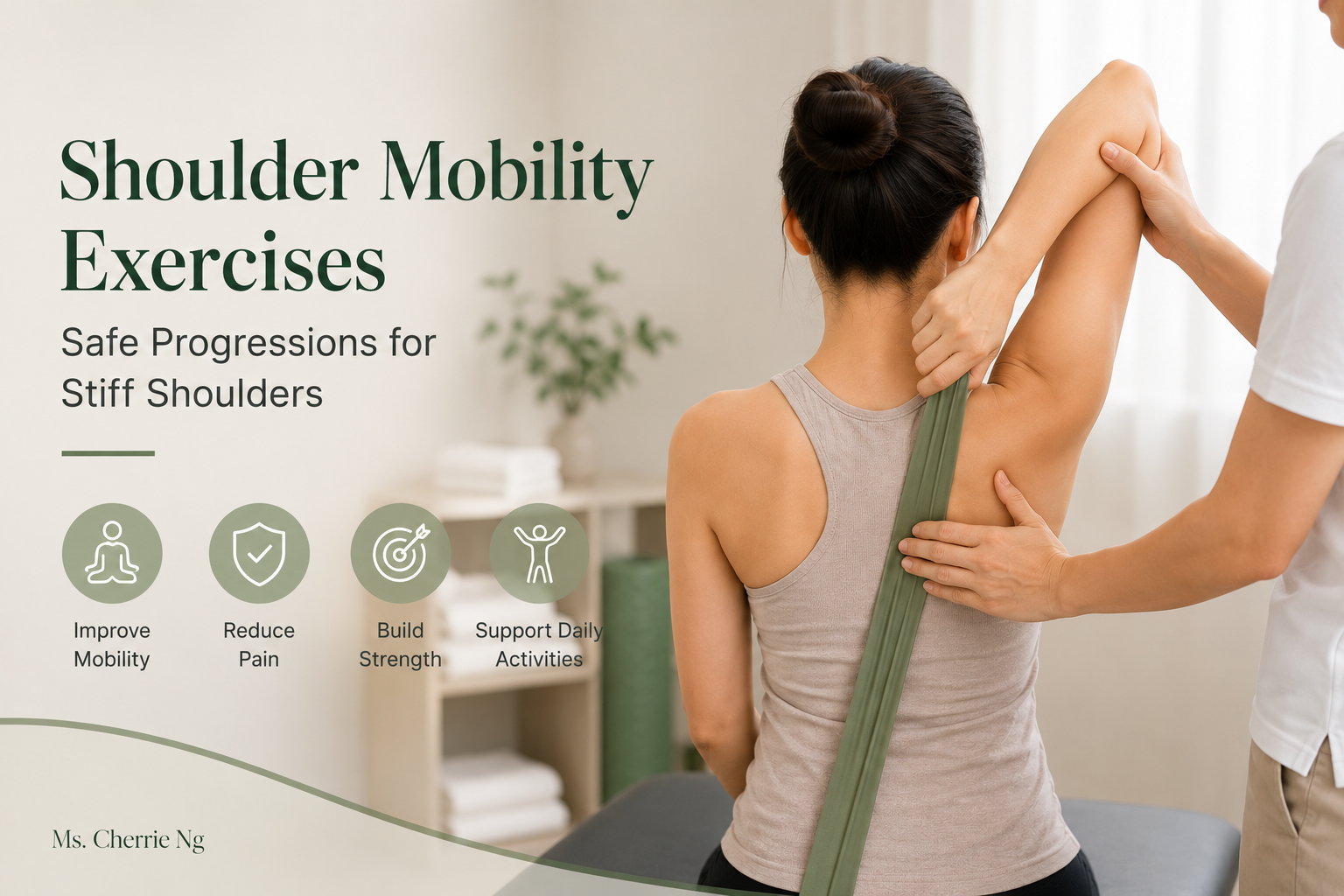
Shoulder mobility exercises can help stiff shoulders, but the safest progression depends on why the shoulder is stiff, how painful it is, and what movements are limited. A useful plan usually starts with comfortable motion, then gradually adds control, strength and the daily or sport movements you need.
If your shoulder is stiff after desk work, gym training, a pain flare-up, frozen shoulder, rotator cuff irritation or a period of avoiding movement, the goal is not to force the shoulder through sharp pain. Physiotherapy can help you choose the right starting level so mobility work supports recovery instead of repeatedly aggravating symptoms.
Why shoulders become stiff
Shoulder stiffness can happen for several reasons, including:
- Guarding after pain or injury
- Frozen shoulder or capsular stiffness
- Rotator cuff irritation or tendon sensitivity
- Long periods of desk work or reduced movement
- Upper back stiffness affecting overhead reach
- Training changes, lifting or repeated overhead work
- Fear of using the shoulder after a painful flare-up
- Neck or shoulder blade control issues
The same stiff feeling can need different strategies. Some people need gentle mobility. Others need strengthening, load modification, upper back work, posture changes or medical review.
A safe shoulder mobility progression
Shoulder mobility work often progresses through stages. You do not need to rush through them.
Stage 1: Comfortable movement
Start with movements that feel easy enough to repeat without a flare-up:
- Gentle pendulum movements
- Supported table slides
- Shoulder rolls
- Assisted arm raises with the other hand
- Gentle upper back extension over a chair
At this stage, the aim is to remind the shoulder that movement is safe. Keep the range comfortable and stop before sharp pain.
Stage 2: Assisted mobility
When comfortable movement feels more settled, you may add support to explore a little more range:
- Wall slides
- Towel-assisted behind-the-back movement
- Stick-assisted shoulder flexion
- Doorway or corner chest opening if tolerated
- Side-lying or supported shoulder rotation
Assisted exercises should still feel controlled. Pulling hard into pain is not usually helpful, especially if the shoulder is irritable.
Stage 3: Active control
Mobility becomes more useful when you can control the range you gain. This stage may include:
- Slow arm raises in front or to the side
- Shoulder blade setting and controlled reaching
- Wall angels in a comfortable range
- Light rotator cuff activation
- Rib cage and trunk control using rehab Pilates principles
If your shoulder only moves well when someone else helps it, but you cannot control that range yourself, strengthening and coordination may need attention.
Stage 4: Strength and task practice
As pain and stiffness settle, the shoulder usually needs gradual loading:
- Light pushing and pulling
- Carrying practice
- Overhead reaching progressions
- Rotator cuff and shoulder blade strengthening
- Gym, Pilates, swimming or sport-specific progressions
The final goal is not just a flexible shoulder. It is a shoulder that can tolerate the things you actually need to do.
What a physiotherapy assessment may look at
A shoulder mobility assessment may start with your symptom history: when stiffness began, what movements are limited, whether pain affects sleep, and whether there was injury, surgery or a training change.
Cherrie may then assess shoulder range of motion, pain irritability, strength, shoulder blade control, neck movement, upper back mobility and how symptoms respond to assisted, active and resisted movements.
This helps decide whether you need mobility, strength, load management, manual therapy, rehab Pilates-informed control work or medical review.
When to stop and get help
Stop an exercise and seek advice if it causes sharp pain, worsening symptoms into the arm, numbness, pins and needles that do not settle, dizziness, sudden weakness or pain that stays worse after the session.
Consider physiotherapy if shoulder stiffness lasts more than a few days, keeps returning, affects sleep, limits dressing or reaching, or makes you unsure which exercises are safe.
Seek medical care promptly if shoulder pain follows a fall or major trauma, comes with obvious deformity, sudden major weakness, inability to lift the arm after injury, chest pain, shortness of breath, fever, unexplained weight loss, severe swelling, worsening numbness, severe night pain that does not change with position, or symptoms that feel unusual for you.
Related reading
- Frozen Shoulder Physiotherapy: Stages, Exercises and Recovery Expectations
- Shoulder Pain Physiotherapy in KL: When Pain Is More Than Tight Muscles
- Rotator Cuff Rehab in KL: What Shoulder Exercises Should Focus On
- Mobility vs Flexibility: Which One Matters More for Rehab?
If you are in Kuala Lumpur or Selangor and shoulder stiffness is affecting work, sleep, dressing, gym, Pilates or sport, you can WhatsApp Cherrie to ask whether physiotherapy assessment is suitable.
Foundational clinical sources and further reading
These authoritative sources provide general background relevant to this topic; they are not claim-by-claim citations. This content is educational and does not replace individual assessment, diagnosis or emergency medical care.
- What is physiotherapy? — World Physiotherapy
- Musculoskeletal health — World Health Organization