Shoulder Pain
Shoulder Impingement: How Physiotherapy Can Help Movement Control
Learn how shoulder impingement symptoms may relate to movement control, load, posture and rotator cuff rehab.
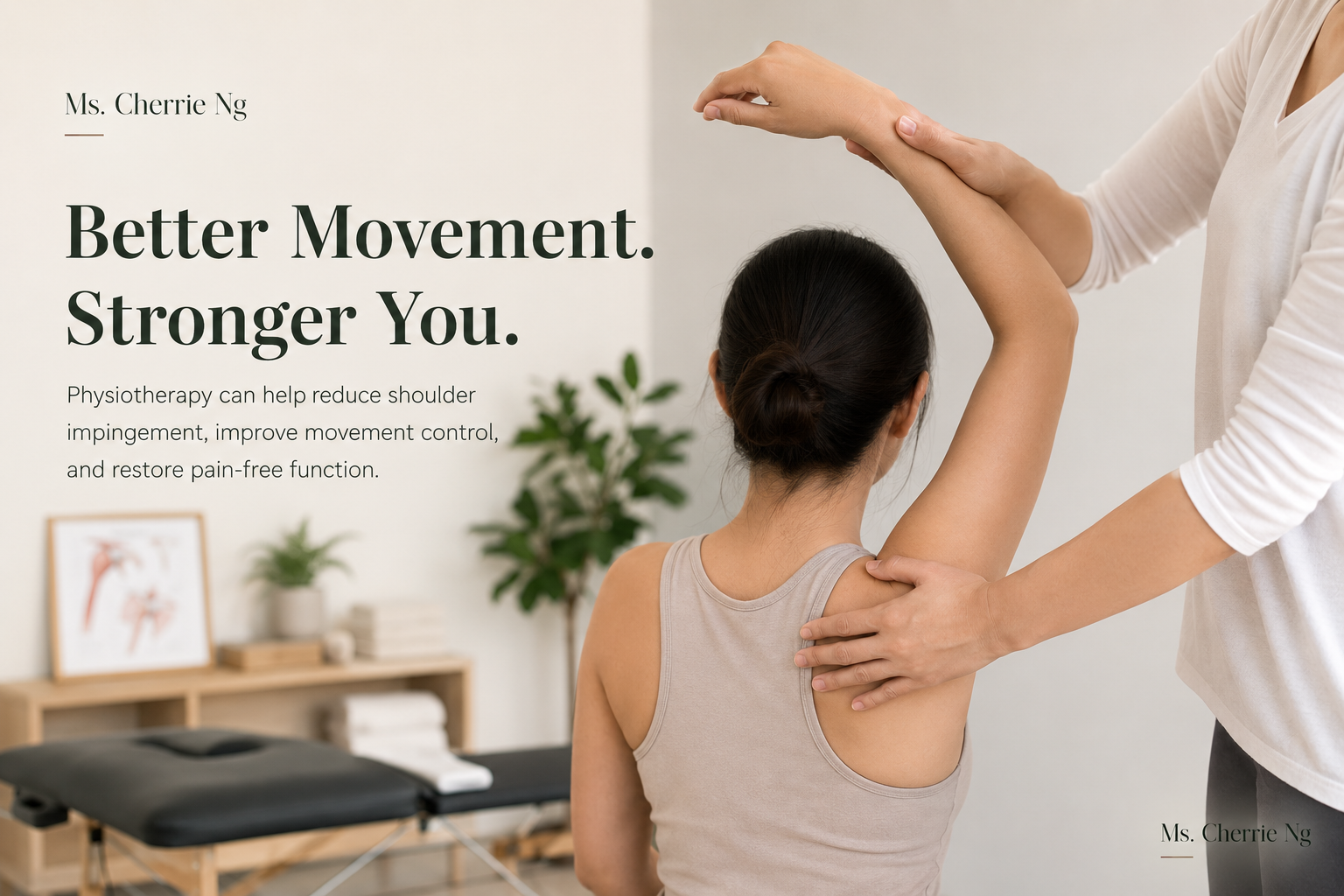
Shoulder impingement physiotherapy usually focuses on improving how the shoulder, shoulder blade, upper back and rotator cuff share movement and load. The goal is not only to avoid painful positions, but to rebuild control so reaching, lifting, gym, Pilates or sport can become more comfortable and confident.
“Impingement” is often used to describe pain when the shoulder feels pinched during lifting or overhead movement. It can be linked with rotator cuff irritation, shoulder blade control, upper back stiffness, training load, posture habits or sensitivity around the shoulder. A physiotherapy assessment can help clarify what is contributing to your symptoms instead of treating every painful shoulder the same way.
Common shoulder impingement patterns
People with shoulder impingement-type symptoms may notice:
- Pain when lifting the arm sideways or overhead
- A painful arc during reaching
- Pain during gym pressing, push-ups, swimming or racket sports
- Discomfort when reaching into a high shelf
- Shoulder pain after increasing training volume too quickly
- Pinching at the front or side of the shoulder
- Reduced confidence with overhead movement
- Symptoms that improve with rest but return when loading resumes
These patterns can suggest a movement or load-related shoulder problem, but they do not confirm the exact cause. Frozen shoulder, neck referral, joint stiffness, rotator cuff tendon pain and other conditions can overlap.
Why movement control matters
The shoulder is not just one joint working alone. Overhead movement depends on the shoulder joint, shoulder blade, collarbone, rib cage, upper back and neck all contributing at the right time.
If one area is stiff, weak, overloaded or guarded, another area may compensate. For example, limited upper back mobility may make the shoulder work harder overhead. Poor shoulder blade control may change how the rotator cuff is loaded. Sudden increases in gym or sport load can irritate tissues before strength and tolerance catch up.
Physiotherapy helps identify which parts of this movement system are relevant for you.
What physiotherapy may assess
A shoulder impingement assessment may start with your symptom story: when pain began, which movements trigger it, whether symptoms followed a training change, and how it affects work, sleep, exercise or sport.
Cherrie may then assess shoulder range of motion, painful arcs, rotator cuff strength, shoulder blade control, upper back mobility, neck movement, posture habits and how the shoulder responds to different positions or loading options.
This helps decide whether the starting point should be calming symptoms, improving mobility, rebuilding strength, modifying training load or screening for something that needs medical review.
What exercises may focus on
Shoulder impingement rehab is usually more useful when exercises are matched to the person. Depending on the assessment, a plan may include:
- Short-term modification of painful overhead or pressing tasks
- Gentle shoulder and upper back mobility
- Rotator cuff strengthening in tolerable ranges
- Shoulder blade control and upper back strengthening
- Gradual return to reaching, pushing, pulling and carrying
- Technique adjustments for gym, swimming, Pilates or sport
- Posture and desk setup advice when relevant
- Rehab Pilates principles for rib cage, trunk and shoulder control
Exercises should not feel like a random list. They should give the shoulder enough challenge to adapt without repeatedly flaring symptoms.
What to avoid while symptoms are irritable
You usually do not need to avoid all shoulder movement, but it may help to temporarily reduce the tasks that clearly worsen symptoms. This might include heavy overhead pressing, repeated painful reaching, sudden high-volume swimming, or sleeping with the arm overhead if that triggers pain.
The aim is not permanent avoidance. It is to create enough calm for the shoulder to start rebuilding strength and movement tolerance.
When to seek assessment or medical care
Consider physiotherapy if shoulder pain lasts more than a few days, keeps returning with overhead activity, affects sleep, limits reaching or lifting, or makes you unsure which exercises are safe.
Seek medical care promptly if shoulder pain follows a fall or major trauma, comes with obvious deformity, sudden major weakness, inability to lift the arm after injury, chest pain, shortness of breath, fever, unexplained weight loss, worsening numbness, severe night pain that does not change with position, or symptoms that feel unusual for you.
Related reading
- Shoulder Pain When Lifting Your Arm: What Could It Mean?
- Can Poor Posture Cause Shoulder Pain?
- Rotator Cuff Rehab in KL: What Shoulder Exercises Should Focus On
- Shoulder Pain Physiotherapy in KL: When Pain Is More Than Tight Muscles
- Frozen Shoulder Physiotherapy: Stages, Exercises and Recovery Expectations
- Neck and Shoulder Pain from Desk Work: What You Can Do
If you are in Kuala Lumpur or Selangor and shoulder pain is affecting reaching, gym, Pilates, swimming or work, you can WhatsApp Cherrie to ask whether shoulder physiotherapy assessment is suitable.
Foundational clinical sources and further reading
These authoritative sources provide general background relevant to this topic; they are not claim-by-claim citations. This content is educational and does not replace individual assessment, diagnosis or emergency medical care.
- What is physiotherapy? — World Physiotherapy
- Musculoskeletal health — World Health Organization