Corporate Wellness
What to Include in a Corporate Wellness Proposal Request: An HR Checklist
Use this HR checklist to request a clear corporate wellness proposal covering goals, format, participants, venue, pricing and follow-up.
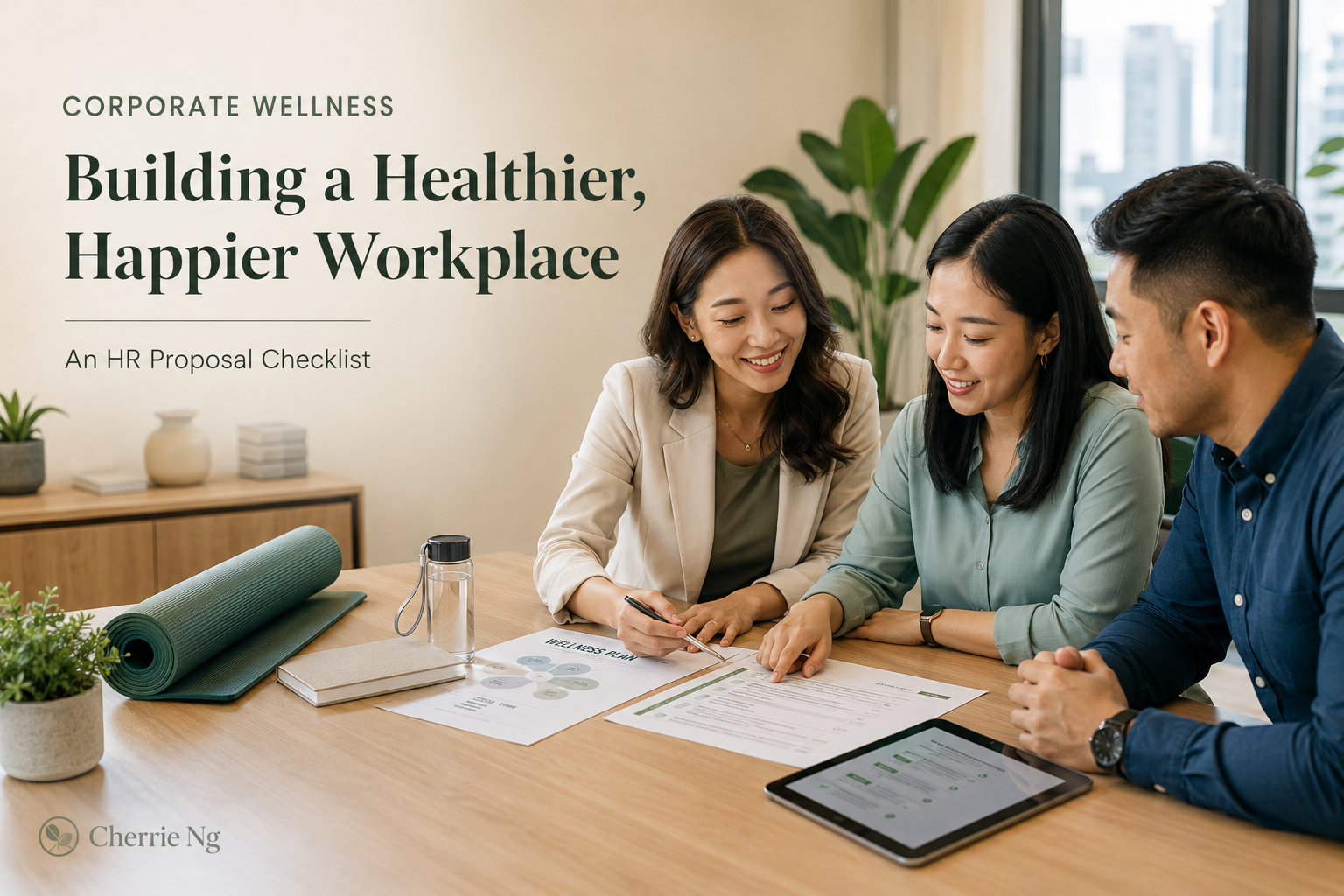
A corporate wellness proposal request should tell the provider what your organisation wants employees to learn or experience, who will attend, which format you are considering, when and where it will happen, what the venue can support, and what the quote must include. A clear brief helps HR compare like with like and reduces revisions after internal approval.
You do not need to design the full programme before contacting a provider. Separate what is confirmed, what is preferred and what is still open to recommendation. For a physiotherapist-led workplace session, also state whether you want general education, group movement, a workstation-focused workshop or a separate assessment service; these are not interchangeable.
Why the proposal request matters
“Please quote for a wellness workshop for 50 people” leaves important questions unanswered. A presentation for 50 seated employees has different preparation, space and participation needs from a mat-based movement session, several workstation reviews or a multi-activity wellness day.
The CDC workplace-health model recommends assessing the employee population, work environment and organisational factors before planning, then choosing a few well-matched strategies and defining evaluation as part of the programme. CDC strategies for building a workplace health programme
WHO workplace physical-activity guidance likewise describes the need for practical, context-specific planning because organisations have different needs and constraints. WHO guidance on workplace physical activity in small and medium-sized enterprises
Your request does not need to be long. It needs enough context for the provider to recommend an appropriate scope instead of making assumptions.
Copy-and-paste proposal request template
HR teams can use this short template for a first enquiry:
Company and location: [company name, exact office or event address]
Preferred date and time: [date, start time, total available window, alternatives]
Purpose: [one or two outcomes employees or HR should gain]
Team: [estimated number, main job types, office/hybrid/operational work pattern]
Preferred format: [talk, lunch and learn, interactive workshop, corporate Pilates, wellness-day activity, series, or open to recommendation]
Priority topics: [for example posture, desk setup, movement breaks or beginner-friendly Pilates]
Venue: [room dimensions/layout, seating, clear floor space, accessibility and building access]
Available equipment: [screen, projector, microphone, desk, chairs, mats or none]
Participation needs: [language, seated options, accessibility, dress or timing considerations]
Deliverables: [session, handout, Q&A, feedback summary or follow-up options]
Quote requirements: [itemised fee, travel, equipment, taxes if applicable, validity and terms]
Decision timeline: [proposal deadline, approval date and event confirmation date]
If procurement requires a formal document, add the legal company name, billing details, purchase-order process and required vendor documents. Avoid sending unnecessary employee medical information in the first enquiry.
The complete HR checklist
1. Organisation and contact details
Include the company name, the person coordinating the request and a reliable contact method. Clarify whether the contact is arranging the programme, approving it or gathering options for another decision-maker.
If the event is for a particular business unit, office or employee group, name it. A proposal for one KL office should not silently assume that the same scope covers several branches.
2. One or two practical goals
State what should be different after the activity. Useful examples include:
- employees can complete a basic workstation self-check;
- the team understands practical ways to vary screen-based work;
- employees can try a beginner-friendly group movement session;
- managers can identify workplace barriers that need follow-up; or
- HR can test a pilot format before considering a wider series.
Avoid goals such as “eliminate back pain,” “prevent all injuries” or “guarantee productivity.” A group activity cannot responsibly promise those outcomes.
3. Workforce and work context
Describe the work, not employees’ diagnoses. Tell the provider whether the group is mainly desk-based, hybrid, mobile, customer-facing or operational. Mention common devices, long meetings, hot-desking, standing work or other relevant features.
A short anonymous interest poll can help select a topic. The CDC recommends considering employee interests and involving employees early in workplace-health planning. CDC strategies for building a workplace health programme
NIOSH describes programmes aligned with its Total Worker Health approach as voluntary and participatory, giving workers a voice in workplace conditions and offerings. NIOSH Total Worker Health frequently asked questions
4. Preferred service format
Name the closest format, even if you want the provider to advise:
| Format | Main purpose to describe |
|---|---|
| Talk or lunch and learn | Focused education, demonstration and questions |
| Interactive workshop | Shared education with more guided practice |
| Corporate Pilates | Beginner-friendly group movement with suitable space and options |
| Wellness-day activity | A scheduled station or session within a larger event |
| Ergonomic review | Closer observation of work tasks, equipment or setup |
| Individual physiotherapy | Private, symptom-specific assessment rather than group education |
| Programme series | Several linked sessions, teams, dates or locations |
Ask the provider to explain if another format fits the goal better. Do not place individual assessments inside a group brief without clarifying privacy, consent, time and deliverables.
5. Date, duration and event schedule
Provide a preferred date plus alternatives where possible. State the total room-access window, not only the teaching time. Setup, employee arrival, catering, transitions, questions and pack-down may all affect feasibility.
For an event with several activities, include the draft run sheet. If you are requesting repeated sessions, list the number of groups and the proposed interval between them.
6. Participant estimate and participation model
Give a realistic attendance range and explain whether registration is compulsory, optional or still being measured. The number alone is not enough: say whether participants will remain seated, work at their own desks, stand beside chairs or use floor space.
Participation in movement should be voluntary, with a practical way to observe, choose an alternative or pause. The proposal should not depend on employees revealing personal health information in front of colleagues.
7. Exact location and building access
Send the full office or event location, including building, area and floor. For Kuala Lumpur and Selangor venues, travel, parking, security registration, lift access and the distance from loading or parking to the room may affect the quote and setup plan.
Mention any visitor registration deadline, loading restriction, parking validation or access contact. “KL office” is usually not specific enough for a final quotation.
8. Room layout and usable space
Share a floor plan, measurements or current photographs when available. Confirm:
- fixed or movable tables and chairs;
- clear floor area after furniture is arranged;
- safe walkways and exits;
- seated participation options;
- screen visibility and microphone needs;
- ventilation and temperature control; and
- where equipment, bags, food and drinks will be placed.
Room capacity does not automatically equal usable activity capacity. Ask the provider to confirm whether the proposed format works in the actual layout.
9. Equipment and responsibilities
List what the organisation can supply and what the provider should include. Depending on the format, this may involve a projector, screen, HDMI adapter, microphone, desk, adjustable chair, laptop, mats or small movement equipment.
The proposal should make ownership clear: who brings, sets up, cleans and removes each item? If equipment hire or an additional facilitator is optional, request it as a separate line.
10. Language, accessibility and comfort
Specify the preferred delivery language and whether materials need another language. Tell the provider about known access needs without identifying employees unnecessarily. Helpful details may include wheelchair access, seating, hearing or visual support, prayer or fasting considerations, dress expectations and whether floor-based activity is suitable for the group.
Ask how the facilitator will offer seated or standing options and avoid singling people out. Inclusive design should be part of the brief rather than a last-minute modification.
11. Clinical and privacy boundaries
State whether the request is for general education or movement—not diagnosis or treatment. Ask how anonymous questions, personal disclosures and requests for individual help will be handled.
Useful boundaries include:
- no public diagnosis or posture judgement;
- no pressure to disclose symptoms or medical history;
- no individual exercise prescription within a general group session;
- a private route for questions that need personal assessment; and
- clear advice that employees can stop or opt out of movement.
This protects both participants and the intended scope of the event.
12. Deliverables and follow-up
Tell the provider what HR expects before, during and after the session. Possible deliverables include:
- a briefing call;
- a tailored content outline;
- facilitator profile;
- digital handout or self-check;
- anonymous question collection;
- attendance or feedback process;
- short summary of recurring workplace barriers; or
- optional follow-up workshop, ergonomic review or referral route.
Define who owns each follow-up action. A provider can deliver education, but equipment, workflow or policy changes usually need an internal owner.
13. Quote format and commercial terms
Ask for a proposal that clearly states:
- programme title, scope and intended outcome;
- preparation and delivery included;
- date, duration, location and participant assumption;
- facilitator, travel and equipment arrangements;
- itemised professional fee and optional additions;
- applicable tax or reimbursable costs, if any;
- quotation validity and payment schedule;
- cancellation, postponement and rescheduling terms; and
- what happens if the date, attendance, venue or scope changes.
If there is a budget range, sharing it can help the provider propose a feasible format. If procurement policy prevents this, ask for clearly separated options rather than one vague total.
14. Procurement, documentation and claimability
List the documents needed for vendor onboarding and the deadline for each one. Examples may include a formal quotation, invoice details, company registration information or a facilitator profile. Only request documents your process actually requires.
If HRD Corp claimability is essential, state this before asking for a final proposal. HRD Corp distinguishes registered training providers and registered programmes, with current requirements handled through its official processes. HRD Corp programme registration information
This website does not state that Cherrie or her corporate wellness sessions are HRD Corp registered or claimable. A service quotation is not proof of grant eligibility; confirm the provider, programme and employer requirements directly with HRD Corp before approval.
15. Proposal deadline and decision criteria
Give the provider enough time to check availability and prepare the requested detail. State when questions are due, when the proposal is needed and when the organisation expects to decide.
Before proposals arrive, agree on the comparison criteria. These may include:
- fit with the defined goal;
- relevant facilitator scope;
- safe, voluntary and inclusive participation;
- realistic venue and equipment plan;
- clarity of deliverables and boundaries;
- credible, proportionate outcomes;
- complete terms and total cost; and
- a useful follow-up route.
Price matters, but comparing total fees without comparing scope can lead to the wrong conclusion.
Common proposal-request mistakes
Avoid these preventable gaps:
- requesting “something about wellness” without an outcome;
- giving headcount without describing the activity or room;
- asking for several unrelated topics in one short session;
- expecting individual assessment inside a group workshop;
- omitting travel, setup, equipment or follow-up from the quote request;
- making movement compulsory or requesting employee diagnoses;
- assuming HRD Corp eligibility without verification;
- asking providers to guarantee pain, injury, absence or productivity results; or
- changing the venue or group size after approval without revisiting scope.
Where details are uncertain, label them as estimates. That is more useful than presenting a guess as confirmed.
What Cherrie can consider in a proposal
For organisations in Kuala Lumpur and selected Selangor areas, Cherrie can discuss physiotherapist-led health and movement talks, posture and desk-wellbeing workshops, beginner-friendly corporate Pilates, wellness-day activities and customised event briefs.
Availability, travel, programme scope, duration, group size, room suitability, equipment, preparation and follow-up are confirmed case by case. Group sessions provide general education or movement experiences rather than individual diagnosis or treatment.
Related reading
- How to Choose a Corporate Wellness Provider in KL: An HR Checklist
- How to Plan an Employee Wellness Day in KL: An HR Checklist
- Corporate Wellness Programme Cost in KL: What Affects a Quote?
- How to Choose an Office Wellness Workshop in KL
- Corporate Wellness Lunch and Learn in KL: Practical Posture and Movement Topics
- How to Measure Corporate Wellness Activities Without Overclaiming ROI
Sources and clinical references
- CDC: Strategies for Building a Workplace Health Program
- NIOSH: Total Worker Health Frequently Asked Questions
- WHO: Promotion of Health-Enhancing Physical Activity in Small-to-Medium-Sized Enterprises
- HRD Corp: Programme Registration for HRD Corp Claimable Courses
Frequently asked questions
Do we need a confirmed budget before requesting a proposal?
Not necessarily. A budget range can help, but HR can instead request two or three clearly separated scope options. State which details are still awaiting internal approval.
Can we request several programme options?
Yes. Ask the provider to separate each option by format, duration, deliverables, requirements and fee so decision-makers can compare them fairly.
Should employees’ medical information be included?
Do not include identifiable medical histories in a general proposal request. Describe work context, accessibility and participation needs without naming individuals. Personal clinical questions require a separate, appropriate process.
What if the participant number is not final?
Provide a realistic range and the date when registration closes. Ask whether the facilitation plan or quote must be reviewed if attendance changes beyond that range.
Is a corporate wellness proposal automatically HRD Corp claimable?
No. Claimability depends on current requirements for the employer, training provider and registered programme. Verify the specific arrangement with HRD Corp; do not treat an ordinary quotation as approval.
Ready to request a proposal? Explore Cherrie’s corporate wellness programmes and WhatsApp the exact location, date range, participant estimate, goal and preferred format for an initial suitability check.
Foundational clinical sources and further reading
These authoritative sources provide general background relevant to this topic; they are not claim-by-claim citations. This content is educational and does not replace individual assessment, diagnosis or emergency medical care.
- What is physiotherapy? — World Physiotherapy