Local SEO
Sports Physiotherapy in KL: Injury Rehab for Active Adults
Learn what sports physiotherapy in KL may assess, how injury rehab progresses and when active adults should modify training or seek medical care.
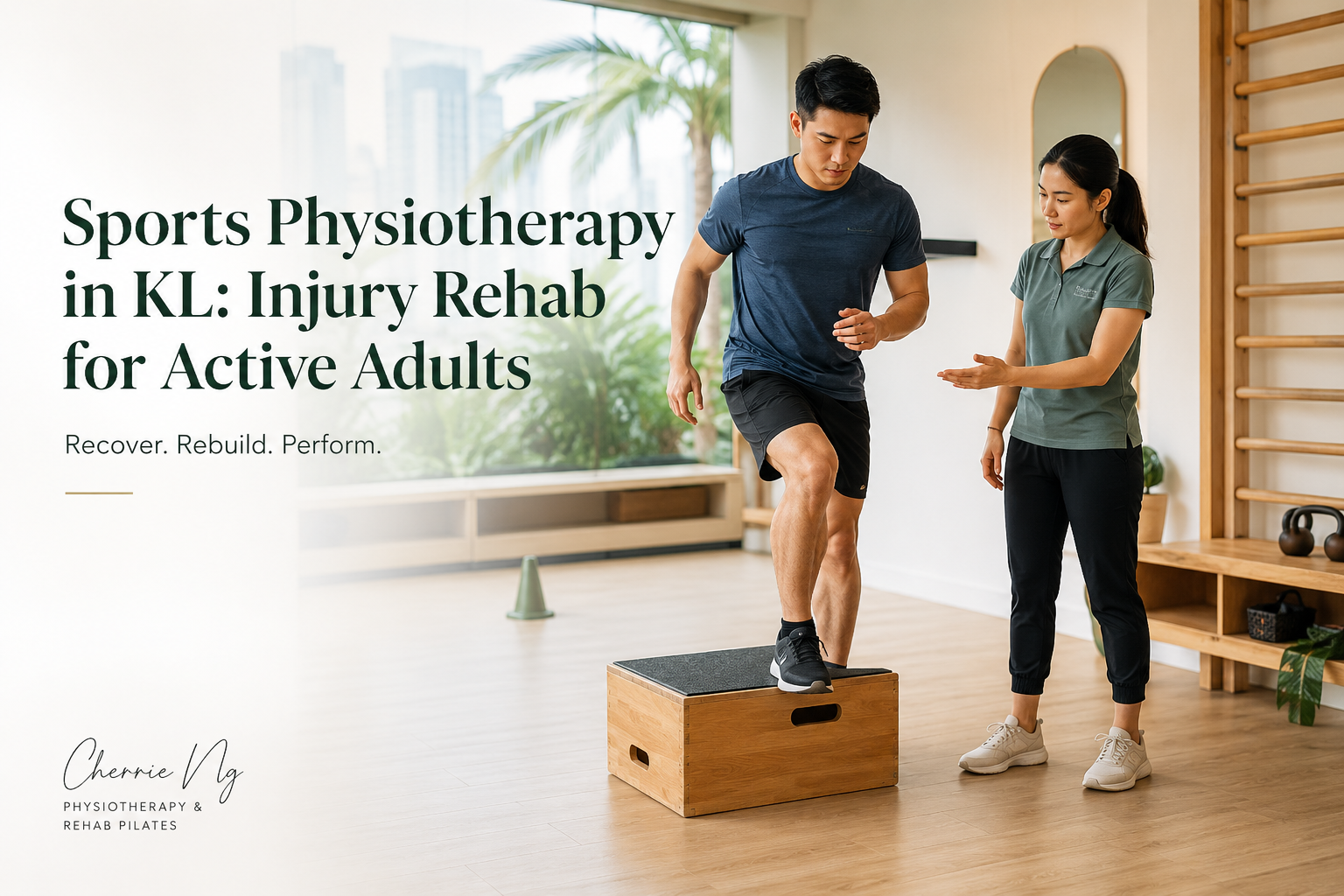
Sports physiotherapy in KL can help active adults understand an injury, keep suitable parts of training going and rebuild the capacity needed for running, gym work, court sports or other active hobbies. The goal is not simply to make pain disappear at rest; it is to prepare you for the movements, load and confidence your activity requires.
You do not need to be a professional athlete to benefit. A recreational runner preparing for a first event, a weekend badminton player, a regular gym member and someone returning to exercise after a long break can all face sport-specific decisions that a generic rest plan may not answer.
What is sports physiotherapy?
Sports physiotherapy applies physiotherapy assessment and rehabilitation to the demands of exercise and sport. It considers the injury or symptoms, but also the task you want to resume: how far you run, how heavily you lift, how often you train, whether you jump or change direction, and what happens as fatigue builds.
The World Health Organization describes rehabilitation as interventions designed to optimize functioning in interaction with a person’s environment. It also emphasizes that rehabilitation is person-centred and targeted to individual goals and preferences. WHO rehabilitation fact sheet
For an active adult, that means the plan should connect clinic or home exercises with real participation. Being able to walk comfortably is useful, but it may not show readiness for repeated sprints, a heavy squat, a long hike or a full badminton match.
When might an active adult see a sports physiotherapist?
Assessment may be useful when:
- Pain or swelling started after a twist, fall, sprint, lift or change in training
- Symptoms improve with rest but return whenever activity increases
- An ankle, knee, shoulder or back feels weak, stiff or unreliable
- You have changed your technique to avoid a painful movement
- Gym, running or sport is becoming progressively more limited
- You are unsure how much training to stop, modify or continue
- You have completed early recovery but do not feel ready for full sport
- Fear of reinjury is affecting speed, load or confidence
Common concerns include ankle sprains, knee pain, muscle strains, shoulder pain, back pain, tendon-related symptoms and recovery after medically managed injury. A pain location alone does not establish a diagnosis, so the assessment needs to consider how the problem began and behaves.
What happens during a sports physiotherapy assessment?
Cherrie may ask about the injury event, symptom pattern, previous injuries, medical care, current training and the activity you want to return to. Useful details include recent changes in frequency, duration, distance, load, exercise selection, playing surface, equipment, sleep and recovery.
The physical assessment may include:
- Joint movement and symptom response
- Strength and endurance relevant to the injured area
- Balance and single-leg control
- A squat, step, lunge, push, pull or lift
- Running, hopping, landing or direction change when appropriate
- Repeated movements to see what happens with fatigue
- Comparison with your sport, job and daily-life demands
- Neurological screening when numbness, tingling or weakness is present
Not every person needs every test. A recent operation, suspected fracture, concussion or significant ligament, tendon or muscle injury may require medical guidance and an injury-specific pathway before higher-level testing.
What can a sports rehabilitation plan include?
The plan depends on the assessment and may combine several approaches.
Training modification
Modification might involve changing load, range, speed, volume, exercise choice or the number of weekly sessions. It does not always mean stopping all activity, but the alternative should still respect tissue healing, medical restrictions and symptom response.
Progressive strength and mobility
Exercise may focus on the injured area and the surrounding joints that help perform the task. Mobility is useful when a relevant range is limited; strength and endurance help prepare the body for repeated force and fatigue.
Balance, control and impact
For lower-limb sports, later stages may include single-leg balance, landing, hopping, running or changing direction. Shoulder rehabilitation may progress from controlled resistance to faster or overhead actions when appropriate.
Sport-specific exposure
The final bridge may involve drills that resemble the activity at a manageable level. Examples include walk–run intervals, reduced court time, lighter lifting sets or controlled non-contact practice before full participation.
Rehab Pilates may sometimes support trunk control, breathing, mobility or graded movement quality, but it should complement rather than replace the strength, speed, impact or sport exposure required by the goal.
Why training load and recovery both matter
Symptoms are influenced by more than one workout. Recent increases in distance, weight, intensity, frequency, competition, travel, sleep disruption and psychological stress can all change how training is tolerated.
An International Olympic Committee consensus reviewed the relationship between sport load and injury risk and recommended considering training and competition load alongside psychological load, well-being and injury monitoring. The evidence was developed mainly in athletic populations, so it should guide individualized reasoning rather than become a universal formula for every recreational athlete. IOC consensus statement on load in sport and injury risk
Practical monitoring may include:
- What was performed, not only what was planned
- Symptoms during and after the session
- Swelling, stiffness or changes in movement
- Sleep, fatigue and confidence
- Response the following day
- Whether progress remains repeatable across several sessions
A single good session does not automatically justify a large jump in training.
How do you know when you are ready to return?
Return to sport is better treated as a process than one clearance day. The Bern sports-physical-therapy consensus describes a continuum from return to participation, to return to sport, and finally return to performance. It recommends graded, criteria-based progression and shared decision-making around the athlete’s context and risk. 2016 Bern return-to-sport consensus
Depending on the injury and activity, readiness may consider:
- Symptoms and swelling
- Mobility and strength
- Balance, power or endurance
- Repeated sport-specific movement
- Response to training over time
- Confidence and fear of reinjury
- Medical or surgical restrictions
Being pain-free during normal walking or desk work is encouraging, but it may not represent the demands of sport.
Sports physiotherapy in KL: what should you ask before booking?
Before arranging a session, it helps to share:
- The painful or injured area
- How and when it started
- Your sport or training activity
- Whether medical assessment, imaging or surgery has occurred
- What you can and cannot currently do
- Your location and preferred session arrangement
Cherrie’s mobile physiotherapy and private call-out coverage across Kuala Lumpur and selected Selangor areas is confirmed case by case. Some higher-level running, jumping or direction-change tests may need suitable space or equipment, so session suitability and location should be discussed before booking.
When should you seek urgent medical care?
After an acute injury, seek prompt medical advice if pain is very severe or worsening, swelling or bruising is substantial, you cannot bear weight or walk more than a few steps, movement is very limited, or you feel feverish or unwell.
Seek emergency care if you heard a crack and suspect a fracture, the body part has changed shape, it is numb or tingling, or the skin has become blue, grey or cold. NHS sprains and strains guidance
Related reading
- Sports Injury Rehab in KL: Why Rest Alone Is Usually Not Enough
- Return-to-Sport Physiotherapy: How to Know You Are Ready
- Gym Injury Physiotherapy: When to Modify Training Instead of Stopping
Sources and clinical references
- World Health Organization: Rehabilitation
- How Much Is Too Much? IOC Consensus Statement on Load in Sport and Risk of Injury
- 2016 Consensus Statement on Return to Sport from the First World Congress in Sports Physical Therapy, Bern
- NHS: Sprains and strains
Frequently asked questions
Is sports physiotherapy only for serious injuries?
No. It may also help with recurring pain, uncertainty about training modification, reduced confidence or the transition from basic recovery back to activity. Serious or medically complex injuries may need coordination with a doctor or surgeon.
Should I stop training completely when something hurts?
Not always. Some situations allow modified activity, while others require protection or medical review. The decision depends on the injury, severity, healing stage, symptoms and the demands of the alternative exercise.
Can sports physiotherapy help runners and gym members?
Yes, when the assessment and progression reflect the actual activity. A runner may need graded distance, pace and impact exposure; a gym member may need planned changes in exercise, load, range and weekly volume.
How many sessions will I need?
There is no responsible fixed number for every injury. The plan depends on the diagnosis or working assessment, irritability, healing restrictions, starting capacity, sport demands and how independently you can progress.
If an injury is affecting running, gym training, badminton or another active hobby in Kuala Lumpur or Selangor, you can WhatsApp Cherrie to ask whether sports physiotherapy assessment and rehabilitation may be suitable.
Foundational clinical sources and further reading
These authoritative sources provide general background relevant to this topic; they are not claim-by-claim citations. This content is educational and does not replace individual assessment, diagnosis or emergency medical care.
- What is physiotherapy? — World Physiotherapy