Sports Rehab
Return-to-Sport Physiotherapy: How to Know You Are Ready
Learn how return-to-sport readiness may be assessed through symptoms, strength, movement, confidence and sport-specific progression.
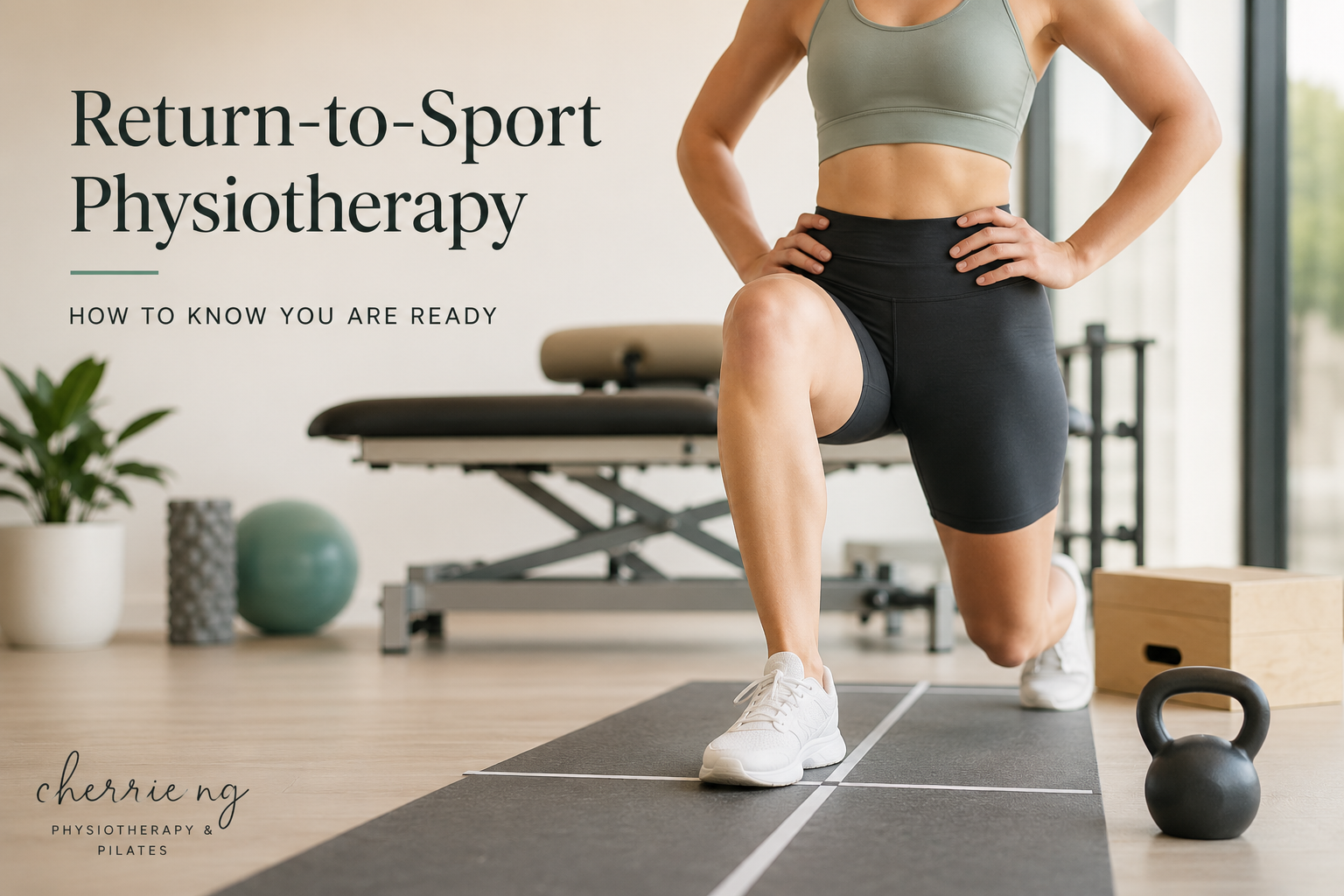
Return-to-sport physiotherapy can help you judge whether your body is ready for the demands of training and competition after an injury. Being pain-free during daily life is encouraging, but readiness may also depend on strength, mobility, control, fitness, confidence, injury healing and how the area responds to repeated sport-specific load.
There is no single test or timeline that clears every injury and every sport. This article provides general education, not an individual clearance decision. A recent fracture, surgery, concussion or significant ligament, tendon or muscle injury may require medical guidance and an injury-specific rehabilitation plan.
Returning to sport is a process, not one day
A widely used sports medicine consensus describes return to sport as a continuum:
- Return to participation: You are active in rehabilitation or modified training but have not returned to your full sport goal.
- Return to sport: You are back in your sport, though perhaps not yet at your previous performance level.
- Return to performance: You have rebuilt the capacity and confidence needed to perform at your intended level.
This distinction matters. Joining a warm-up, completing a light drill and playing a full competitive match are very different physical and psychological demands. A graded plan helps connect rehabilitation exercises to those real demands.
Why being pain-free is not the only sign
Pain and swelling are important, but they do not show the whole picture. An ankle may feel comfortable when walking yet remain unsteady during landing or changing direction. A knee may manage gym exercises but fatigue during repeated sprinting. A shoulder may feel fine at rest but lack the strength or control needed for serving, throwing or contact.
Readiness may be affected by:
- The type and severity of the injury
- Tissue healing and any medical or surgical restrictions
- Joint mobility and stability
- Strength, power and endurance
- Balance, coordination and movement control
- Sport-specific speed, impact, contact or change-of-direction demands
- Training history and recent workload
- Confidence and fear of reinjury
Time since injury is useful context, especially when tissue healing matters, but time alone does not show what you can currently tolerate.
What a return-to-sport assessment may look at
Cherrie may ask how the injury happened, what rehabilitation you have completed, whether symptoms change during or after training, and which sport, position or level you want to return to. Medical reports and post-surgery protocols should guide the plan when relevant.
Assessment may include:
- Pain, swelling and other symptom responses
- Joint range of motion and relevant flexibility
- Strength and endurance of the injured area and connected regions
- Balance and single-leg control when relevant
- Squatting, stepping, pushing, pulling or overhead tasks
- Running, hopping, jumping, landing or direction changes when appropriate
- Repeated efforts to see whether control changes with fatigue
- Confidence during tasks that resemble the injury situation
The exact tests should match the injury and sport. A runner, badminton player, footballer, swimmer and gym participant do not need identical testing. Results should inform the next training step rather than act as a guarantee that reinjury cannot happen.
Practical signs that you may be progressing
Depending on the injury, useful signs may include:
- Daily activities and basic training are manageable without worsening symptoms
- Mobility is sufficient for your sport’s required positions
- Strength and control have improved enough for higher-load tasks
- You can complete relevant drills with consistent technique
- The injured area tolerates repeated efforts, not only one successful repetition
- You can recover from a planned session without an unexpected increase in pain, swelling or instability
- Confidence is improving as the drills become more realistic
These signs need clinical context. Comparing sides can be useful in some tests, but the uninjured side may also be under-trained after a long rehabilitation period. Quality, absolute capacity and sport demands still matter.
How a graded return may work
A return plan may move through stages such as:
- Individual conditioning and controlled rehabilitation drills
- Modified practice with limits on speed, volume, contact or direction changes
- More demanding sport-specific drills and repeated efforts
- Full training before unrestricted competition
- Gradual rebuilding of match, event or weekly training volume
Progression is not always linear. If pain, swelling, stiffness, fatigue or confidence changes after a session, the next session may need less volume or intensity. A temporary adjustment is information, not necessarily failure.
For team and competitive athletes, communication between the athlete, physiotherapist, doctor, coach and trainer can help align medical restrictions, rehabilitation targets and training demands.
What physiotherapy may focus on before return
The programme depends on the gap between your current ability and sport demands. It may include progressive strength work, balance and coordination, running preparation, jumping and landing, agility, conditioning, and planned exposure to sport-specific tasks.
Rehab Pilates principles may support trunk control, alignment, breathing and movement awareness for some people, but they should complement rather than replace the running, impact, contact or skill demands required by the sport.
When to pause and seek medical care
Stop and seek prompt medical care if returning to activity causes severe or rapidly worsening pain, an obvious deformity, inability to bear weight, a joint that becomes locked, sudden weakness, new numbness, a cold or discoloured limb, chest pain, fainting, unusual shortness of breath, or severe calf pain or swelling.
After surgery, contact your medical team about wound concerns, fever, increasing redness or swelling, sudden deterioration, calf pain or breathing difficulty. Suspected concussion symptoms require removal from sport and appropriate medical assessment; do not use a general musculoskeletal return-to-sport checklist for concussion clearance.
Related reading
- Sports Physiotherapy in KL: Injury Rehab for Active Adults
- Sports Injury Rehab in KL: Why Rest Alone Is Usually Not Enough
- ACL Rehab Physiotherapy in KL: Phases of Return to Sport
- Ankle Sprain Physiotherapy in KL: Why Balance Training Matters
Frequently asked questions
Do I need to be completely pain-free before returning to sport?
It depends on the injury, healing stage and sport. Some rehabilitation can continue with mild, stable symptoms, while certain injuries or warning signs require greater caution. The response during and after activity should be considered with assessment findings and medical restrictions.
Is passing a return-to-sport test a guarantee against reinjury?
No. Testing can identify strengths, remaining gaps and a sensible next step, but no test removes all risk. Gradual exposure, ongoing training, recovery and communication remain important after testing.
Can I return to competition as soon as I complete one full training session?
Not necessarily. One session may not represent repeated training, competition intensity or accumulated fatigue. Some people benefit from several progressive sessions before rebuilding competition time or volume.
If you are in Kuala Lumpur or Selangor and are unsure how to progress from rehabilitation back to training or sport, you can WhatsApp Cherrie to ask whether a return-to-sport physiotherapy assessment may be suitable.
Foundational clinical sources and further reading
These authoritative sources provide general background relevant to this topic; they are not claim-by-claim citations. This content is educational and does not replace individual assessment, diagnosis or emergency medical care.
- What is physiotherapy? — World Physiotherapy
- Musculoskeletal health — World Health Organization
- WHO guidelines on physical activity and sedentary behaviour — World Health Organization