Knee Pain
ACL Rehab Physiotherapy in KL: Phases of Return to Sport
Understand ACL rehab phases, what physiotherapy may assess, and why return to sport should be based on readiness, not only time.
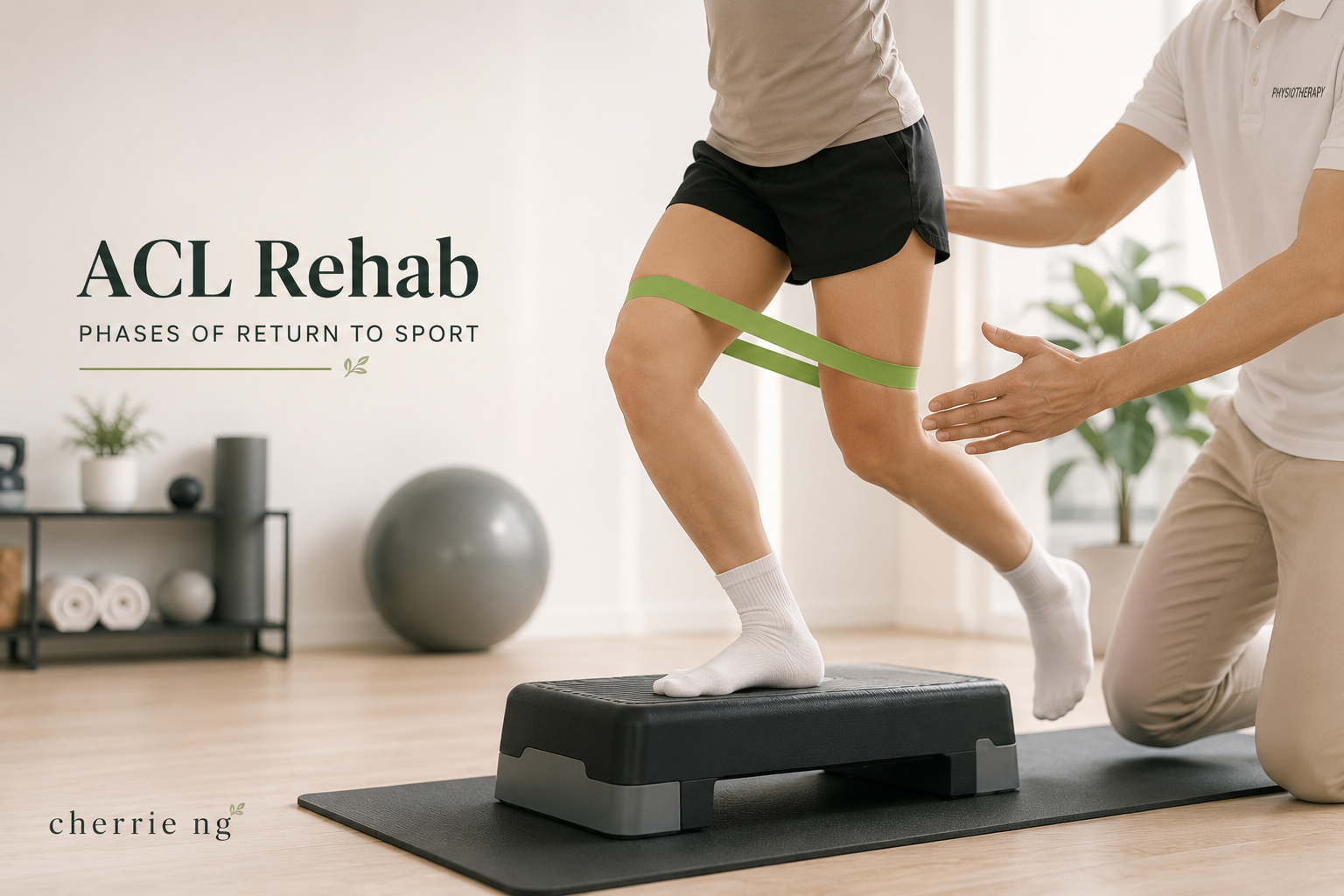
ACL rehab physiotherapy in KL can support recovery after an ACL injury or ACL reconstruction by rebuilding knee movement, strength, control, confidence and sport-specific readiness. Return to sport should not be based on time alone. It usually needs progressive testing, symptom monitoring and a plan that matches your surgery status, sport demands and current ability.
This article is general education, not a diagnosis or a replacement for your surgeon’s advice. If you have had surgery, your physiotherapy plan should respect the surgeon’s protocol, graft type, healing stage and any restrictions given to you.
Why ACL rehab needs phases
The anterior cruciate ligament, or ACL, helps control knee stability during pivoting, landing, cutting and sudden direction changes. After an ACL injury or reconstruction, the knee may feel swollen, weak, stiff, unstable or less trustworthy during daily movement and sport.
Rehab is usually planned in phases because the knee needs different things at different stages. Early rehab often focuses on swelling, range of motion and walking. Later rehab gradually adds strength, balance, running, jumping, landing and change-of-direction work.
Skipping stages can increase irritation or reduce confidence. Staying too long at an easy stage can also leave the knee underprepared for sport.
Phase 1: Calm symptoms and restore basics
Early ACL rehab often focuses on:
- Reducing swelling and irritation
- Restoring knee extension and comfortable bending
- Rebuilding quadriceps activation
- Improving walking pattern
- Practising safe stairs or daily tasks
- Understanding what movements to avoid at this stage
The exact plan depends on whether the ACL was managed surgically or non-surgically, and whether there were other injuries such as meniscus, cartilage or collateral ligament involvement.
Phase 2: Build strength and control
Once the knee is more settled, rehab usually progresses toward strength and movement control. This may include:
- Squat, sit-to-stand and step-up progressions
- Quadriceps and hamstring strengthening
- Hip, calf and trunk strengthening
- Balance and single-leg control
- Range-of-motion work if stiffness remains
- Low-impact conditioning where appropriate
Strength work should be progressed carefully. A knee that feels okay during simple walking may still need a lot of preparation before running, jumping or sport.
Phase 3: Prepare for running, jumping and landing
Before returning to higher-impact activity, physiotherapy may assess whether the knee can tolerate load, absorb force and control alignment during more demanding tasks.
This phase may include:
- Single-leg strength progressions
- Step-downs and split squats
- Running preparation drills
- Hopping and landing progressions when appropriate
- Agility preparation
- Rehab Pilates-informed control work for trunk, hip and breathing awareness
The goal is not to rush into sport. It is to build a bridge from controlled strengthening to real movement demands.
Phase 4: Return-to-sport preparation
Return to sport after ACL injury usually needs sport-specific progression. A football, basketball, netball, badminton, running or gym goal may each require different preparation.
Depending on your sport, this stage may include:
- Running volume progression
- Jumping and landing mechanics
- Cutting and change-of-direction drills
- Deceleration control
- Strength and power testing
- Confidence and fear-of-reinjury discussion
- Training-load planning before full return
Readiness should be based on strength, symptoms, swelling response, movement quality, confidence and the demands of your sport. Time since injury or surgery is only one part of the decision.
What a physiotherapy assessment may look at
An ACL rehab assessment may review your injury history, surgery details if relevant, current symptoms, swelling, knee range, walking, stairs, strength, balance, single-leg control and training goals.
Cherrie may also look at hip and ankle mobility, trunk control, previous injuries, confidence with movement and how your knee responds to exercise. If you are post-surgery, any surgeon protocol or medical report should guide what is appropriate.
This helps decide whether the next step should be calming symptoms, rebuilding strength, improving movement control, preparing for running, or planning sport-specific progression.
When to seek medical care
Seek medical care promptly if knee pain follows major trauma, you cannot bear weight, the knee is very swollen, red or hot, you have fever, severe calf pain or swelling, sudden locking, major instability, a changed knee or kneecap shape, new numbness or weakness, or symptoms that feel unusual for you.
If you have had ACL surgery and notice sudden worsening pain, increasing swelling, wound concerns, fever, calf pain or shortness of breath, contact your medical team urgently.
Related reading
- Knee Strengthening Exercises: What to Start With Safely
- Meniscus Injury Physiotherapy: What Rehab Usually Focuses On
- Sports Injury Rehab in KL: Why Rest Alone Is Usually Not Enough
- Return-to-Sport Physiotherapy: How to Know You Are Ready
Frequently asked questions
How long does ACL rehab take?
ACL rehab often takes months, but the timeline depends on injury severity, surgery status, graft type, other injuries, strength, symptoms, sport demands and medical guidance. Return to sport should be based on readiness, not only a calendar date.
Can physiotherapy help before ACL surgery?
Pre-surgery physiotherapy may help some people improve swelling, range of motion, strength and walking before surgery. This should be discussed with your surgeon or medical team, especially if there are other injuries.
When can I run after an ACL injury?
Running should usually wait until the knee has enough range, strength, control and symptom stability. The right timing depends on your injury, surgery status, protocol and assessment findings.
If you are in Kuala Lumpur or Selangor and need guidance for ACL rehab, knee strengthening or return-to-sport progression, you can WhatsApp Cherrie to ask whether physiotherapy assessment is suitable.
Foundational clinical sources and further reading
These authoritative sources provide general background relevant to this topic; they are not claim-by-claim citations. This content is educational and does not replace individual assessment, diagnosis or emergency medical care.
- What is physiotherapy? — World Physiotherapy
- Musculoskeletal health — World Health Organization