Knee Pain
Knee Strengthening Exercises: What to Start With Safely
Learn how to start knee strengthening safely, what muscles matter, and when knee pain needs physiotherapy assessment.
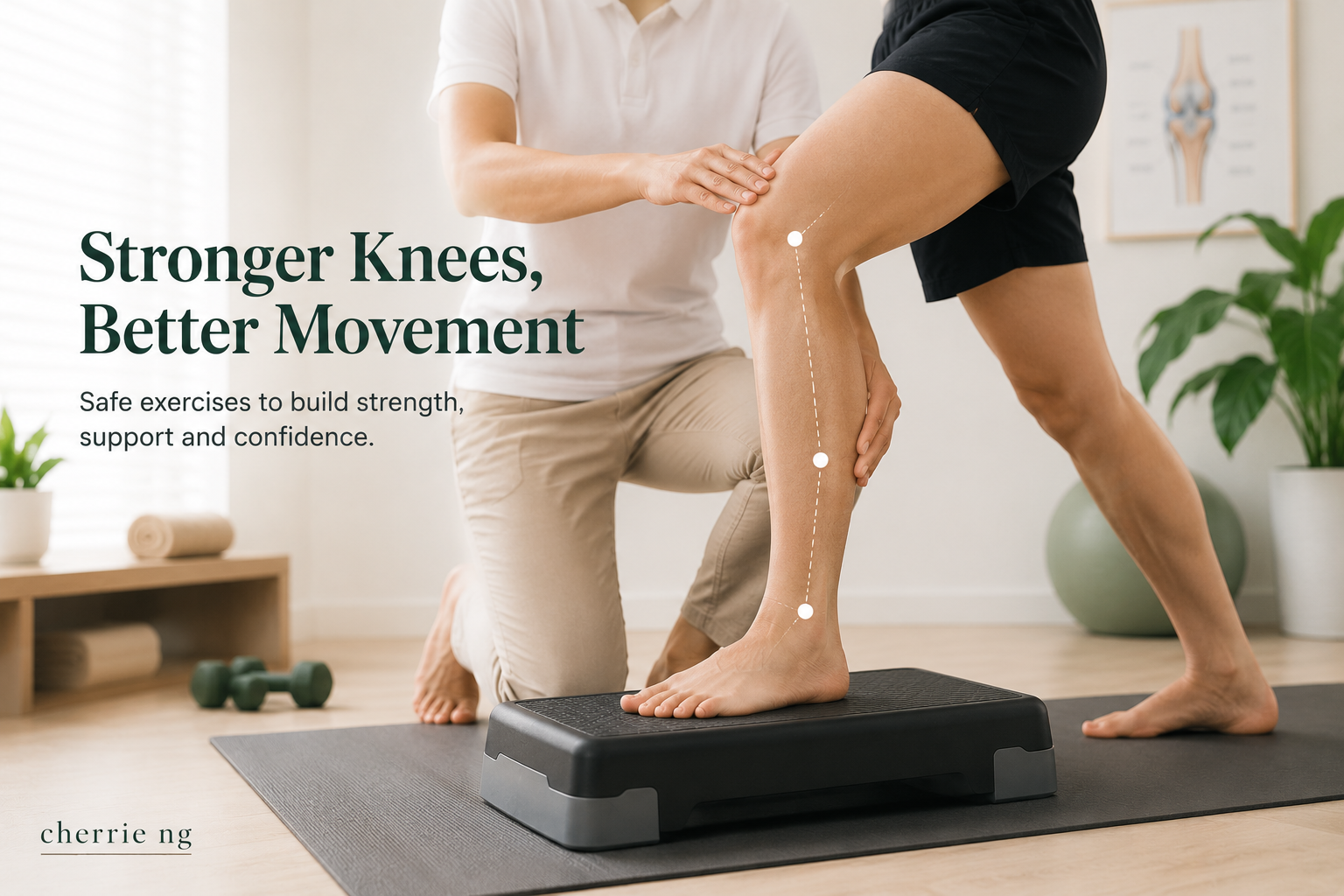
Knee strengthening exercises can help many people with knee pain, but the safest starting point depends on your symptoms, swelling, injury history, strength, balance and what activities you want to return to. A good plan usually starts with tolerable exercises, then gradually builds toward stairs, squats, walking, running, gym, Pilates or sport.
The knee does not work alone. Stronger thighs matter, but hip strength, calf strength, ankle mobility, balance, trunk control and activity pacing can also affect how the knee feels. If pain is persistent, worsening or unclear, physiotherapy assessment can help you choose exercises that match your current tolerance.
What muscles matter for knee support?
Knee rehab often includes more than one knee exercise. Depending on your assessment, strengthening may focus on:
- Quadriceps: The front thigh muscles that help with stairs, squats and standing up.
- Hamstrings: The back thigh muscles that support knee control and hip movement.
- Glutes: Hip muscles that help control the leg during walking, stairs, running and single-leg tasks.
- Calves: Important for walking, running, jumping and absorbing load.
- Trunk muscles: Helpful for overall balance and movement control.
The aim is not to strengthen every muscle at once with a long routine. The aim is to find the most useful starting point and progress consistently.
Stage 1: Start with low-irritation exercises
If the knee is painful or sensitive, start with exercises that feel controlled and do not flare symptoms:
- Quad sets or gentle knee squeezes
- Straight leg raises if tolerated
- Seated knee extensions in a comfortable range
- Heel slides for gentle movement
- Supported sit-to-stand from a higher chair
- Calf raises with support
These should not cause sharp pain, increasing swelling or symptoms that stay worse after the session. Mild effort is okay; a strong flare-up is a sign the starting level may be too much.
Stage 2: Build basic strength
When symptoms are more settled, the plan may progress to:
- Sit-to-stand from a lower chair
- Wall sits in a comfortable range
- Step-ups to a low step
- Mini squats
- Bridges
- Side-lying hip strengthening
- Standing calf raises
Progression can come from more repetitions, slower tempo, slightly deeper range, more load or less hand support. You do not need to change everything at once.
Stage 3: Add control and balance
Many knee problems show up during single-leg tasks, stairs or sport. Control work may include:
- Single-leg balance
- Step-down practice
- Split squats in a small range
- Side steps with a band
- Slow stair practice
- Controlled lunges when tolerated
The goal is to build confidence and control, not to make the knee look perfect. Pain, swelling or repeated giving-way should guide whether the exercise is appropriate.
Stage 4: Return to your real activity
Once strength and symptoms improve, rehab should connect to your actual goals:
- Longer walks
- More stairs
- Hiking
- Running intervals
- Gym squats, deadlifts or lunges
- Pilates classes
- Jumping, landing or sport drills
This stage is where many people need pacing. A knee may tolerate daily walking but still need gradual preparation for running, jumping or heavy gym work.
What a physiotherapy assessment may look at
A physiotherapy assessment may start with your symptom story: where pain is, when it appears, whether there was injury, and how it affects stairs, walking, exercise or sport.
Cherrie may then assess knee range, swelling, strength, walking, stairs, squat pattern, single-leg control, hip and ankle mobility, balance, training load and how symptoms respond to different exercises.
This helps decide whether you should start with gentle activation, strength, mobility, balance, load management, rehab Pilates-informed control work or medical review.
When to seek assessment or medical care
Consider physiotherapy if knee pain lasts more than a few days, keeps returning with exercise, affects stairs or walking, comes with swelling, or makes you unsure which movements are safe.
Seek medical care promptly if knee pain follows major trauma, you cannot bear weight, the knee is very swollen, red or hot, you have fever, severe calf pain or swelling, sudden locking, major instability, a changed knee or kneecap shape, unexplained weight loss, or symptoms that feel unusual for you.
Related reading
- Knee Pain When Squatting: Common Reasons and When to Get Assessed
- Knee Replacement Physiotherapy in KL: Mobility, Strength and Confidence
- Knee Pain Physiotherapy in KL: Common Causes and Rehab Options
- Patellofemoral Pain: Why the Front of the Knee Hurts
- Knee Pain When Climbing Stairs: Common Reasons and Rehab Ideas
- Meniscus Injury Physiotherapy: What Rehab Usually Focuses On
- Sports Injury Rehab in KL: Why Rest Alone Is Usually Not Enough
- ACL Rehab Physiotherapy in KL: Phases of Return to Sport
If you are in Kuala Lumpur or Selangor and you are unsure how to start knee strengthening safely, you can WhatsApp Cherrie to ask whether physiotherapy assessment is suitable.
Foundational clinical sources and further reading
These authoritative sources provide general background relevant to this topic; they are not claim-by-claim citations. This content is educational and does not replace individual assessment, diagnosis or emergency medical care.
- What is physiotherapy? — World Physiotherapy
- Musculoskeletal health — World Health Organization