Knee Pain
Knee Pain When Climbing Stairs: Common Reasons and Rehab Ideas
Understand why stairs can trigger knee pain, what physiotherapy may assess, and how rehab can rebuild confidence safely.
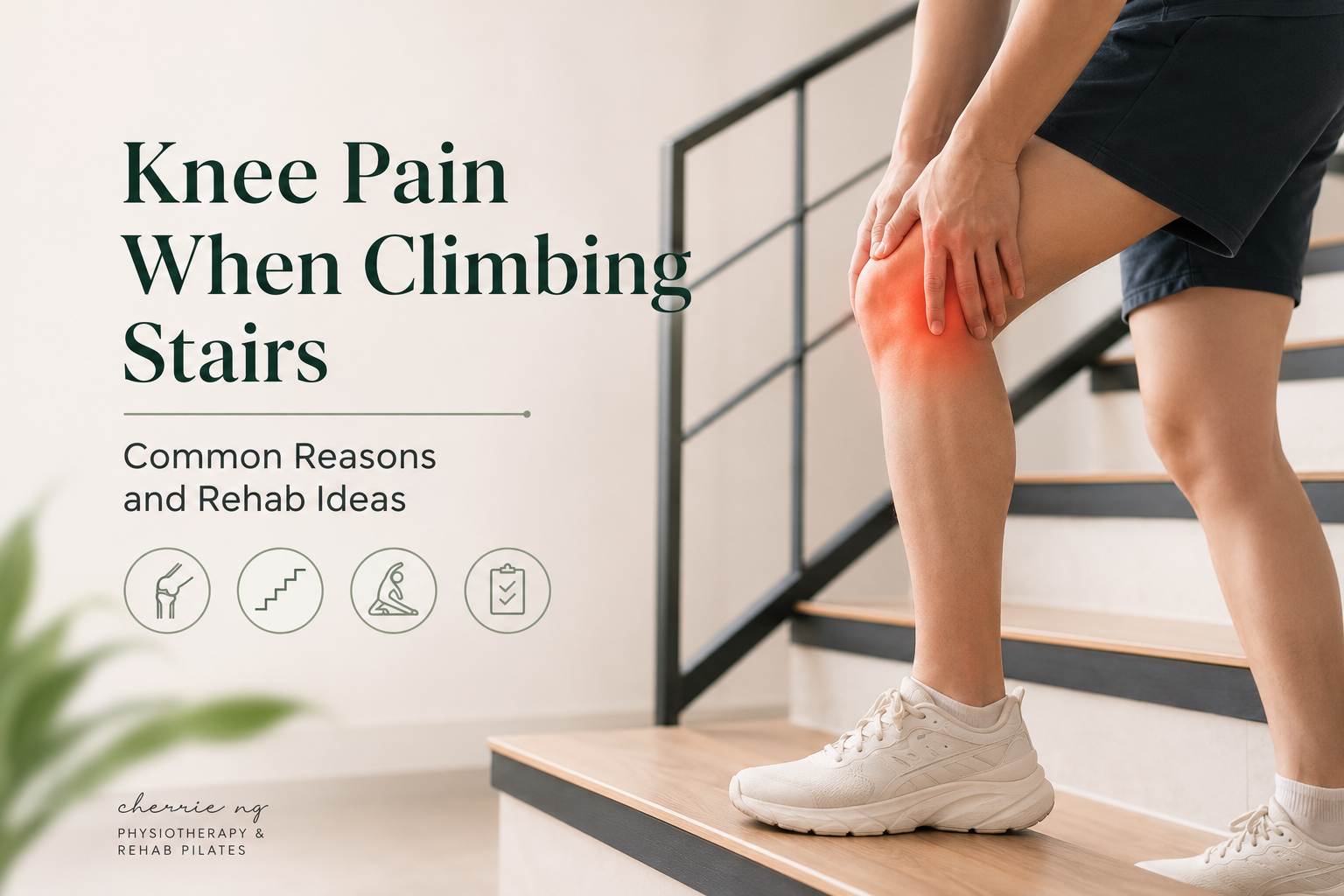
Knee pain when climbing stairs is common because stairs ask the knee to handle more load than level walking. Pain may relate to patellofemoral pain, tendon irritation, strength deficits, movement control, swelling, training load, previous injury or how the hip, ankle and foot share the work.
The useful question is not only “what is wrong with my knee?” It is also “what is my knee currently ready to tolerate, and how can we rebuild stairs safely?” A physiotherapy assessment can help answer that without guessing.
Why stairs can trigger knee pain
Going up and down stairs requires the knee to bend, control body weight and coordinate with the hip, ankle and foot. Going down stairs can feel harder because the leg has to control your body as it lowers.
Stairs may irritate knee pain when:
- The front of the knee is sensitive with bending load
- The thigh, hip or calf muscles are not sharing load well
- Single-leg control is reduced
- The ankle or hip feels stiff
- Training, hiking, running or stair volume increased quickly
- There is swelling or irritation after a previous injury
- You are avoiding knee bending because of fear or pain
The same stair pain can have different drivers in different people, so a generic exercise list is not always enough.
Common patterns people notice
People with stair-related knee pain may notice:
- Pain at the front of the knee when going downstairs
- Pain around or behind the kneecap during stairs
- Discomfort after repeated stairs at work or home
- Knee pain during squats, lunges or step-ups
- A feeling of weakness, wobbling or reduced confidence
- Stiffness after sitting, then pain when using stairs
- Symptoms that improve with rest but return with load
- Clicking that becomes worrying because it is painful
Painless clicking can be normal for many people. Painful clicking, locking, giving way, swelling or inability to trust the knee should be assessed.
What a physiotherapy assessment may look at
A physiotherapy assessment may start with your symptom story: when stair pain began, whether there was injury, whether pain is worse going up or down, and what else triggers symptoms.
Cherrie may then assess walking, stair stepping, squats, step-downs, single-leg balance, hip and thigh strength, ankle mobility, knee range of motion, swelling, footwear, training load and how symptoms respond to different movement strategies.
This helps decide whether rehab should focus on calming symptoms, strengthening, movement retraining, mobility, load management or medical review.
Rehab ideas for stair confidence
Depending on the assessment, physiotherapy may include:
- Short-term pacing of stair volume
- Practising step-ups or step-downs at a tolerable height
- Strengthening the quadriceps, hips, calves and trunk
- Balance and single-leg control exercises
- Squat or lunge modifications
- Foot, ankle or hip mobility work if relevant
- Gradual return to hiking, running, gym or Pilates
- Education on when to progress and when to reduce load
For some people, holding a rail, reducing speed, taking smaller steps or temporarily using a step-to pattern may help symptoms settle while strength is rebuilt. These should be stepping stones, not permanent avoidance if your goal is normal stair use.
What to avoid when stairs are painful
When symptoms are irritable, it may help to temporarily reduce repeated stair climbing, deep squats, heavy lunges, hill running, jumping or sudden training increases. This does not mean complete rest is always best.
The aim is to find a tolerable starting point, then gradually increase what the knee can handle.
When to seek assessment or medical care
Consider physiotherapy if stair pain lasts more than a few days, keeps returning, affects walking or exercise, comes with swelling, or makes you unsure which movements are safe.
Seek medical care promptly if knee pain follows major trauma, you cannot bear weight, the knee is very swollen, red or hot, you have fever, severe calf pain or swelling, sudden locking, major instability, a changed knee or kneecap shape, unexplained weight loss, or symptoms that feel unusual for you.
Related reading
- Knee Pain Physiotherapy in KL: Common Causes and Rehab Options
- Patellofemoral Pain: Why the Front of the Knee Hurts
- Knee Strengthening Exercises: What to Start With Safely
- Sports Injury Rehab in KL: Why Rest Alone Is Usually Not Enough
If you are in Kuala Lumpur or Selangor and knee pain is making stairs feel difficult, you can WhatsApp Cherrie to ask whether physiotherapy assessment is suitable.
Foundational clinical sources and further reading
These authoritative sources provide general background relevant to this topic; they are not claim-by-claim citations. This content is educational and does not replace individual assessment, diagnosis or emergency medical care.
- What is physiotherapy? — World Physiotherapy
- Musculoskeletal health — World Health Organization