Sports Rehab
Runner's Knee Physiotherapy in KL: Load, Strength and Recovery
Learn what runner's knee may mean, how physiotherapy assesses running-related knee pain, and how load and strength can guide recovery.
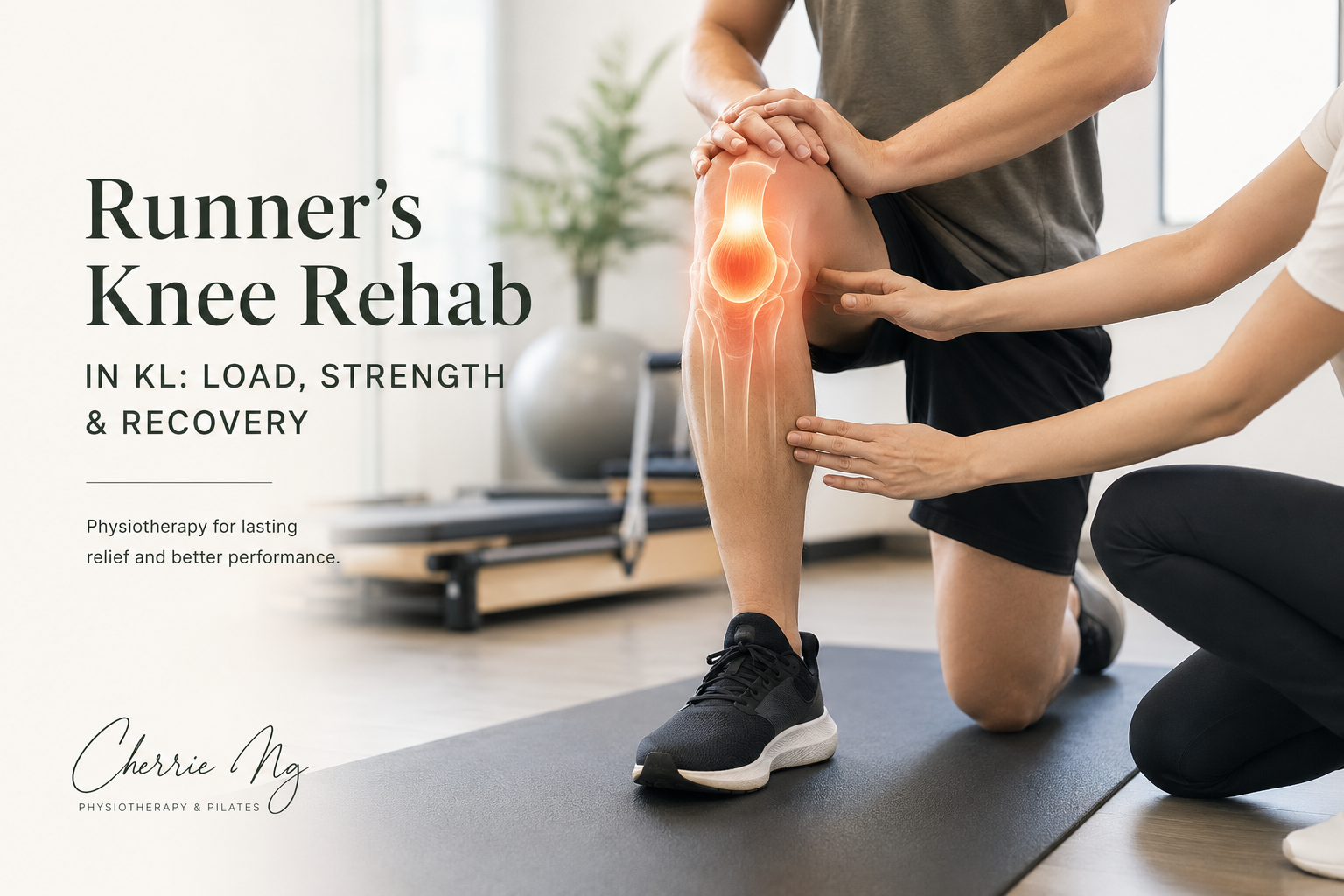
Runner’s knee physiotherapy in KL can help when pain around or behind the kneecap appears during running, hills, stairs, squats or after an increase in training. Recovery often involves adjusting load without stopping all activity, rebuilding knee and hip capacity, and gradually returning to the distance, speed and terrain you want to manage.
“Runner’s knee” is an informal label, not a precise diagnosis. It often refers to patellofemoral pain, but pain at the front, side or inside of the knee can have different causes. This article is general education; an assessment is useful when symptoms are persistent, worsening or unclear.
What does runner’s knee usually feel like?
Patellofemoral pain is commonly felt around or behind the kneecap. Runners may notice:
- A dull ache that builds during a run
- Pain with hills, especially downhill running
- Discomfort after increasing distance, pace or frequency
- Pain with stairs, squats, lunges or jumping
- Stiffness or soreness after sitting with the knee bent
- Symptoms later that day or the morning after a harder session
Knee clicking can occur without injury and is not always concerning by itself. Swelling, locking, repeated giving way, marked loss of movement or pain after a twist or fall deserves closer assessment.
Why running-related knee pain may develop
Running repeatedly loads the knee, which is normally something the body can adapt to. Symptoms may appear when the current running demand exceeds what the knee and the rest of the leg are ready to tolerate.
Relevant factors may include:
- A sudden increase in weekly distance, speed or running days
- Adding hills, intervals, races or harder surfaces too quickly
- Returning after illness, injury or a long break
- Reduced quadriceps, hip or calf capacity
- Limited ankle or hip mobility when it affects running tasks
- A change in footwear, route or training schedule
- Insufficient recovery between demanding sessions
This does not mean a single “weak muscle,” foot shape or running style caused the pain. Runner’s knee is often influenced by several factors, and the useful combination differs between people.
What a physiotherapy assessment may look at
Cherrie may ask where the pain is, when it starts during a run, how long it lasts afterward, and what changed in the weeks before symptoms began. Weekly distance, pace, hills, surfaces, races, gym training, footwear, recovery and previous injuries can all provide context.
Assessment may include:
- Knee movement, tenderness and swelling
- Quadriceps, hip and calf strength
- Ankle and hip mobility
- Squat, step-down and single-leg control
- Balance, hopping or landing when appropriate
- Running observation when it is relevant and practical
- Symptom response to different loads or movement options
The aim is not to make every runner move identically. It is to identify the most relevant limits, decide what can continue, and build a plan toward your running goal.
Do you need to stop running completely?
Not always. Some runners can continue with a temporarily adjusted distance, pace, route or frequency. Others may need a short break from running while maintaining tolerable walking, cycling, swimming or strength work.
Useful short-term changes may include:
- Reducing distance or the number of running days
- Pausing speed sessions, hills or long downhill routes
- Separating harder sessions with more recovery
- Using run-walk intervals
- Keeping a simple record of running load and symptom response
The right adjustment depends on severity and how symptoms behave during and after running. Pushing through steadily worsening pain, swelling or altered running is not a useful progression.
What runner’s knee rehab may include
Current patellofemoral pain best-practice guidance supports education and knee-focused exercise, with hip-focused exercise and other options tailored to the individual.
Depending on assessment findings, physiotherapy may include:
- Progressive quadriceps strengthening
- Hip and calf strengthening when relevant
- Squat, lunge, step-down and single-leg progressions
- Balance, hopping and landing preparation
- Temporary running-load adjustments
- A gradual return-to-run programme
- Running retraining only when a specific finding and goal support it
- Footwear, taping or prefabricated insert discussion for selected cases
There is no universal need to change foot strike, increase cadence or “correct” every movement difference. Running changes should be tested carefully because shifting load away from one area may increase demand elsewhere.
How to progress back to regular running
Progress is usually easier to interpret when one main variable changes at a time. For example, you might first rebuild comfortable easy running, then increase duration, add speed, and later reintroduce hills or sport-specific demands.
Signs that the plan may be tolerable include stable movement, manageable symptoms, no unexpected swelling, and recovery that allows the next planned session. A flare-up may mean the recent change was too large; it does not automatically mean all progress has been lost.
For a race or competitive goal, the final stages should prepare you for repeated running load rather than only passing one strength exercise. Return-to-sport readiness also includes confidence, fitness and sport-specific progression.
When to seek medical care
Seek prompt medical care if knee pain follows major trauma, you cannot bear weight, the knee is severely swollen, red or hot, there is fever, sudden locking, major instability, an obvious change in shape, new numbness or weakness, or severe calf pain or swelling.
Arrange an assessment if pain repeatedly changes your running, does not improve with sensible load adjustment, appears with swelling, or affects daily walking and stairs. Not every running-related knee pain is patellofemoral pain, so persistent symptoms should not be managed by a generic exercise list alone.
Related reading
- Patellofemoral Pain: Why the Front of the Knee Hurts
- Can Weak Glutes Contribute to Knee Pain?
- Knee Strengthening Exercises: What to Start With Safely
- Sports Injury Rehab in KL: Why Rest Alone Is Usually Not Enough
Frequently asked questions
Can I keep running with mild runner’s knee symptoms?
Some runners can continue at an adjusted level if symptoms remain manageable and do not progressively worsen during or after running. Swelling, limping, instability or increasing pain needs greater caution and assessment.
Are weak glutes always the cause of runner’s knee?
No. Hip strength may be relevant for some runners, but runner’s knee should not be reduced to one muscle. Knee strength, training load, recovery, movement, mobility and individual history may also matter.
Will changing my running form fix knee pain?
Not automatically. Running retraining can be considered when assessment identifies a relevant pattern, but no single cadence, foot strike or posture suits everyone. Changes should be gradual and monitored.
If you are in Kuala Lumpur or Selangor and knee pain is limiting running, race preparation or active training, you can WhatsApp Cherrie to ask whether a physiotherapy assessment may be suitable.
Foundational clinical sources and further reading
These authoritative sources provide general background relevant to this topic; they are not claim-by-claim citations. This content is educational and does not replace individual assessment, diagnosis or emergency medical care.
- What is physiotherapy? — World Physiotherapy
- Musculoskeletal health — World Health Organization
- WHO guidelines on physical activity and sedentary behaviour — World Health Organization