Local SEO
Rehab Pilates in Kuala Lumpur: How to Choose the Right Session Safely
Learn how to choose rehab Pilates in Kuala Lumpur, what assessment should include, and when physiotherapy should come before Pilates.
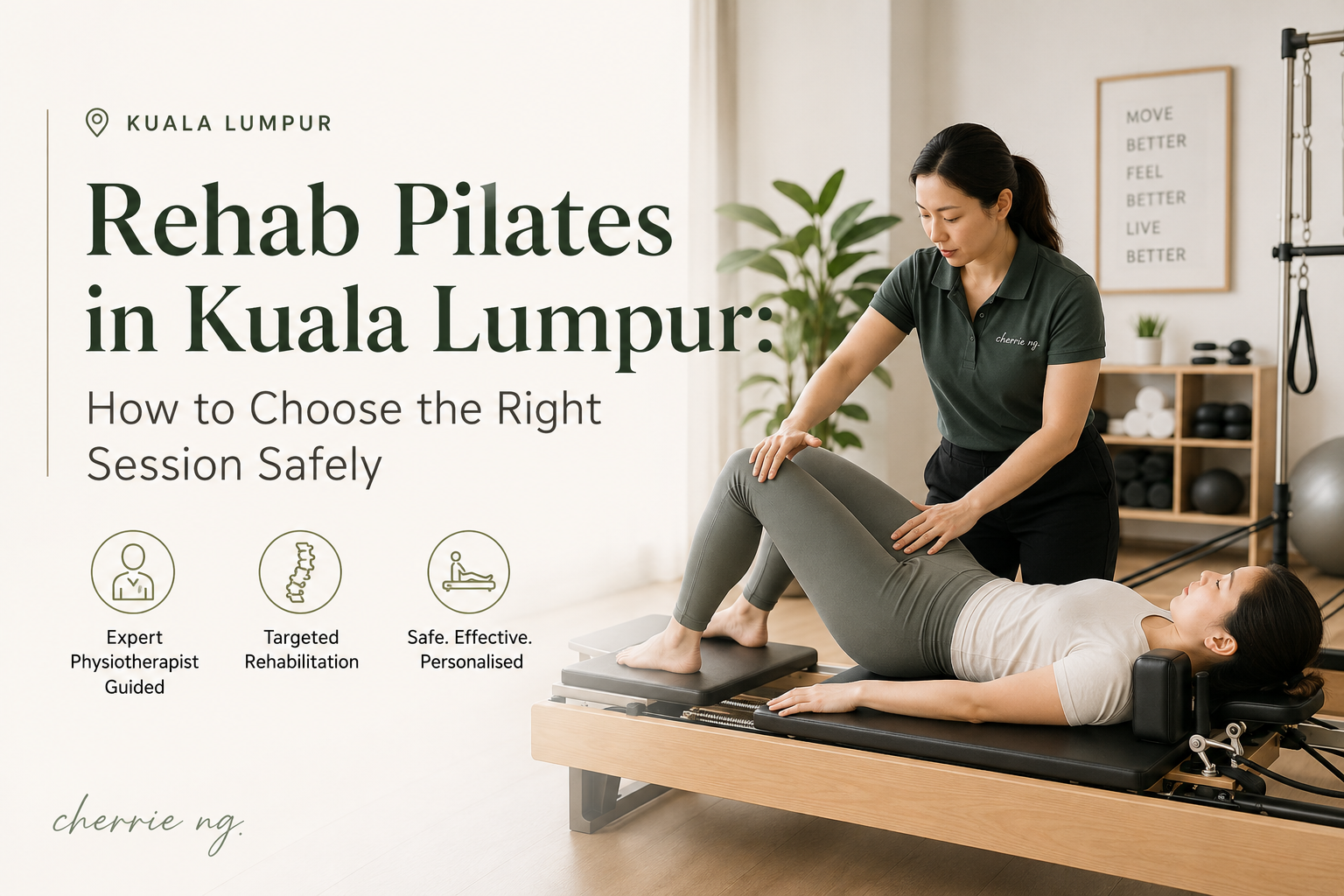
Rehab Pilates in Kuala Lumpur is most useful when the session is chosen around your symptoms, movement goals, injury history and current strength instead of following a fixed class routine. If you are recovering from pain, posture strain, surgery, pregnancy-related changes or a period of reduced activity, the safest starting point is usually an assessment before exercise selection.
The goal is not to find the hardest Pilates class. The goal is to find a setting where your body is screened, the exercises are adapted, and progress is guided carefully.
What makes a Pilates session rehab-focused?
Rehab Pilates uses Pilates principles, but the decision-making is shaped by clinical reasoning. Instead of asking everyone to do the same sequence, the session may begin with questions about symptoms, daily activities, exercise history, medical history and your goals.
Cherrie may then look at movement, strength, mobility, posture, breathing pattern, balance, coordination and how your symptoms respond to different positions. From there, the exercises can be adjusted by changing range of motion, resistance, pace, body position or equipment.
This is different from joining a general class and hoping the movements fit. Rehab-focused work should explain why each exercise is chosen and how it connects to your daily function or recovery goal.
Who may benefit from rehab Pilates in KL?
Rehab Pilates may be suitable for people in Kuala Lumpur who want guided movement support for:
- Back, neck, shoulder or hip discomfort
- Desk-related posture strain
- Returning to exercise after a painful flare-up
- Sports injury rehabilitation after the acute stage
- Post-natal core and movement recovery
- Post-surgery strengthening after medical clearance
- Balance, coordination and movement confidence
- A safer bridge from physiotherapy into regular exercise
It may also help people who are not in pain but want a more individualised start before entering a group class, gym routine or higher-intensity training.
Questions to ask before booking
Before choosing a rehab Pilates session, ask practical questions:
- Is there an assessment before exercises are selected?
- Will the session be one-to-one or in a group?
- Can exercises be modified for pain, old injuries, post-natal needs or surgery history?
- Will mat, reformer or other equipment be used, and why?
- What should I do if symptoms increase during or after the session?
- How will progress be reviewed?
- Should I start with physiotherapy assessment first?
These questions matter because “rehab Pilates”, “clinical Pilates” and “physiotherapist-led Pilates” are sometimes used loosely. The safer option is the one that matches your actual body and goals.
Mat, reformer or physiotherapy-led Pilates?
Mat Pilates can be simple, accessible and easy to repeat at home. Reformer Pilates can provide support, resistance and more exercise variety. Neither is automatically better.
For rehab, the more important question is whether the exercise is appropriate for your current stage. A gentle mat exercise may be more useful than a complicated reformer exercise if you are learning basic control. A reformer exercise may be useful later if you need support, feedback or progressive resistance.
Physiotherapist-led Pilates can help bridge this decision because the session considers symptoms, strength, mobility, confidence and clinical screening before choosing the format.
When physiotherapy should come first
Start with physiotherapy assessment if pain is new, worsening, linked to trauma, spreading into the arm or leg, or affecting daily activities. Assessment should also come first if you notice numbness, weakness, balance changes, unexplained symptoms or pain that feels unusual for you.
Seek medical care promptly if pain follows major trauma, worsens quickly, comes with fever, unexplained weight loss, new numbness or weakness, loss of bladder or bowel control, chest pain, sudden severe headache, dizziness, fainting, severe shortness of breath, or symptoms that feel unusual for you.
Rehab Pilates can support movement confidence and strength, but it should not replace medical review or physiotherapy assessment when symptoms need screening.
How to start safely
Start with a level that lets you breathe, control the movement and finish without a strong symptom flare-up. Mild muscle effort can be normal, but sharp pain, spreading symptoms, increasing numbness or lingering worsening after exercise are signs to pause and ask for guidance.
Good rehab Pilates should progress gradually. Early sessions may focus on breathing, alignment, mobility and control. Later sessions may add resistance, balance, reformer work or more demanding strength progressions when your body is ready.
Related reading
- What Is Rehab Pilates and How Is It Different from Regular Pilates?
- Physiotherapist-Led Pilates in KL: Who Is It Suitable For?
- Reformer Pilates for Rehab in KL: Who It Helps and What to Ask Before Booking
- Reformer Pilates in KL: Fitness, Rehab and What to Ask Before Booking
Frequently asked questions
Is rehab Pilates the same as clinical Pilates?
They are often used in similar ways, but the key point is whether the session starts with assessment and adapts exercises around symptoms, goals and movement capacity.
Can beginners do rehab Pilates?
Yes, beginners may be suitable when the exercises are chosen at the right level. A rehab-focused session should help you start with control, confidence and clear modifications.
Is rehab Pilates suitable for back pain?
It may support some people with back pain, especially when exercises are assessed and adapted. Persistent, worsening, nerve-related or unusual symptoms should be assessed before starting.
If you are in Kuala Lumpur or Selangor and want to ask whether rehab Pilates is suitable for your body, you can WhatsApp Cherrie and share your main concern, activity level and goals.
Foundational clinical sources and further reading
These authoritative sources provide general background relevant to this topic; they are not claim-by-claim citations. This content is educational and does not replace individual assessment, diagnosis or emergency medical care.
- What is physiotherapy? — World Physiotherapy
- WHO guidelines on physical activity and sedentary behaviour — World Health Organization