Local SEO
Physiotherapist in Subang: Home-Based Recovery and Movement Support
Looking for a physiotherapist in Subang? Learn about mobile assessment, home rehabilitation, older-adult mobility and return-to-activity support.
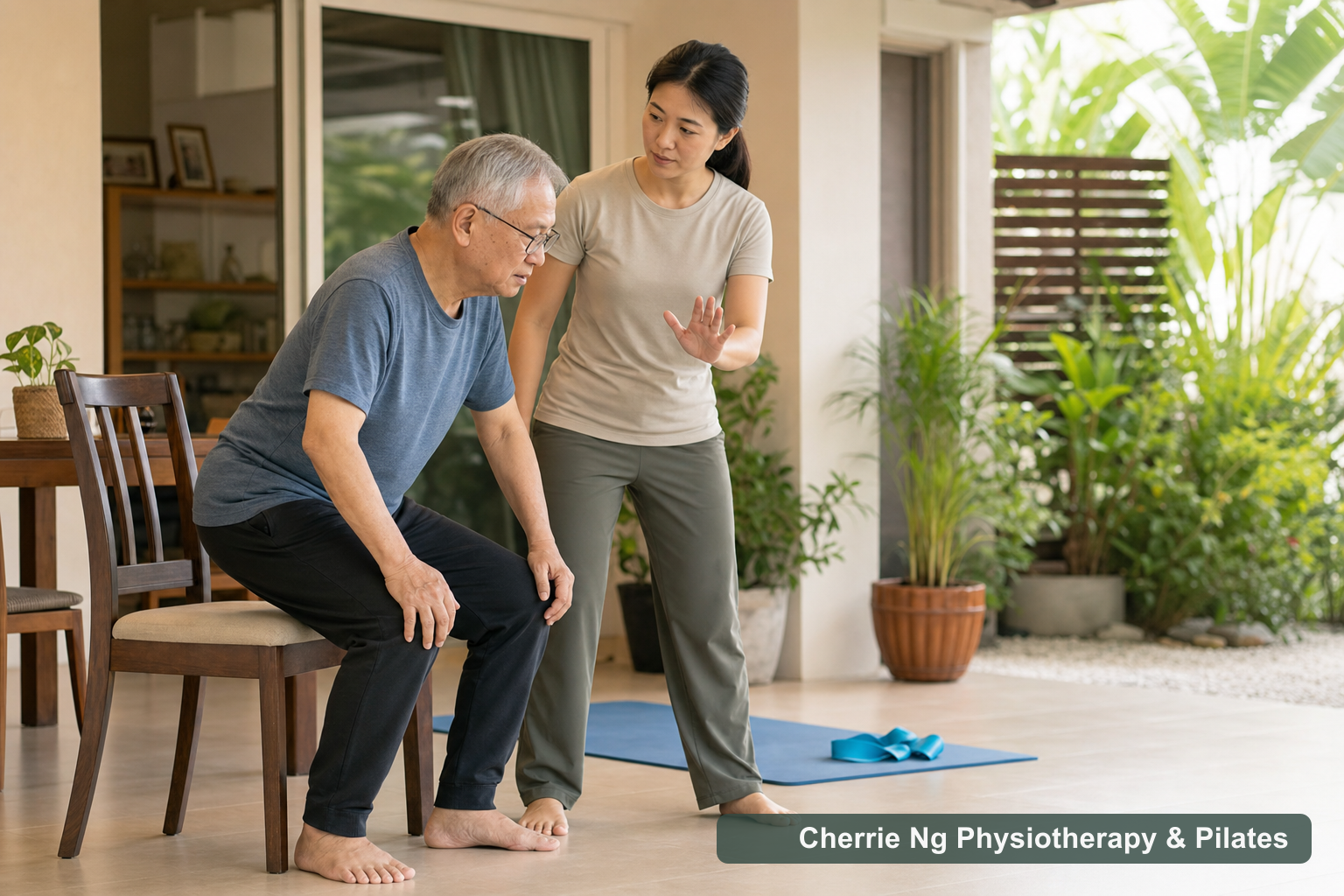
If you are looking for a physiotherapist in Subang, Cherrie offers practitioner-led mobile physiotherapy and movement rehabilitation, with each visit considered according to your needs, exact address and travel arrangements. Home-based support may be suitable after injury, surgery or illness, when mobility has become more difficult, or when you need a practical route back to daily activity and exercise.
This page describes a mobile service across selected Subang locations. It is not a walk-in clinic listing or a claim that Cherrie has a permanent treatment room in Subang. Availability is confirmed case by case before booking.
Who may consider physiotherapy in Subang?
It may be useful to discuss an assessment if you:
- Have back, neck, shoulder, hip, knee or ankle symptoms affecting daily activity
- Are recovering after surgery or illness with medical precautions confirmed
- Find walking, stairs, balance, standing up or household tasks more difficult
- Want an older family member’s exercises adapted to the home environment
- Are returning to gym, running, court sports or another active hobby after injury
- Need an exercise plan that works with the space and equipment you already have
- Are unsure whether physiotherapy, medical review or another service should come first
These examples do not identify a diagnosis. Similar movement difficulties may have different causes, so the starting point should reflect the person’s history, examination, goals and relevant medical information.
What happens during a mobile physiotherapy assessment?
The first session normally begins with a conversation. Cherrie may ask:
- When the concern began and how it has changed
- Which movements, positions or activities affect symptoms
- Whether there was an injury, operation, illness or fall
- About previous diagnoses, current medication and medical advice
- What daily, work, caregiving or exercise tasks need to be managed
- Which activity the person most wants to regain
Relevant physical checks may include walking, balance, joint movement, strength, posture, stairs, sitting down and standing up, reaching, lifting or another task connected to the goal. Not every person needs the same tests.
The World Health Organization describes rehabilitation as person-centred and connected to functioning in a person’s environment. It may be provided in community settings such as the home or workplace. World Health Organization rehabilitation fact sheet
What may a Subang home session include?
The plan depends on the assessment and may include:
- Education about symptoms and appropriate activity
- Mobility, strengthening or balance exercises
- Walking, stair or transfer practice
- Sit-to-stand and other daily movement practice
- Movement coaching for work, lifting, gym or sport
- Review of a chair, bed, desk or home layout when relevant
- Manual therapy when appropriate and agreed
- A manageable home programme for practice between sessions
The purpose is not to give every person the same routine. Exercise selection, assistance and progression should reflect current ability, symptom response, medical context and the activities that matter to the individual.
Why can home-based recovery be useful?
A home visit allows the assessment to consider the actual environment where a difficulty occurs. This may include:
- The stairs used each day
- The chair or bed involved in transfers
- Walking routes inside and outside the home
- Bathroom, doorway or furniture access
- The space available for exercise
- How a family member currently provides help
This context can make recommendations more practical. However, a home visit is not automatically better than clinic-based care. The suitable setting depends on safety, privacy, equipment, examination needs and the type or stage of rehabilitation.
How may physiotherapy support older-adult mobility?
For an older adult, an assessment may focus on a meaningful task such as standing from a chair, walking to the gate, using stairs, carrying a light item or moving around the home with more confidence. The plan may consider leg strength, balance, joint movement, walking pattern, fatigue, vision, footwear, medication context and the available environment.
WHO’s physical-activity guidance for older people recommends regular activity and includes varied movement that emphasises functional balance and strength. These population recommendations are not a prescription for every individual; a person with recent falls, illness, surgery, dizziness or significant weakness may need a safer starting point and medical input. WHO brief on physical activity and sedentary behaviour for older people
For people who have diagnosed osteoarthritis, NICE recommends therapeutic exercise tailored to individual needs, such as local strengthening or general aerobic fitness, and says supervised exercise may be considered. This does not mean every painful knee or hip is osteoarthritis. NICE guideline NG226
Can a family member join the session?
A family member or caregiver may be present when they help with walking, transfers, stairs or exercise practice. Cherrie can observe the current approach and suggest clearer roles or safer setup where appropriate.
The session cannot guarantee that all transfers are safe or replace nursing, medical or occupational-therapy input when those services are needed. If the person requires substantial physical assistance, specialised equipment or complex medical monitoring, this should be discussed before booking.
Can sports rehabilitation be done at home?
Some early and intermediate sports rehabilitation can be assessed and progressed at home when there is suitable space. This may include mobility, strength, balance, single-leg control and a gradual return to basic training tasks.
Return to sport should be treated as a continuum rather than one final pass-or-fail decision. A sports-physical-therapy consensus describes progression from return to participation, to return to sport, and then return to performance, guided by the sport, level, context and relevant testing. 2016 Bern return-to-sport consensus statement
Later-stage sprinting, jumping, heavy lifting or rapid direction-change testing may require a gym, court, field or other appropriate environment. A home visit should not be presented as capable of every return-to-sport test.
How are Subang visits arranged?
Subang covers a broad area, so travel feasibility and timing are confirmed individually. When you enquire, share:
- Your neighbourhood, residence, office or nearest landmark
- The main symptom or rehabilitation goal
- Whether there was an injury, operation, illness, fall or medical diagnosis
- Relevant reports, precautions or post-surgery instructions
- Current walking ability and whether stairs are involved
- Your preferred days or time range
- Parking, visitor registration, lift and security requirements
These details help Cherrie plan travel and prepare for the session. Being in Subang does not guarantee that every address or requested time can be accommodated.
How should you prepare for a home visit?
Wear clothing that allows the relevant area to move. If possible, prepare a clear space where the person can stand, walk a few steps and use a stable chair. A mat or place to lie down may be useful depending on the concern.
Keep medical reports, scan summaries, medication information, walking aids and surgical instructions available when relevant. You do not need to purchase exercise equipment before the first assessment.
When should medical care come first?
Routine physiotherapy should not replace urgent medical care. For back pain, seek urgent help if symptoms include pain, tingling, weakness or numbness in both legs; loss of feeling around the genitals or anus; bladder or bowel changes; chest pain; or pain following a serious accident. Severe pain that begins suddenly, worsens quickly or comes with feeling feverish or generally unwell also needs prompt medical advice. NHS back-pain guidance
After a fall, major trauma, sudden change in strength or awareness, or any situation where the person seems seriously unwell, contact an appropriate medical service instead of booking a routine rehabilitation session.
Frequently asked questions
Is there a walk-in physiotherapy clinic in Subang?
This page does not represent a walk-in clinic or permanent Subang treatment room. Cherrie provides mobile sessions, with the address and travel arrangements confirmed before booking.
Which parts of Subang are covered?
Coverage is checked from the exact address or nearest landmark because travel time, traffic, parking and access vary. Share your location through WhatsApp before assuming a visit is available.
Is home physiotherapy only for older adults?
No. A home visit may also suit working adults, people recovering after surgery and active clients beginning sports rehabilitation. Suitability depends on the assessment and environment rather than age alone.
Do I need exercise equipment?
No. An initial assessment can often begin with clear floor space and a stable chair. Existing bands, weights, steps or walking aids can be reviewed before use.
How many sessions will I need?
There is no responsible fixed number without assessment. Frequency depends on the concern, medical context, goals, response and ability to practise independently or with appropriate support.
Related reading
- Home Physiotherapy in Selangor: Who It Helps and How Sessions Work
- Sports Injury Rehab in KL: Why Rest Alone Is Usually Not Enough
Sources and clinical references
- World Health Organization: Rehabilitation
- WHO: Physical activity and sedentary behaviour — a brief to support older people
- NICE guideline NG226: Osteoarthritis in over 16s
- British Journal of Sports Medicine: 2016 Bern return-to-sport consensus statement
- NHS: Back pain
If you are looking for a physiotherapist in Subang, WhatsApp Cherrie with your exact location, main concern and the activity you want help with. She can first clarify whether a mobile physiotherapy session is suitable and whether travel can be arranged.
Foundational clinical sources and further reading
These authoritative sources provide general background relevant to this topic; they are not claim-by-claim citations. This content is educational and does not replace individual assessment, diagnosis or emergency medical care.
- What is physiotherapy? — World Physiotherapy