Knee Pain
Meniscus Injury Physiotherapy: What Rehab Usually Focuses On
Learn what meniscus injury physiotherapy may focus on, when assessment matters, and how knee rehab can progress safely.
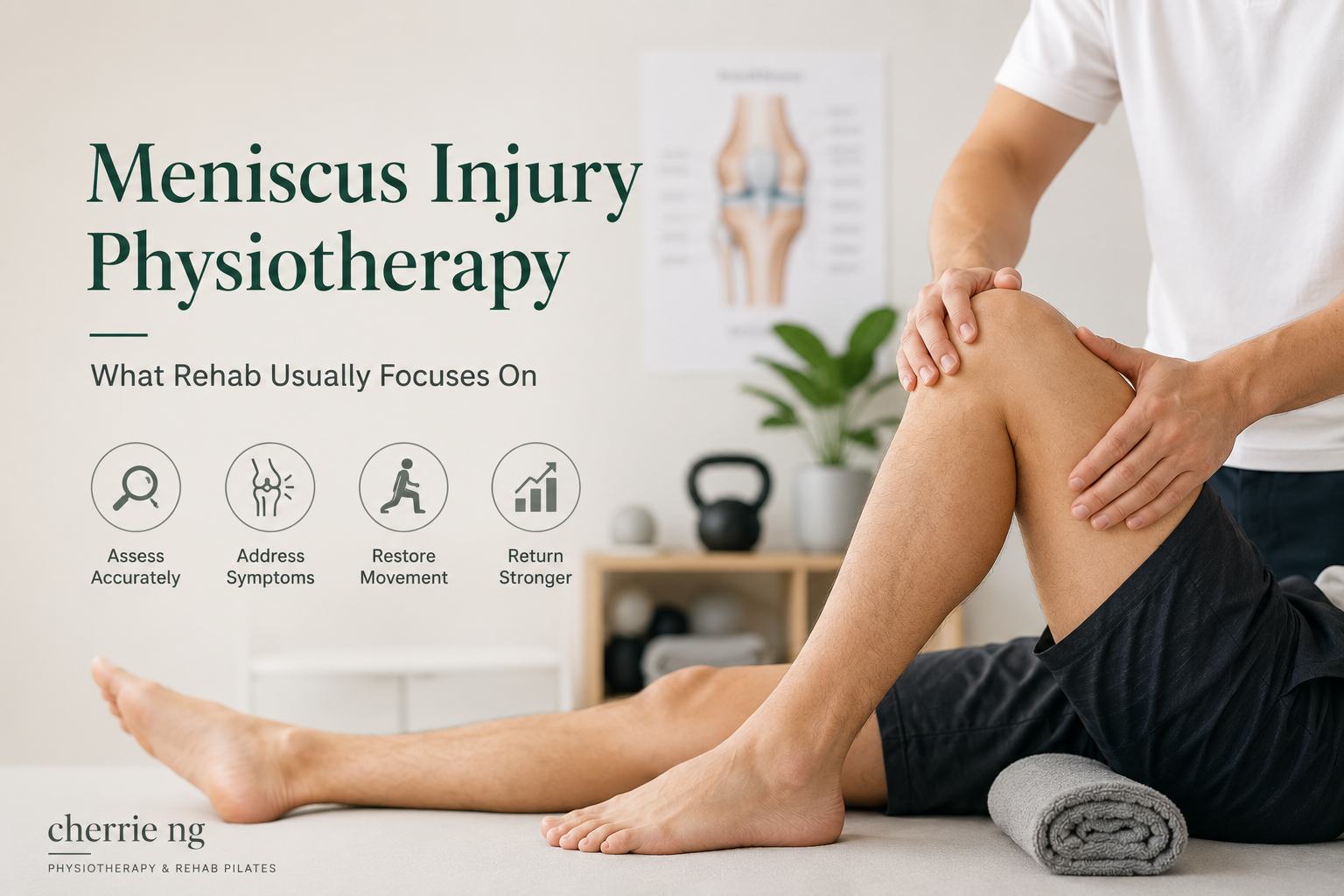
Meniscus injury physiotherapy can help guide rehabilitation after a twist, sports injury, gradual knee symptoms or a meniscus procedure. Rehab usually focuses on settling swelling and irritation, restoring comfortable knee movement, rebuilding leg strength and progressing back to the activities you need. The right plan depends on your symptoms, whether the injury was assessed medically, any surgery or surgeon restrictions, and your goals.
This is general education, not a diagnosis. Knee pain, clicking or catching can have different causes, so a physiotherapy or medical assessment can help clarify the safest next step.
What is the meniscus?
Each knee has two menisci: firm, C-shaped pieces of cartilage that sit between the thigh bone and shin bone. They help distribute load and contribute to knee stability.
Meniscus symptoms may start after a pivot, deep squat, fall or sports movement. They can also develop more gradually as knee tissue changes over time. A meniscus injury may occur alongside other knee injuries, including an ACL injury, so the whole knee needs to be considered.
Common symptoms and situations
People may seek assessment after noticing:
- Pain along the inside or outside of the knee
- Swelling or stiffness after activity
- Difficulty bending or straightening the knee fully
- Catching, clicking or a feeling that the knee is stuck
- Discomfort with squatting, twisting, stairs, running or kneeling
- A feeling of giving way or reduced confidence on the leg
These symptoms do not confirm a meniscus tear on their own. Their pattern, injury history, swelling, movement and response to loading all matter.
What a physiotherapy assessment may look at
Cherrie may ask how the symptoms began, whether there was a twist or impact, what activities now feel limited, and whether you have had scans, surgery or other knee injuries.
Assessment may include knee range of motion, swelling, walking, stairs, squat tolerance, leg strength, balance, hip and ankle mobility, single-leg control and how the knee responds to different movements. If there is a surgeon’s protocol after a repair, that should guide the rehabilitation plan.
The aim is to decide whether you need symptom management, gradual strength work, movement modification, medical review, or a more specific post-operative progression.
What rehab usually focuses on
Rehab is not one fixed set of exercises. It is usually progressed according to symptoms, swelling, movement quality and the demands of your daily life, work or sport.
Settle symptoms and restore comfortable movement
Early rehabilitation may focus on reducing irritation, maintaining or restoring knee extension and bending, improving walking tolerance, and finding activities that do not cause a significant flare-up. Short-term changes to deep squatting, twisting, running or impact activity may be appropriate while the knee is sensitive.
Rebuild strength and control
As symptoms settle, physiotherapy often progresses quadriceps, hamstring, glute, calf and trunk strength. Step-ups, sit-to-stands, controlled squats, balance work and single-leg control may be used when appropriate. The starting point should suit your current tolerance rather than copying a generic sports programme.
Return to daily activity and sport demands
Later rehabilitation may connect strength and control to stairs, longer walks, hiking, gym exercises, running, jumping or sport-specific tasks. Progression usually needs to be gradual. A knee that manages normal walking may still need preparation for pivoting, deep flexion or higher-impact activity.
Rehab Pilates-informed movement work may sometimes support trunk, hip and leg control as part of a wider physiotherapy plan. It does not replace medical guidance or post-operative restrictions.
When to seek medical care
Seek medical care promptly after major trauma, if you cannot bear weight, the knee is very swollen, red or hot, you have fever, severe calf pain or swelling, a changed knee shape, major instability, new numbness or weakness, or symptoms that feel unusual for you.
Prompt assessment is also sensible if the knee becomes truly locked and you cannot fully straighten or bend it, or if swelling and pain are worsening. If you have had knee surgery, follow your surgeon’s advice and contact the medical team about wound concerns, fever, calf pain or sudden deterioration.
Related reading
- Knee Pain Physiotherapy in KL: Common Causes and Rehab Options
- Knee Strengthening Exercises: What to Start With Safely
- ACL Rehab Physiotherapy in KL: Phases of Return to Sport
- Return-to-Sport Physiotherapy: How to Know You Are Ready
Frequently asked questions
Does every meniscus injury need surgery?
No. Management depends on the type and location of the injury, symptoms, knee locking, swelling, other knee injuries and your activity needs. A medical assessment can advise whether non-surgical management, physiotherapy or surgical discussion is appropriate.
Can I exercise with meniscus-related knee pain?
Some people can continue modified activity, but the suitable level depends on symptoms and assessment findings. Avoid pushing through sharp pain, increasing swelling, locking or repeated giving way. A physiotherapist can help select an appropriate starting point.
If you are in Kuala Lumpur or Selangor and knee symptoms are affecting walking, stairs, training or sport, you can WhatsApp Cherrie to ask whether a physiotherapy assessment is suitable.
Foundational clinical sources and further reading
These authoritative sources provide general background relevant to this topic; they are not claim-by-claim citations. This content is educational and does not replace individual assessment, diagnosis or emergency medical care.
- What is physiotherapy? — World Physiotherapy
- Musculoskeletal health — World Health Organization