Physiotherapy Basics
Home Exercise Programs in Physiotherapy: How to Practise Safely Between Sessions
Learn what a useful physiotherapy home exercise program should include, how to practise safely, monitor symptoms and know when the plan needs review.
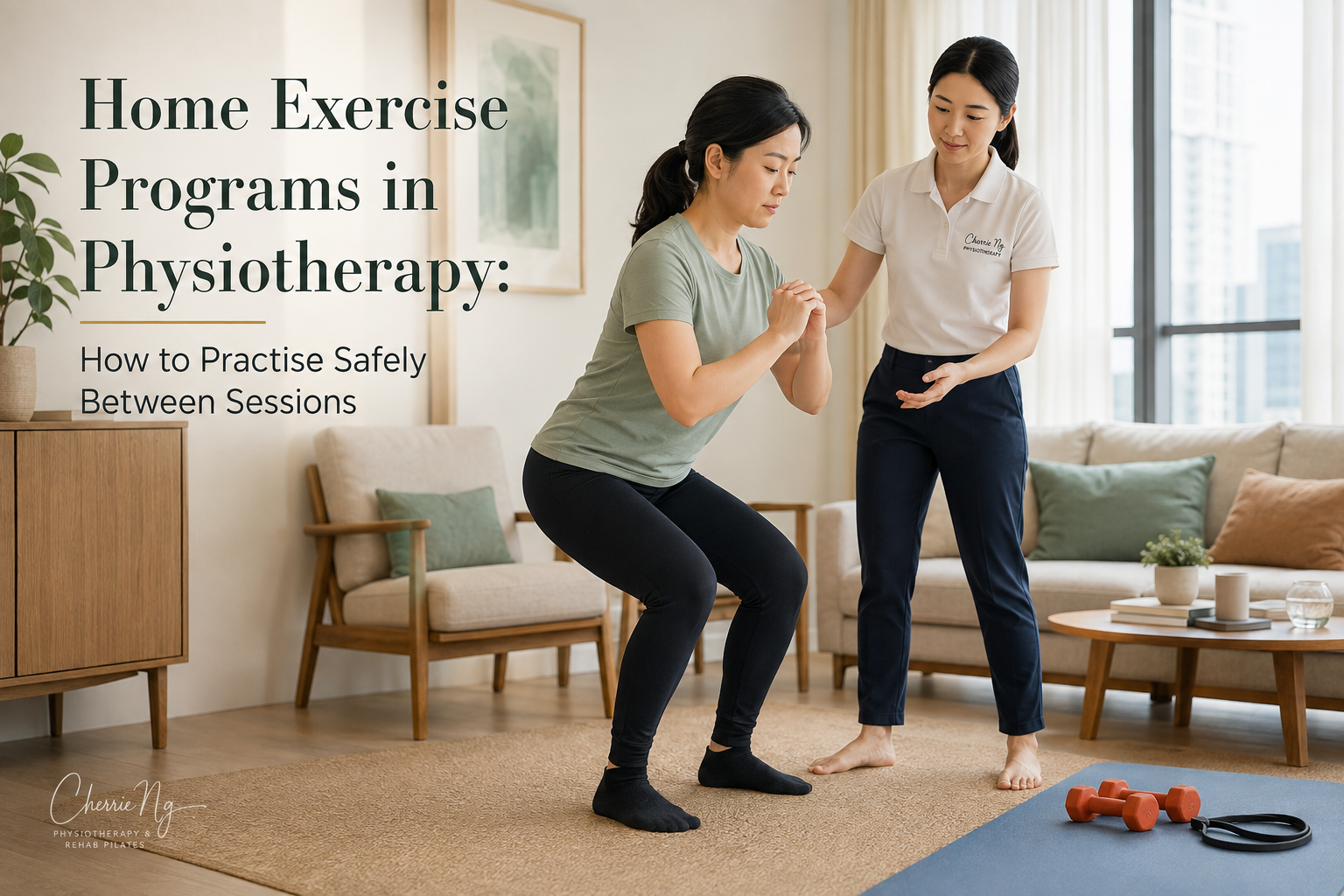
A useful physiotherapy home exercise program should tell you more than the names of a few exercises. You should understand what each movement is for, how to set it up, how much to do, which symptoms are acceptable, when to make it easier and when the plan needs review.
The aim is not perfect attendance or the longest possible routine. It is a plan you can perform safely and consistently enough to learn from your response between physiotherapy sessions.
Why home practice is part of rehabilitation
Rehabilitation is intended to help people become as independent as possible in daily life. The World Health Organization describes it as person-centred and includes education, self-management and adapting tasks or environments among its strategies. A home program can help translate what you learn in a session into walking, stairs, lifting, work, sport or other meaningful activities. WHO rehabilitation fact sheet
That does not mean every condition needs a long exercise list. Sometimes the most useful plan is one or two priority movements, a walking or activity target, and clear rules for monitoring the response.
Seven things a clear home exercise program should include
| Question | What should be clear |
|---|---|
| What am I doing? | The exercise name, starting position and movement |
| Why am I doing it? | The function or rehabilitation goal it supports |
| How much? | Repetitions, sets, hold time, resistance or duration |
| How often? | The planned days or sessions, including rest where relevant |
| What should I feel? | Expected effort, stretch or familiar symptom response |
| When should I modify or stop? | The agreed symptom and safety rules |
| How will it progress? | What will be retested before adding load, range or complexity |
If you cannot answer these questions, ask before guessing. The correct dose can differ with the condition, healing stage, surgical precautions, current capacity and the goal being trained.
Start with a realistic setup
Before practising, check that the space and equipment match what was demonstrated:
- Use a stable chair, step, wall or support where prescribed
- Clear loose rugs, bags and other trip hazards
- Keep walking aids within reach if they are part of the plan
- Use the correct resistance band or weight rather than the closest substitute
- Position a phone or exercise sheet where you can see it without changing the movement
- Ask whether another person should be nearby for balance or transfer practice
For a home visit, the actual chair height, staircase, bed, floor space and available support can be assessed directly. This can make the plan more practical, but it does not replace medical precautions or a surgeon’s restrictions.
How hard should home exercises feel?
Effort, muscle fatigue or a mild familiar symptom may be acceptable in some rehabilitation plans. A new, rapidly increasing or unfamiliar symptom should prompt you to pause and reassess rather than force the remaining repetitions.
Some physiotherapy services use a traffic-light guide: low pain may be monitored, moderate pain suggests reducing the range, resistance or repetitions, and high pain means stopping. One NHS guide also advises that mild exercise-related pain should settle within two hours. It explicitly presents this as a guide, so your own plan may use different limits for the condition or stage of recovery. Kingston and Richmond NHS advice after physiotherapy
Check the response at three points:
- During: Is the sensation expected and stable? Can you keep control?
- After: Does it settle toward the starting level, or continue building?
- The next day: Are pain, stiffness, swelling and normal function close to the expected baseline?
If the response repeatedly exceeds the agreed limits, reduce only the variable you were taught to change or contact your physiotherapist. Do not invent a harder progression because the current exercise looks easy online.
Consistency matters, but the plan must fit real life
Difficulty following a home program is not simply a willpower problem. The routine may be too long, poorly explained, difficult to fit around work or caregiving, or disconnected from a meaningful goal.
A 2024 overview of 19 systematic reviews covering 205 unique trials found a small overall effect from strategies intended to improve physiotherapy adherence. Booster sessions, supervision and graded exercise showed some promise, but the authors rated the overall certainty low and emphasized tailoring approaches to the person. 2024 overview of adherence strategies in physiotherapy
Practical ways to make the plan easier to repeat include:
- Link it to an existing routine, such as after breakfast or before a shower
- Keep the equipment visible and ready where safe
- Use a short checklist instead of recording every detail
- Choose the most important exercises when time is limited
- Tell your physiotherapist honestly which parts you did and did not manage
- Ask for a simpler version when the setup is unrealistic
Doing less than prescribed is useful information. It helps the plan become more realistic; hiding it makes the next progression harder to judge.
Do videos, reminders or exercise apps help?
They may help some people remember technique or build a routine, but they are tools rather than a replacement for an appropriate prescription. A 2022 review of 10 randomised trials involving 1,117 participants found that digital additions often improved short-term adherence, while longer-term effects were less certain and studies varied substantially. Systematic review of digital support for home exercise adherence
Use a video or app only if it matches your current exercise and dose. A generic demonstration cannot account for your precautions, symptoms or progress.
When should the program progress?
Progress is not limited to adding more repetitions. Depending on the goal, a physiotherapist may change:
- Resistance or load
- Movement range
- Speed or control
- Number of repetitions or sets
- Balance support
- Exercise position
- Rest time or frequency
- Complexity of the task or environment
The next step should follow a useful reassessment. For example, the movement may feel more controlled, a functional task may improve, or the current dose may produce a predictable response. Progressing everything at once makes it difficult to know which change caused a flare-up.
Signs the home plan needs review
Ask for a review if:
- You are unsure how to perform an exercise
- Symptoms repeatedly exceed the agreed response
- New swelling, weakness, numbness or loss of function appears
- The routine is impossible to fit into daily life
- The exercises feel too easy but no progression rule was provided
- You have followed the plan but the agreed function is not changing
- Your diagnosis, medication, weight-bearing status or surgical instructions change
A review does not automatically mean the exercises were wrong. The plan may simply need a different dose, setup, priority or goal.
When to seek medical care instead
After an injury, seek urgent medical advice if pain or swelling is severe or worsening, you cannot bear weight, the area looks deformed, or you have fever and feel unwell. Emergency assessment is appropriate if the body part has changed shape or becomes numb, tingly, blue, grey or cold. NHS sprains and strains guidance
Related reading
- What Happens During Your First Physiotherapy Session?
- How Often Should You Do Physiotherapy Sessions?
- Should Exercises Hurt During Rehab? How to Understand Pain Signals
- Sore After Physiotherapy: What Is Expected and When to Ask for Help
Frequently asked questions
Should I do my physiotherapy exercises every day?
Not automatically. Mobility practice, strength work, balance tasks and post-operative exercises can require different schedules. Follow the prescribed frequency and ask how rest days fit the goal.
What if I miss a day?
Resume the agreed schedule when practical. Do not double the next session unless your physiotherapist specifically instructed that approach.
How many home exercises should I have?
There is no ideal number. A shorter plan that targets the priorities and can be repeated well may be more useful than a long list that is confusing or unrealistic.
Should I continue an exercise that causes pain?
Use the symptom rules agreed for your condition. Pause if pain is new, escalating or changes your movement, and seek review when the response is unclear or repeatedly exceeds the plan.
Sources and clinical references
- WHO rehabilitation fact sheet
- Kingston and Richmond NHS advice after physiotherapy
- 2024 overview of adherence strategies in physiotherapy
- Systematic review of digital support for home exercise adherence
- NHS sprains and strains guidance
If you are in Kuala Lumpur or Selangor and need help making a rehabilitation plan workable in your own space, you can WhatsApp Cherrie to ask whether a physiotherapy assessment or home visit may be suitable.
Foundational clinical sources and further reading
These authoritative sources provide general background relevant to this topic; they are not claim-by-claim citations. This content is educational and does not replace individual assessment, diagnosis or emergency medical care.
- What is physiotherapy? — World Physiotherapy