Ankle Foot
Flat Feet, Foot Posture and Insoles: When Do They Matter?
Learn when flat feet may need assessment, what physiotherapy looks at, and when supportive or customized insoles may be useful.
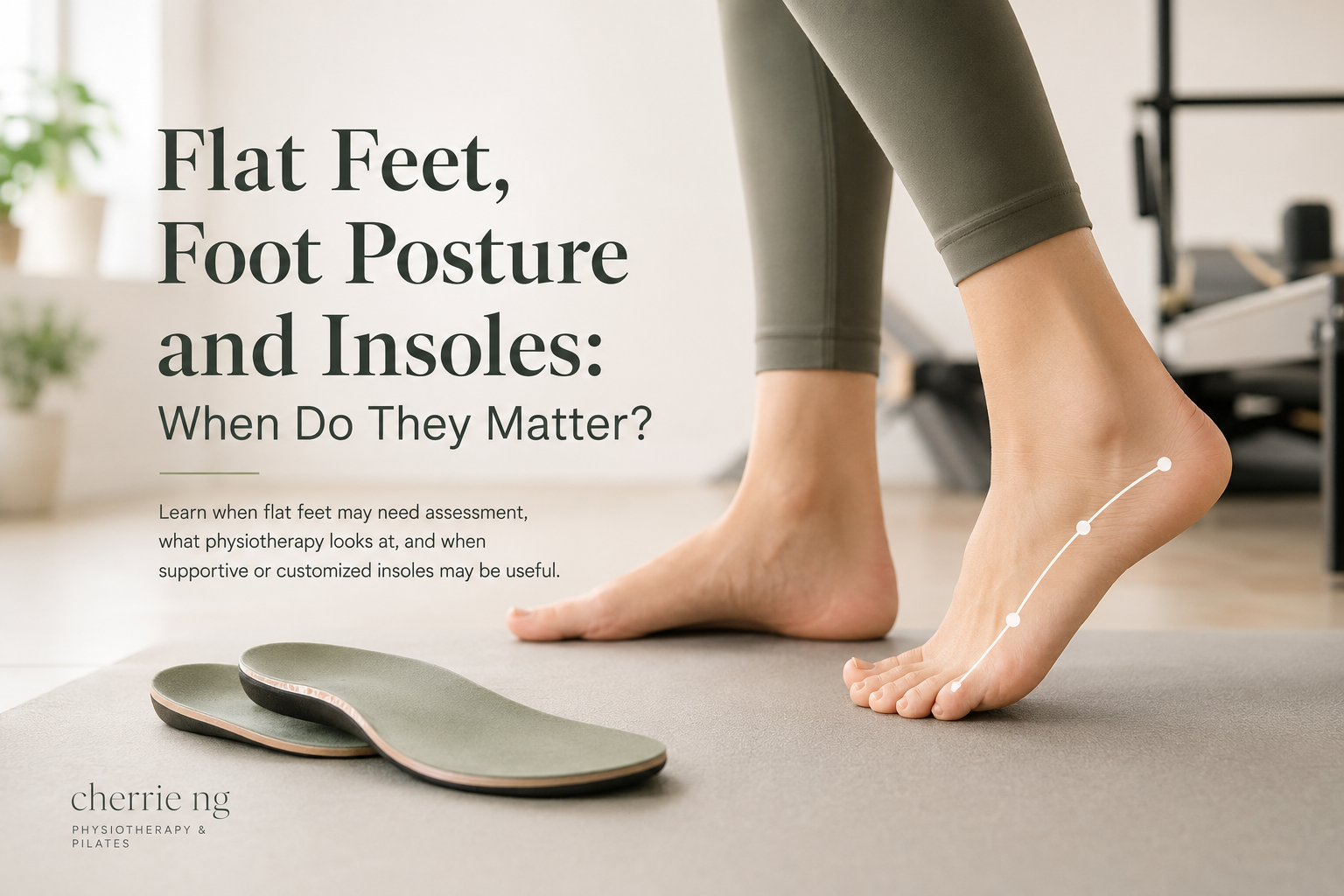
Flat feet do not automatically need correction. Many people have low arches without pain or activity limits. Foot posture becomes more relevant when it is linked with persistent foot or ankle pain, fatigue, repeated injuries, changes in walking, or difficulty with work and exercise. Physiotherapy assessment can help decide whether strength, mobility, footwear, load management or an insole may be useful.
This article is general education, not a diagnosis. A photograph, wet-foot print or shoe-wear pattern alone cannot explain symptoms or determine whether you need custom insoles.
What does “flat feet” mean?
Flat feet generally describes a low or reduced arch when standing. Some feet remain flexible and form more of an arch when sitting or rising onto the toes. Others are stiffer. Foot shape also varies naturally between people and between the left and right sides.
The important question is not simply whether the arch looks low. It is whether there are symptoms, a recent change, reduced function, or a movement and load problem that needs attention.
When foot posture may matter
Assessment may be useful when low arches appear alongside:
- Foot, heel, arch or inner-ankle pain
- Fatigue during longer standing or walking
- Repeated ankle sprains or a feeling of instability
- Difficulty with running, hiking or sport
- Knee or lower-leg symptoms that may be influenced by the whole limb
- A noticeable recent change in one foot’s shape
- Shoes wearing unevenly or becoming uncomfortable quickly
These symptoms can have several causes. Flat feet may be one part of the picture, but they should not be assumed to explain every foot, knee or back complaint.
What a physiotherapy assessment may look at
Cherrie may ask when symptoms started, how work and activity affect them, whether the foot shape has changed, what footwear you use, and what activities you want to return to.
Assessment may include standing foot posture, walking, ankle and big-toe mobility, calf and foot strength, balance, single-leg control, knee and hip movement, footwear and symptom response to different tasks. The aim is to understand function, not to chase a visually “perfect” arch.
Do flat feet always need insoles?
No. If you have no pain or limitation, an insole may not be necessary. When symptoms are present, a supportive insert may sometimes improve comfort, change how load is distributed or make walking and activity more tolerable.
The choice between an off-the-shelf and customized insole depends on the problem, foot shape, footwear, activity, comfort and response to a trial. Custom devices are not automatically better for every person. An insert should fit the shoe properly and should not create new pain, pressure or numbness.
What physiotherapy may include besides insoles
An insole is usually one tool rather than the whole rehabilitation plan. Depending on the assessment, physiotherapy may include:
- Calf, foot, ankle and hip strengthening
- Ankle or big-toe mobility work when movement is limited
- Balance and single-leg control exercises
- Walking, running or activity-load adjustments
- Footwear guidance for work, daily walking or sport
- Gradual return to longer standing, running or impact activity
- Monitoring how symptoms respond with and without an insert
The plan should match your symptoms and goals. Trying to force the arch upward through exercise or an aggressive insert is not a sensible goal if it causes pain.
When to seek medical care
Seek medical care promptly if foot pain follows major trauma, you cannot bear weight, there is obvious deformity, severe swelling, redness with fever, an open wound, new numbness or weakness, a cold or discoloured foot, severe calf pain or swelling, or symptoms that feel unusual for you.
Arrange an assessment if one arch appears to be collapsing or changing, especially with pain or swelling along the inner ankle, or if symptoms are persistent and affecting walking. A new, painful or rigid flat foot needs a different level of attention from a long-standing, comfortable low arch.
Related reading
- Customized Insole Assessment in Malaysia: What to Expect
- Plantar Fasciitis Physiotherapy: Foot Pain in the Morning
- Ankle Mobility After a Sprain: When Stiffness Becomes a Problem
Frequently asked questions
Can insoles permanently correct flat feet?
Insoles are generally used to support or accommodate the foot and improve comfort or function. They should not be presented as a guaranteed permanent correction for adult foot shape.
Are custom insoles always better than shop-bought inserts?
No. Some people do well with an appropriate off-the-shelf insert, while others may need a customized device. Assessment, fit, comfort, footwear and response matter more than price alone.
If you are in Kuala Lumpur or Selangor and foot posture, pain or fatigue is affecting walking, work or exercise, you can WhatsApp Cherrie to ask whether physiotherapy or insole assessment is suitable.
Foundational clinical sources and further reading
These authoritative sources provide general background relevant to this topic; they are not claim-by-claim citations. This content is educational and does not replace individual assessment, diagnosis or emergency medical care.
- What is physiotherapy? — World Physiotherapy
- Musculoskeletal health — World Health Organization