Ankle Foot
Ankle Mobility After a Sprain: When Stiffness Becomes a Problem
Learn why ankle stiffness can linger after a sprain, what mobility rehab may involve, and when to seek physiotherapy assessment.
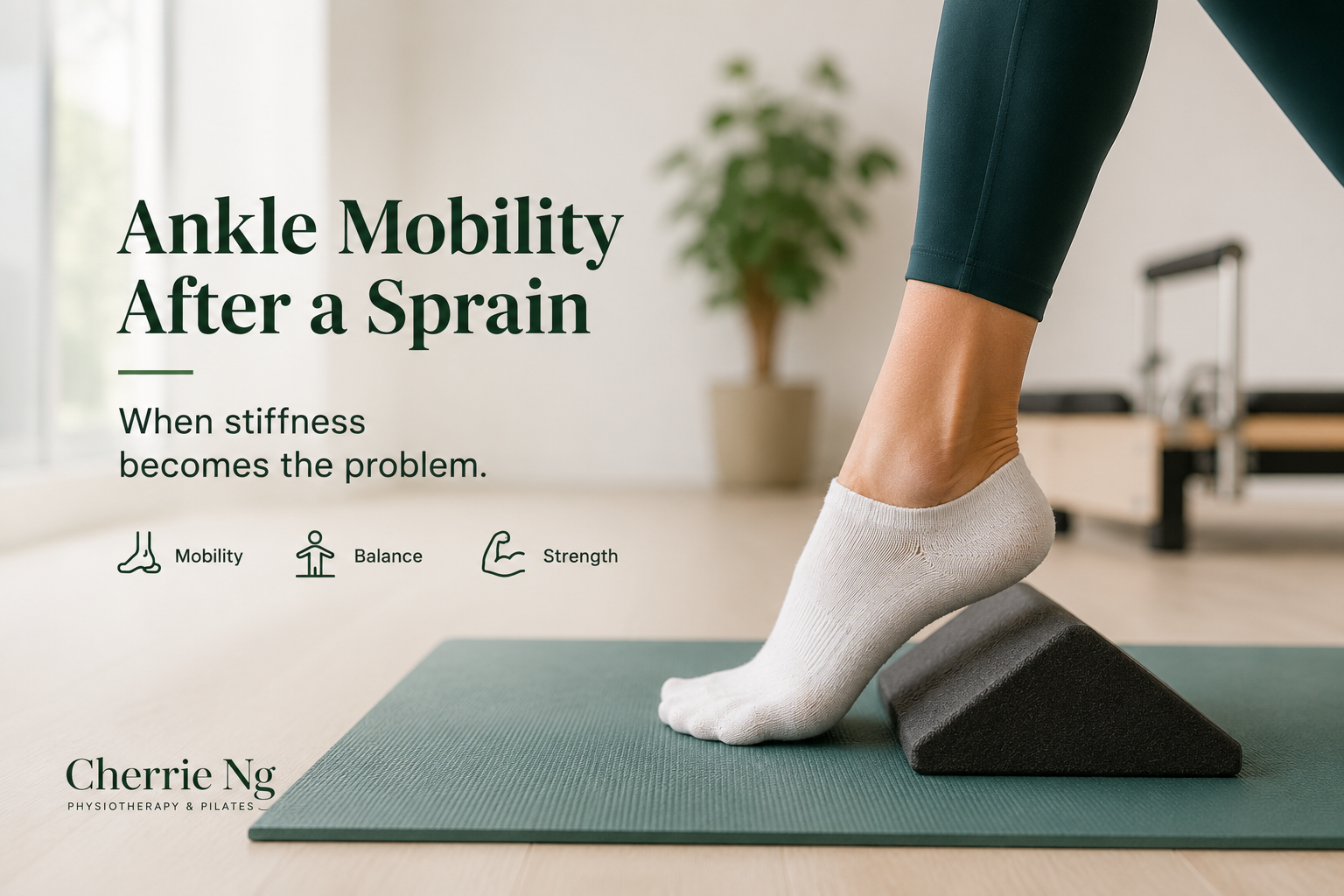
Ankle mobility after a sprain can stay limited even when the initial swelling and pain have improved. Stiffness may affect stairs, squatting, walking downhill, running, lunging or getting back to sport. Physiotherapy can help assess whether the ankle needs gentle mobility work, strength and balance training, changes to activity, or medical review.
This article is general education, not a diagnosis. Do not force a stiff ankle through sharp pain, increasing swelling or a blocked feeling. The right progression depends on the injury, healing stage and how the ankle responds.
Why does the ankle feel stiff after a sprain?
After a sprain, swelling, pain, protective muscle tension and a short period of reduced movement can all make the ankle feel stiff. Sometimes people avoid moving into the positions that feel uncomfortable, which can leave the ankle less prepared for normal walking, stairs or sport.
Stiffness is often most noticeable when the knee moves forward over the foot, such as during a squat, step-down, lunge or walking downhill. This does not automatically mean there is a serious problem, but it is worth assessing if it keeps limiting function or is not gradually improving.
What a physiotherapy assessment may look at
Cherrie may ask how the sprain happened, whether you can bear weight, how swelling has changed, which movements feel restricted, and what you need to return to.
Assessment may include ankle range of motion, swelling, walking, stairs, calf strength, foot control, single-leg balance, hip mobility, footwear, training load and the difference between the affected and unaffected sides. This helps distinguish a tolerable recovery stiffness from a problem that needs a different plan or medical input.
What ankle mobility rehab may include
The best mobility work is not always the deepest stretch. It should be comfortable enough to repeat, matched to the stage of healing, and combined with strength and control so the new range is useful in real movement.
Depending on the assessment, rehab may include:
- Gentle ankle up-and-down or circle movements in a comfortable range
- Controlled knee-over-foot movement for walking, stairs or squatting tolerance
- Calf flexibility work when it is appropriate and not aggravating symptoms
- Calf, shin and foot strengthening to support the ankle through its range
- Balance and single-leg control exercises
- Gradual return to uneven ground, running, jumping or change-of-direction tasks
Pain, swelling and movement quality should guide progression. A little effort or stretch sensation can be expected, but sharp pain, worsening swelling, repeated giving way or symptoms that remain worse after exercise are reasons to scale back and seek guidance.
Why strength and balance still matter
More range of motion alone does not make an ankle ready for activity. The calf, shin and foot muscles need to control that range, while balance training helps the body react to uneven ground or an off-centre landing.
For this reason, ankle rehabilitation often moves from comfortable motion to strength, balance and then the demands of your actual goal. Someone returning to desk-based walking has different needs from someone returning to trail running, badminton or court sport.
When to seek medical care
Seek medical care promptly if you cannot bear weight, there is obvious deformity, severe bone tenderness, severe or rapidly worsening swelling, numbness, a cold or discoloured foot, fever, severe calf pain or swelling, or symptoms that feel unusual for you.
Arrange an assessment if ankle stiffness, pain or swelling is not improving over several weeks, if you cannot regain a useful range for walking or stairs, or if the ankle repeatedly gives way. Severe sprains can feel similar to fractures, and persistent symptoms may need medical review.
Related reading
Frequently asked questions
Should I stretch a stiff ankle after a sprain?
Gentle, controlled movement may be appropriate, but forceful stretching is not always helpful. The safest approach depends on pain, swelling, injury severity and how far along you are in recovery.
How long can ankle stiffness last after a sprain?
Recovery time varies with the severity of the sprain, other injuries and rehabilitation. If stiffness is not gradually improving, or it limits walking, stairs or sport, an assessment can help identify the next step.
If you are in Kuala Lumpur or Selangor and a stiff ankle is affecting walking, exercise or sport after a sprain, you can WhatsApp Cherrie to ask whether physiotherapy assessment is suitable.
Foundational clinical sources and further reading
These authoritative sources provide general background relevant to this topic; they are not claim-by-claim citations. This content is educational and does not replace individual assessment, diagnosis or emergency medical care.
- What is physiotherapy? — World Physiotherapy
- Musculoskeletal health — World Health Organization