Neck Pain
Neck Stiffness: Mobility Exercises and When to Get Assessed
Learn what may help neck stiffness, how to start mobility exercises safely, and when physiotherapy assessment is recommended.
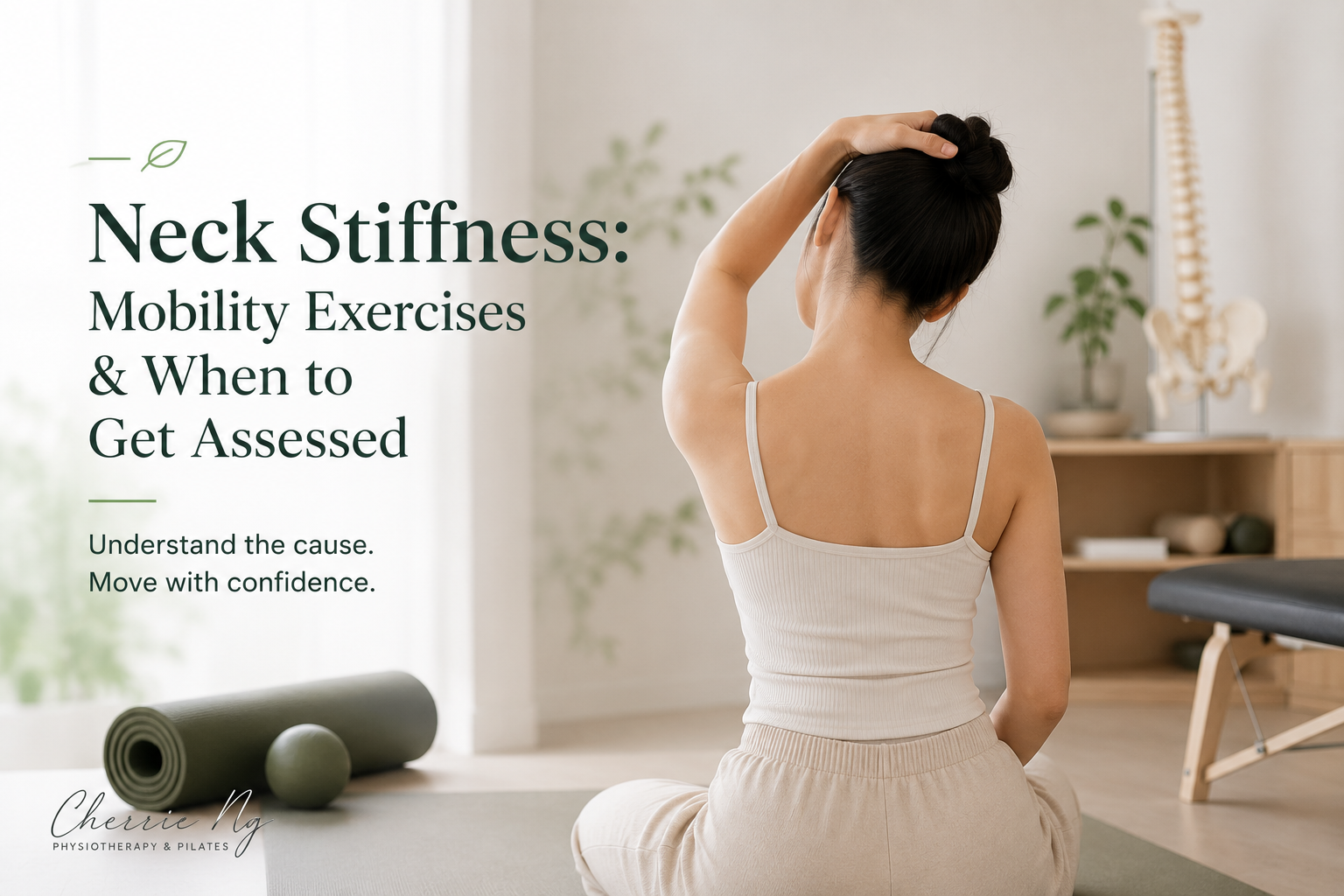
Neck stiffness often improves with gentle movement, posture variety and better control around the upper back and shoulders. But if stiffness is painful, keeps returning, limits driving or comes with arm symptoms, a physiotherapy assessment can help clarify what is safe and useful for you.
In Kuala Lumpur and Selangor, many people notice neck stiffness after desk work, phone use, poor sleep, stress, driving, gym training or long periods without movement. The goal is not to force the neck to crack or stretch aggressively. A better starting point is to restore comfortable movement and understand why the stiffness keeps showing up.
Common reasons the neck feels stiff
Neck stiffness can come from several overlapping factors, including:
- Long laptop or phone use with few movement breaks
- Sleeping in an awkward position
- Upper back stiffness that makes the neck work harder
- Shoulder blade weakness or poor endurance
- Stress-related jaw, neck or shoulder tension
- Recent training changes, lifting or overhead exercise
- Neck guarding after pain, headache or previous injury
- Fear of movement after a painful flare-up
The same stiff feeling does not always need the same solution. Some people need mobility. Some need strength. Others need pacing, ergonomic changes, breathing work or screening for nerve-related symptoms.
Gentle mobility exercises to start with
If your symptoms are mild, familiar and not worsening, you can try gentle movements within a comfortable range:
- Neck rotations: Slowly turn your head left and right, stopping before sharp pain.
- Neck nods: Gently nod as if saying yes, keeping the movement small and relaxed.
- Side bends: Bring one ear slightly toward the shoulder without lifting the shoulder.
- Shoulder rolls: Roll the shoulders slowly to reduce guarding around the neck.
- Upper back extension: Sit tall and gently extend through the upper back over a chair back.
- Chin retraction: Glide the head slightly backward, as if making a small double chin, without forcing.
These should feel controlled and tolerable. Mild stretching or awareness is usually fine, but sharp pain, spreading symptoms, dizziness, numbness or worsening headache means you should stop and seek advice.
What a physiotherapy assessment may look at
A physiotherapy assessment for neck stiffness may start with your symptom history: when stiffness began, what makes it better or worse, whether symptoms spread into the shoulder or arm, and how it affects work, sleep, driving or exercise.
Cherrie may then assess neck range of motion, upper back mobility, shoulder movement, strength, posture habits, breathing, desk setup and how your symptoms respond to different positions or gentle movements.
Assessment is helpful because stiffness may be protective. If your body is guarding because of pain, nerve sensitivity or irritation, pushing harder into stretches may not be the best first step.
What may help beyond stretching
Neck stiffness often needs more than a few stretches. Depending on the assessment, physiotherapy may include:
- Mobility exercises for the neck and upper back
- Strengthening for the shoulder blades and upper back
- Posture and desk setup adjustments
- Movement breaks for long computer or phone use
- Manual therapy when appropriate
- Breathing or relaxation strategies if tension is a strong factor
- Rehab Pilates principles for better trunk, shoulder and neck control
- Gradual return to gym, Pilates or overhead training
The plan should be simple enough to repeat consistently. A short routine done several times through the week is often more helpful than a long routine that only happens when stiffness is severe.
When to get assessed
Consider physiotherapy if neck stiffness lasts more than a few days, keeps returning, limits turning your head, affects sleep or driving, follows an injury, or comes with shoulder, arm, hand, headache or jaw symptoms.
Seek medical care promptly if neck pain or stiffness follows major trauma, comes with fever, severe sudden headache, new weakness, worsening numbness, loss of balance, dizziness, fainting, chest pain, unexplained weight loss, or symptoms that feel unusual for you.
Related reading
- Neck Pain After Sleeping: Pillow, Position or Something Else?
- Neck Pain Physiotherapy in KL: Why It Happens and What Helps
- Can Neck Tension Cause Headaches? A Physiotherapy View
- Physiotherapy vs Massage: Which One Do You Need?
- Text Neck: Why Phone Posture Can Affect Your Neck and Shoulders
If you are in Kuala Lumpur or Selangor and neck stiffness is affecting work, sleep, driving or exercise, you can WhatsApp Cherrie to ask whether physiotherapy assessment is suitable.
Foundational clinical sources and further reading
These authoritative sources provide general background relevant to this topic; they are not claim-by-claim citations. This content is educational and does not replace individual assessment, diagnosis or emergency medical care.
- What is physiotherapy? — World Physiotherapy
- Musculoskeletal health — World Health Organization